
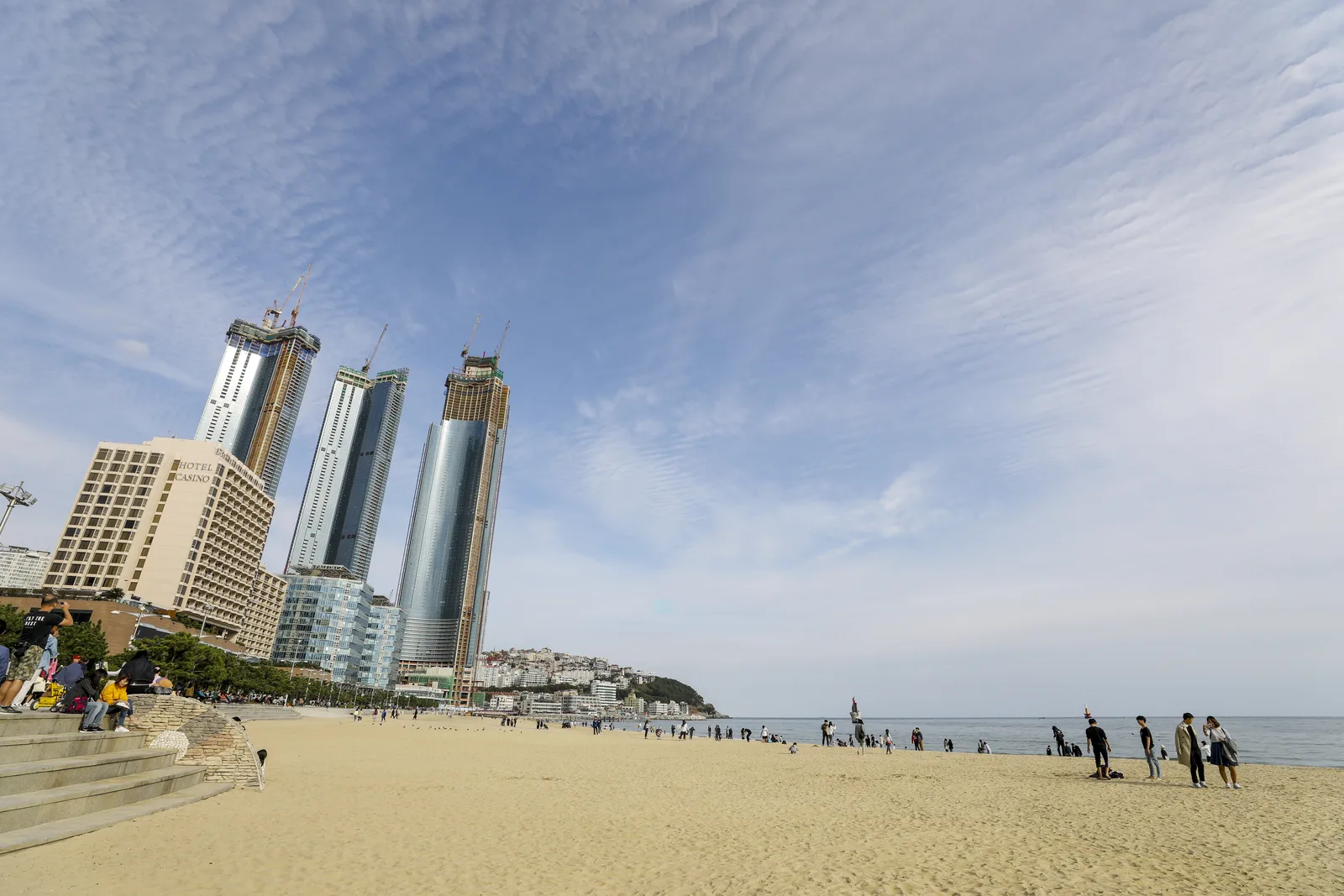
Busan doesn’t have a single obvious base the way Seoul’s Myeongdong does. Its four main options split fairly cleanly by what they trade off: beach space, bridge views, transit convenience, or proximity to the older market core. None of them is wrong, but picking against what your trip actually needs saves a lot of backtracking.
Busan’s Neighborhoods at a Glance
Haeundae and Gwangalli sit on the east side, both beachfront, both pricier for a sea view. Seomyeon sits inland at the crossing of Busan Metro Lines 1 and 2, the most central and usually the cheapest of the four. Nampo anchors the older west side of the city, within walking distance of Jagalchi Market and BIFF Square, and is reachable by Line 1’s Nampo Station despite what some outdated guides claim about it lacking subway access.
Haeundae: The First-Timer’s Choice
Haeundae is Busan’s most infrastructure-heavy beach district, with a wide, flat, step-free walkway running from Haeundae Station straight to the beach, genuinely convenient if you’re pulling a suitcase. It has the widest range of hotel options in the city, from international chains to budget business hotels, and puts you close to Centum City and the Busan X the Sky observation tower.
The tradeoff is scale and crowding. July and August bring roughly a million visitors a month to the beach itself, with umbrella rentals covering most of the sand and restaurant prices climbing accordingly. Shoulder season (May, June, September, October) is when Haeundae’s infrastructure actually feels like an asset rather than a crowd-management problem.
Gwangalli: Bridge Views Over Beach Space
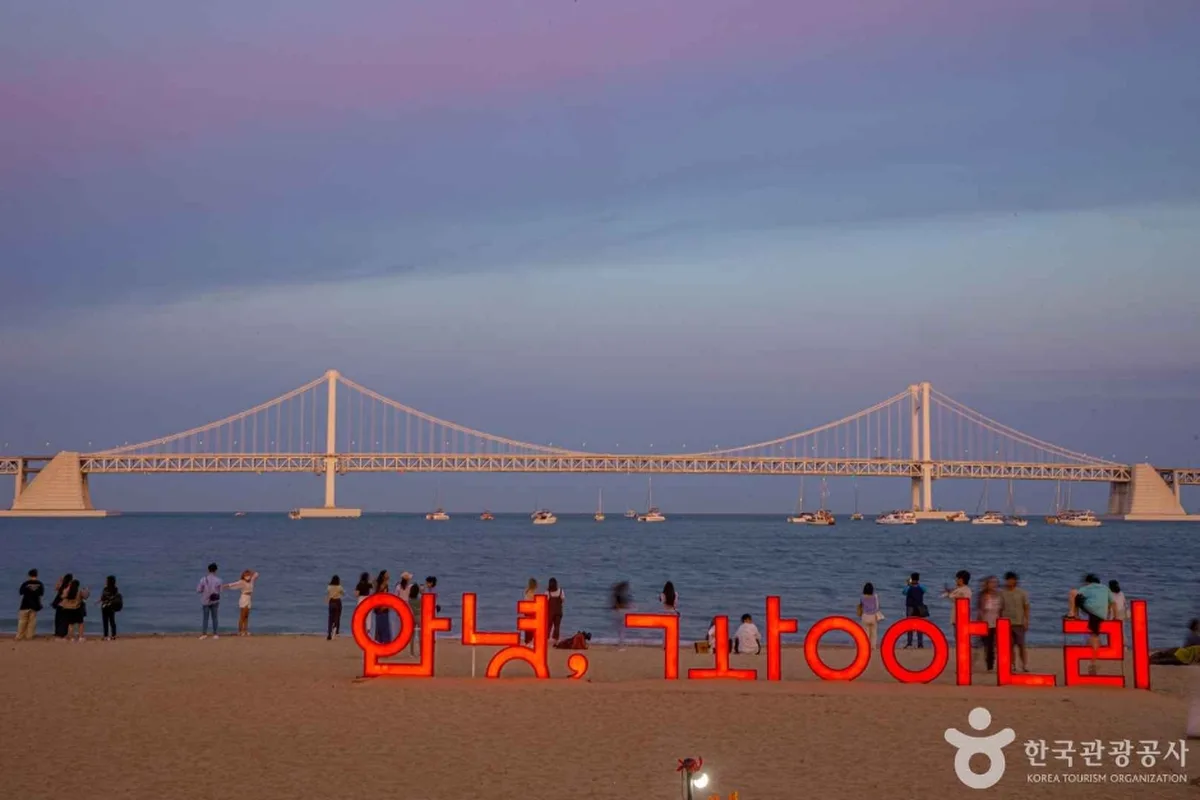
Gwangalli trades some of Haeundae’s beach width for the Gwangandaegyo bridge view, lit up nightly and the backdrop for a weekly Saturday drone show visible from many rooms along the waterfront. It skews younger and more local than Haeundae, with more cafes and smaller boutique stays than large hotel towers, which also means parking can be tighter to find.
The nearest subway stop, Gwangan Station on Line 2, is a 10 to 15 minute walk from the beach itself; Geumnyeonsan Station, one stop further, cuts that down to around 10 minutes for some parts of the beachfront. Neither drops you right at the sand, so factor in that walk if you’re arriving with luggage.
Seomyeon: The Transit Hub
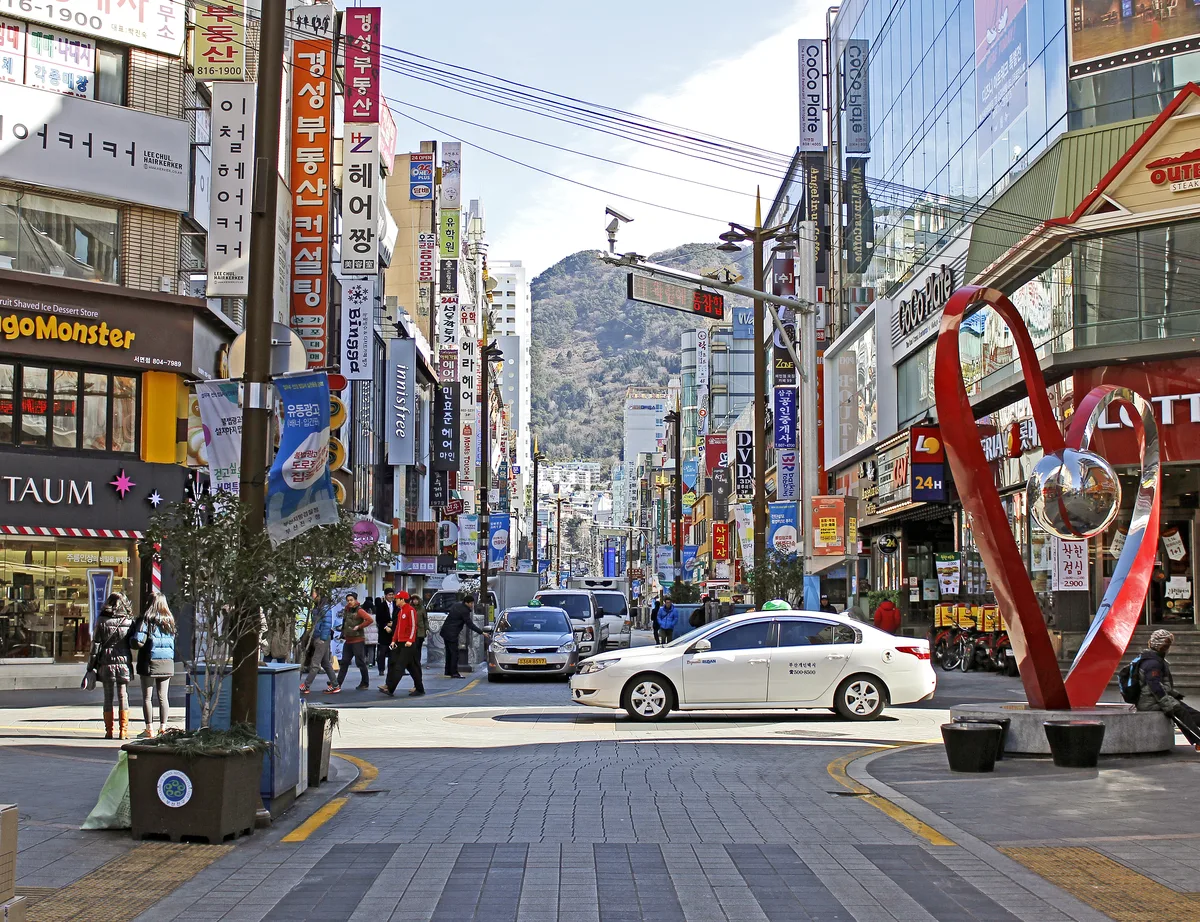
Seomyeon sits where Busan Metro Lines 1 and 2 cross, putting Haeundae, Gwangalli, and Nampo all within a comfortable subway ride without needing a taxi or bus as backup. It’s built around the Seomyeon underground shopping arcade and the streets around it, dense with cosmetics shops, restaurants, and nightlife, closer to Seoul’s Myeongdong in character than to either of Busan’s beach districts.
Accommodation here typically runs 30 to 50 percent cheaper than an equivalent room in Haeundae or Gwangalli, since you’re paying for transit convenience rather than a sea view. It’s the strongest pick if your Busan trip is genuinely split across multiple neighborhoods rather than centered on one beach.
Nampo: Old Busan, Market Access
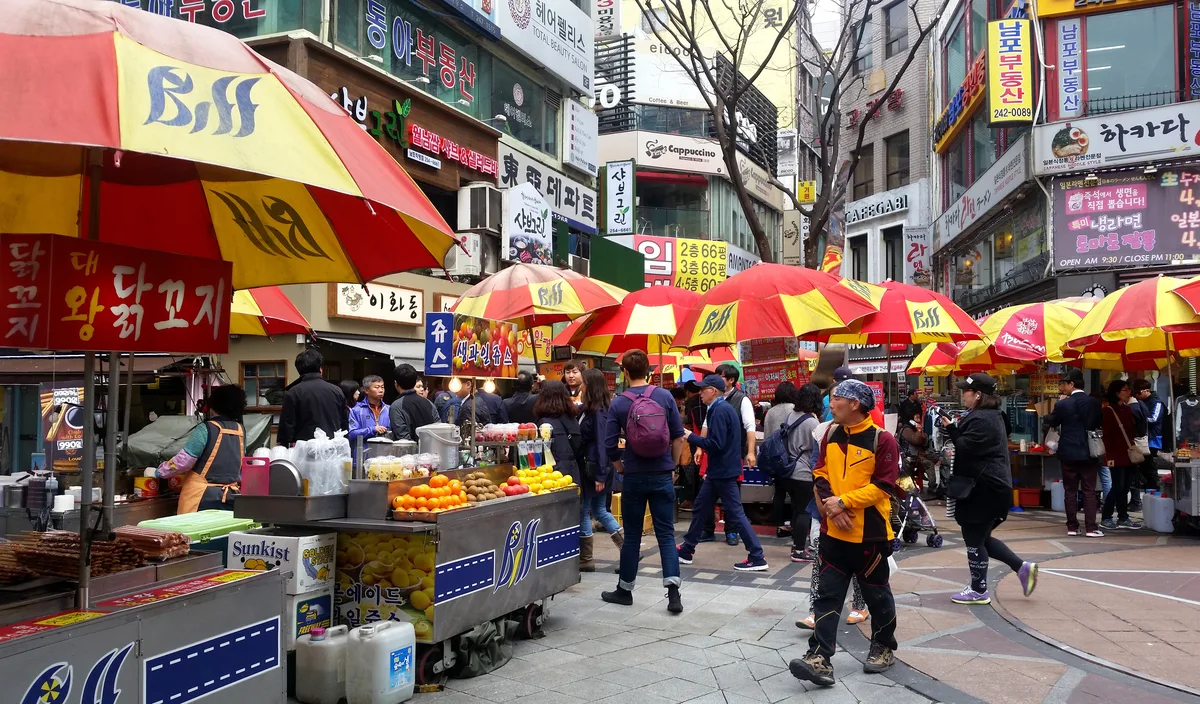
Nampo covers Busan’s older commercial core, walkable to Jagalchi Fish Market, BIFF Square’s street food stalls, and the harbor itself. It has the most concentrated cluster of small, character-driven guesthouses and cafes of the four districts, along with genuine harbor views from some properties, a different feel from the newer high-rise stretches of Haeundae and Gwangalli.
Nampo Station, on Line 1, connects directly to Jagalchi Station and the rest of the subway network, so despite being on the opposite side of the city from Haeundae, it isn’t the transit-isolated pick some outdated guides describe. It suits travelers prioritizing Gamcheon Culture Village, the fish market, and the older city core over beach time.
Busan Neighborhoods: Quick Answers
Haeundae is the most common answer, thanks to its beach access and the widest range of hotel options, though it gets genuinely crowded in July and August.
Yes. Nampo Station sits on Line 1 and connects directly to Jagalchi Station, despite some older guides claiming the area lacks subway access.
Seomyeon and Nampo both run noticeably cheaper than beachfront Haeundae or Gwangalli, with Seomyeon typically 30 to 50 percent below comparable beachfront rooms.
Haeundae has more beach space, more hotel options, and heavier crowds; Gwangalli trades some of that scale for the Gwangandaegyo bridge view, a younger crowd, and a more local, cafe-driven feel.
If your trip covers multiple districts, Seomyeon’s central subway position makes it the easiest single base. If you’re mainly there for one beach, staying in that specific district cuts down on daily transit time.
Planning the rest of a Busan trip? Our Busan travel guide covers the city’s sights beyond just where to sleep.



Comments
Leave a comment