
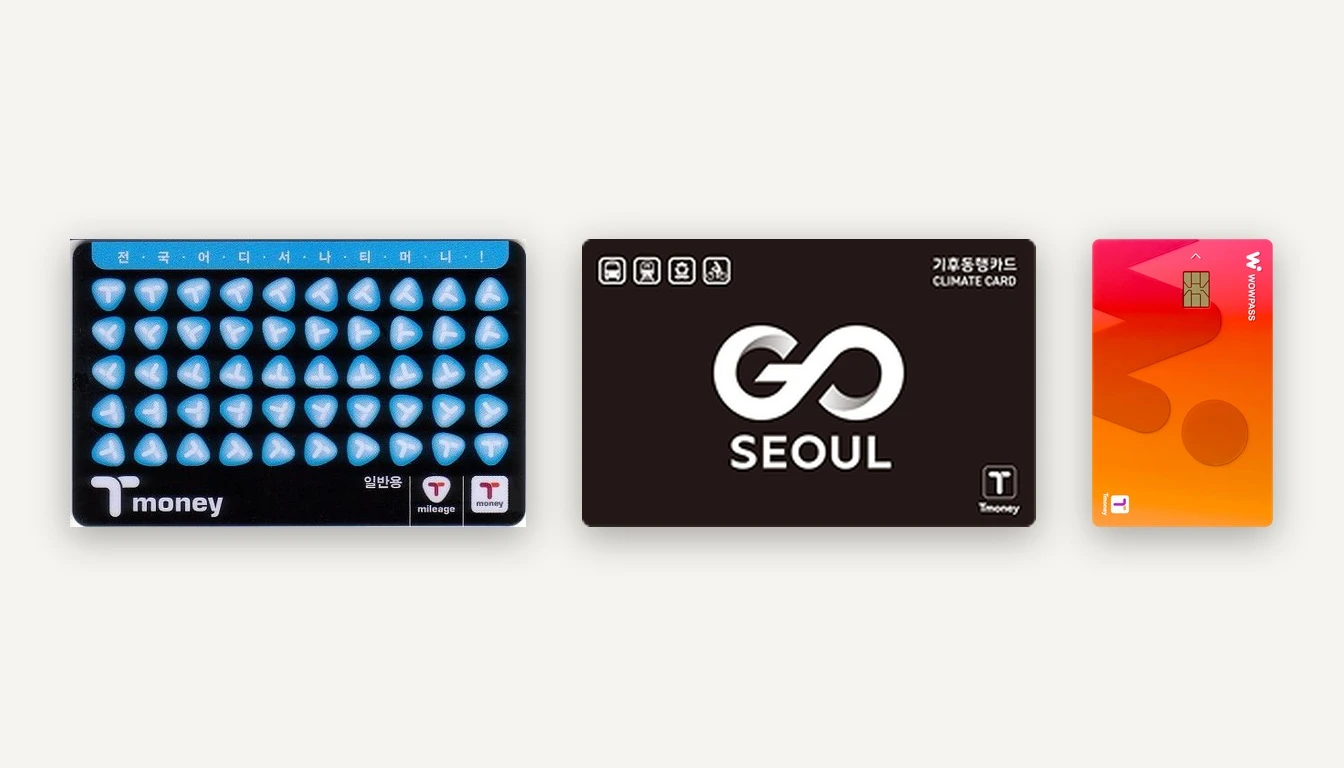
“Which one is best” isn’t quite the right question. These three cards don’t do the same job.
T-money is a plain transit card. WOWPASS adds currency exchange and everyday payments on top of transit. Climate Card throws out the balance model altogether and sells you unlimited rides for a flat price.
So the choice depends on what you’re actually solving: paying for rides, handling cash and card payments in general, or riding often enough that per-trip fares start to add up.
T-money, WOWPASS, or Climate Card: Which One Should You Get?
Just need to pay for the subway and bus? Get a plain T-money card. It’s the cheapest option, and every other card here runs on the T-money network anyway.
Also need to change money, or want fewer cards in your wallet? WOWPASS handles currency exchange and general payments alongside transit.
The Climate Card tourist pass is the narrowest case. It only wins if you’re staying in Seoul long enough, and riding often enough, that a flat unlimited price beats paying per trip.
Looking for a T-money card with tourist attraction discounts built in? That’s a different product. Our T-money Travel Card comparison covers the Travel Card and Travel Card Plus tiers.
T-money: The Baseline Every Visitor Should Have
A standard T-money card costs about ₩3,000, plus whatever balance you load onto it. You’ll find it at GS25, CU, 7-Eleven, and E-Mart24, and at subway station vending machines. No ID, no app.
It’s a pure prepaid transit card. Tap to board, tap again when you exit a bus, and top it up at any of those same shops or machines when the balance runs low.
The trade-off: it does exactly one job. There’s no currency exchange. It pays at convenience stores, but it isn’t a general-purpose payment card the way the next option is.
For most trips that’s fine. You’re not running your travel budget through a transit card anyway. Our Seoul subway and bus guide covers how the fares and transfer discount work once you have one.
WOWPASS: One Card for Cash, Card Payments, and Transit
WOWPASS is a prepaid card built for foreign visitors. It folds three things into one card: T-money’s transit function, currency exchange, and everyday debit-style payments.
You can pick one up at any of 446 kiosks nationwide, in subway stations, hotels, and convenience stores. Reserve online beforehand and it’s ready when you land.
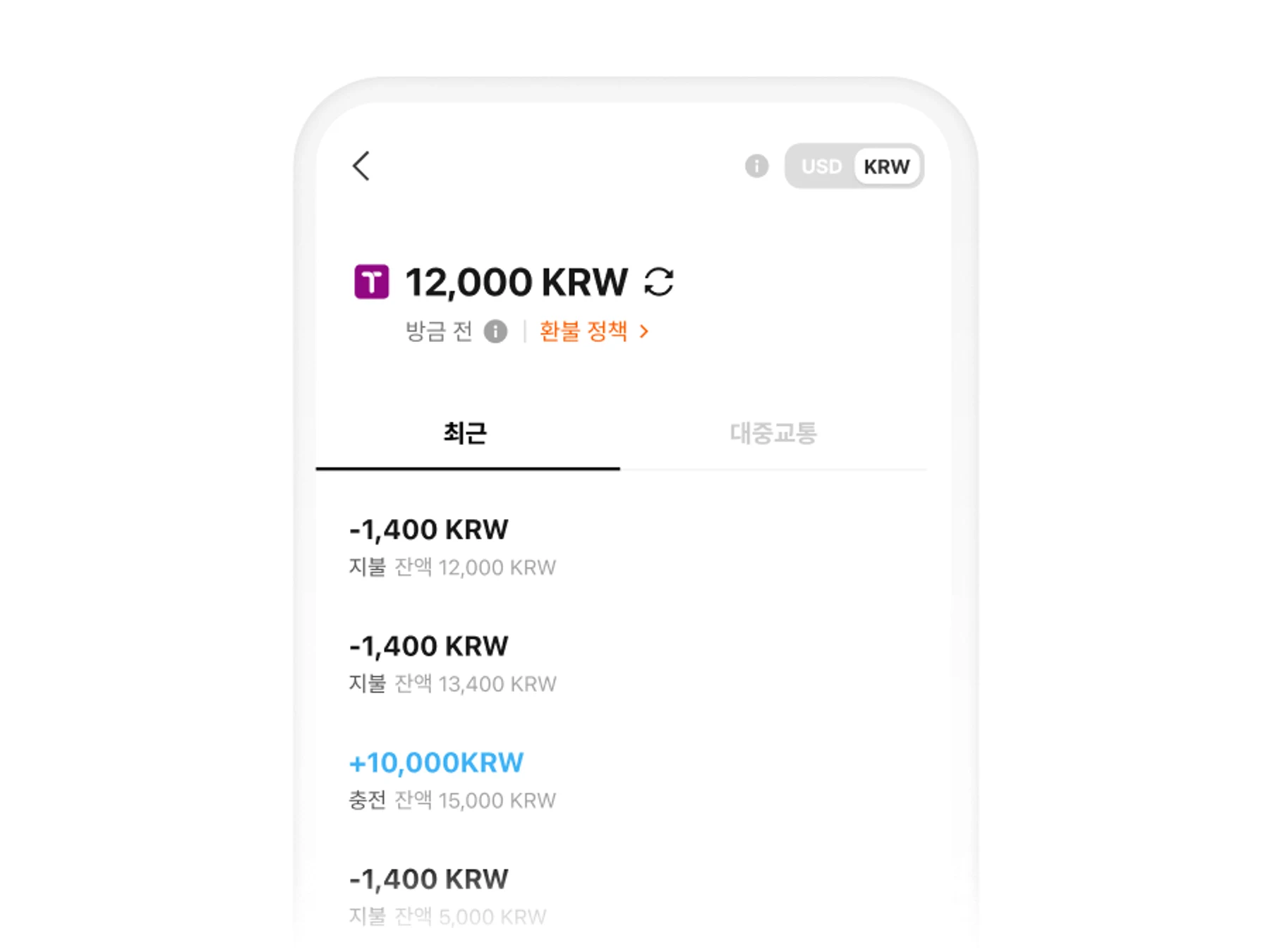
At a kiosk you feed in cash, in any of 16 currencies (USD, JPY, CNY, HKD and others), and it lands on the card. The app handles the transit side separately: check your T-money balance and top it up with Mastercard, JCB, or Visa via PayPal.
Getting cash back out works the same way in reverse. The limit is ₩100,000 per withdrawal with a ₩1,000 fee, and you can withdraw more than once.
Who WOWPASS actually saves effort for
Picture the alternative: cash in one pocket, a transit card in another, your home bank card for everything else. WOWPASS collapses all of that into one card you exchange money onto once.
Not planning to exchange any cash in Korea? Then a plain T-money card does the transit part for less.
Climate Card: Skip the Card Math Entirely If You’re Riding Constantly
Seoul’s 기후동행카드 (Climate Card) tourist pass isn’t a balance card at all. It’s a flat-rate ticket. Pick a duration, from 1 day at ₩5,000 up to 7 days at ₩20,000, then ride Seoul’s subway and city or village buses as much as you like inside that window. No balance ticking down, no reload trips.
You can buy it at the Myeong-dong and Seoul Tourism Plaza tourist information centers, at customer service desks on subway lines 1-8, and at convenience stores near stations. Since March 2026 the new-model ticket machines sell it too, straight from a foreign credit or debit card, with about a 3.7% service fee.
Watch the coverage, though. The Climate Card covers Seoul’s subway and city or village buses only. The Sinbundang Line, express buses, airport buses and anything outside the city are all excluded, which makes it a poor fit if you’re planning day trips.
Run the numbers against a plain T-money card before you buy. A 1-day pass breaks even at roughly 4 rides (4 × ₩1,550 ≈ ₩6,200). It pays off on the days you’re genuinely crisscrossing the city, and not much otherwise.
Korea Transit Cards: Quick Answers
T-money is a plain prepaid transit card with no currency exchange function. WOWPASS runs on the same T-money network but adds cash currency exchange (16 currencies) and general debit-style payments on the same card, issued at 446 kiosks nationwide or reserved online.
No. They solve different problems, and some travelers reasonably carry two: a plain T-money card for transit plus a Climate Card during a heavy sightseeing stretch, for example. WOWPASS is the one most likely to replace the other two entirely, since it includes T-money’s transit function.
Yes, at the same kiosks used to load it, up to ₩100,000 per withdrawal with a ₩1,000 fee, and you can make multiple withdrawals if needed.
Usually not unless you’re taking 4+ rides in a single day. For a typical 2-3 rides a day itinerary, a plain T-money card stays cheaper. It’s a better fit for a longer Seoul-based stay with heavy daily movement.
Yes, its T-money transit function works nationwide the same as a regular T-money card, and its payment function works anywhere that accepts standard card payments, unlike the Climate Card, which is Seoul-only.
Pick one, load it, and stop thinking about it. Any of the three beats fumbling for coins at a bus door.
Paying in Korea more broadly is its own topic, covered in our currency exchange and payment methods guide. You can also check whether your foreign credit card taps directly on Seoul transit yet.



Comments
Leave a comment