
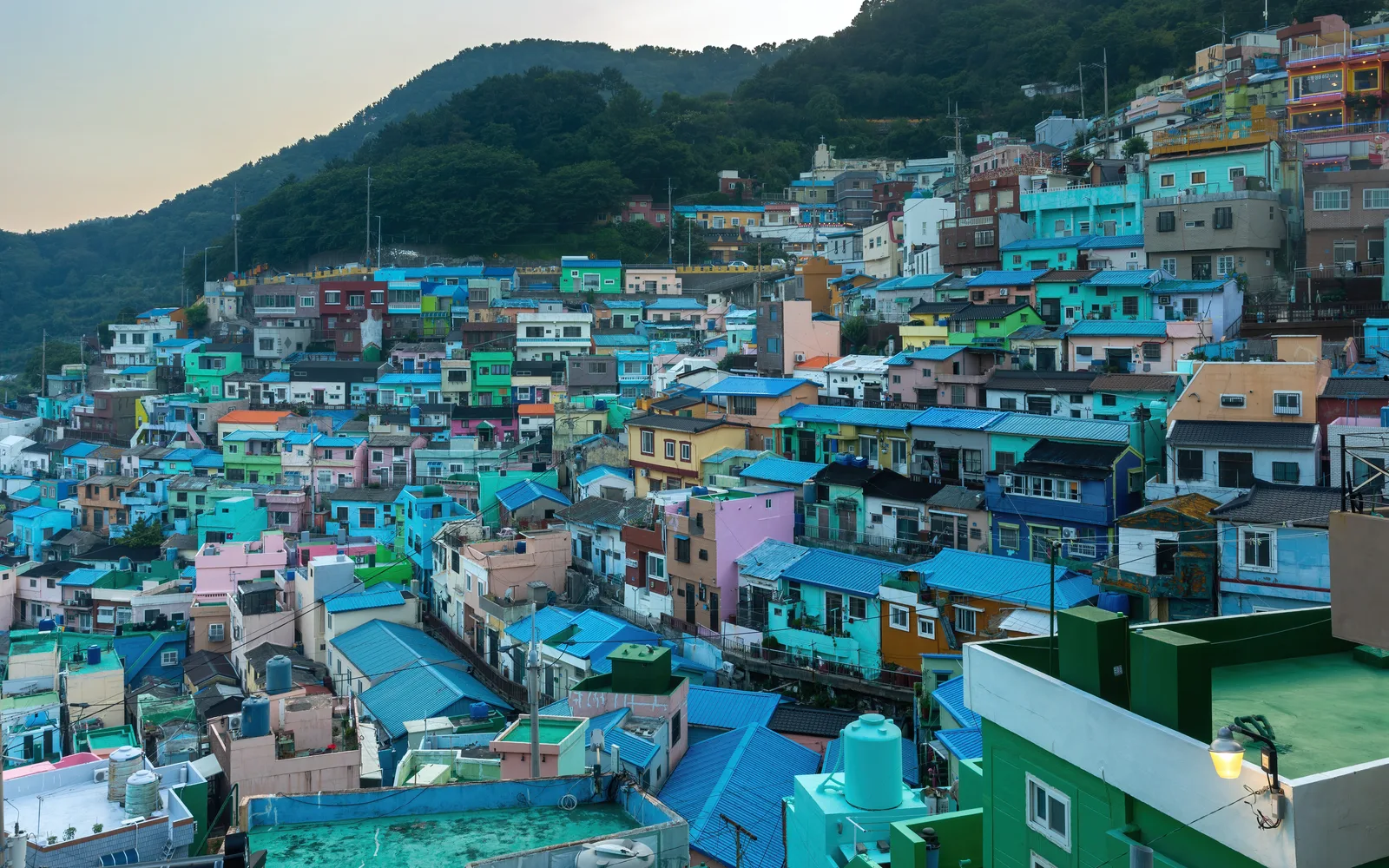
Busan is Korea’s second-largest city and its main port, built into hills around a natural harbor rather than laid out on a grid the way Seoul mostly is. That geography is the whole point: beaches, a fish market, and a hillside village all sit within the same city limits in a way that’s genuinely unusual for a metropolis of this size.
It also runs Asia’s largest film festival every October (BIFF) and has a slower, saltier feel than the capital, distinct enough that plenty of visitors end up preferring it.
Busan at a Glance
The city wraps around Busan Harbor and stretches across several distinct districts rather than one center, so orienting yourself around neighborhoods, Haeundae, Nampo-dong, Seomyeon, rather than the city as a single unit, makes the layout click faster.
Getting There and Getting Around
KTX from Seoul is the fastest land option, around 2 hours 15 minutes at best with a standard fare near 54,000 KRW, though most departures run closer to 2 hours 45 minutes to 3 hours. Since the September 2026 KTX-SRT merger, both networks book through the same system now. Our KTX and SRT booking guide covers how that works in practice. An express bus from Seoul takes about 4 hours and costs less.
Flying into Gimhae International Airport works well if you’re skipping Seoul entirely. From the airport, the Busan-Gimhae Light Rail runs to Sasang Station, where you transfer to the subway, roughly 24 minutes total to Seomyeon and about 35 minutes to Nampo-dong once transfers are factored in.
Where to Go: Haeundae, Gwangalli, and Gamcheon
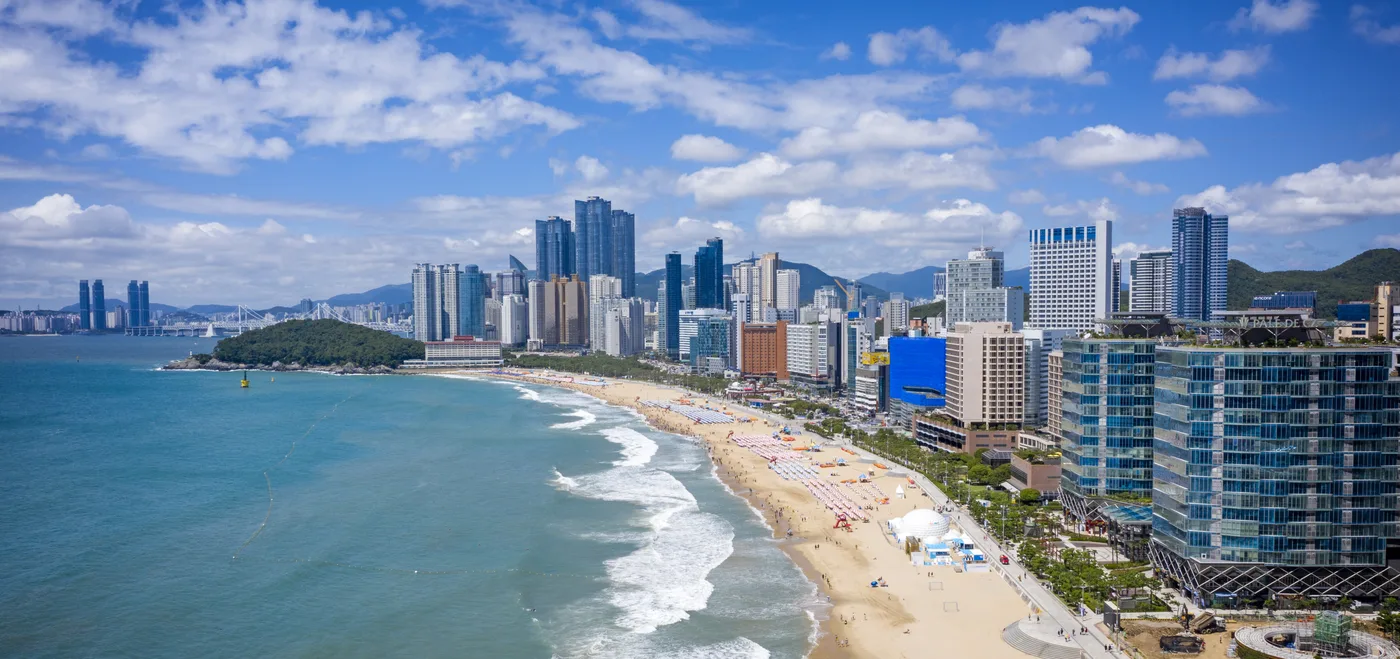
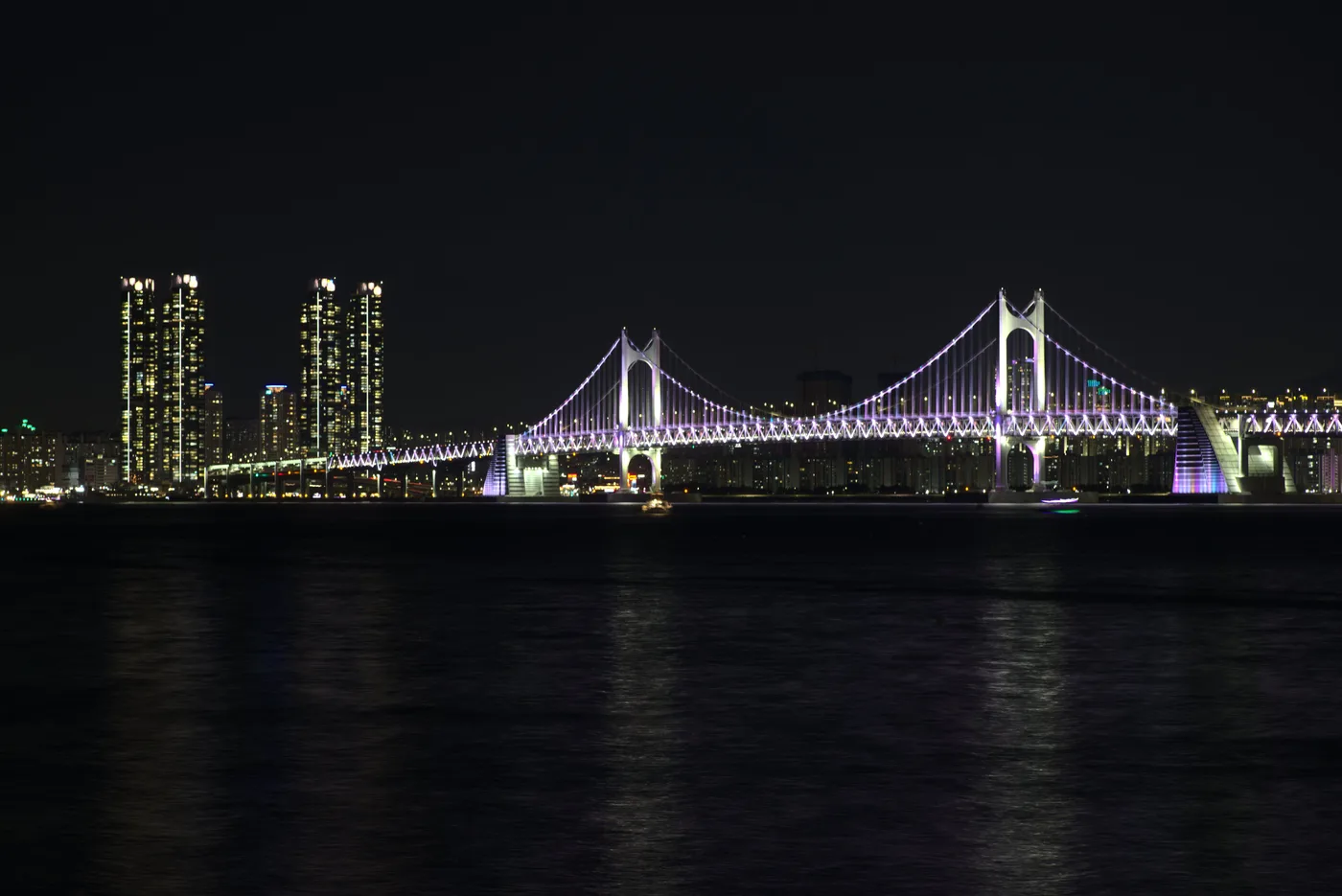
Haeundae is Busan’s best-known beach, backed by high-rise hotels and a dense restaurant strip, and the Blue Line Park train runs along the coast nearby for a scenic ride rather than a swim. Gwangalli, a short distance away, trades Haeundae’s scale for a quieter beach with a direct view of Gwangan Bridge, especially worth timing for after dark.
Gamcheon Culture Village, a hillside neighborhood of brightly painted houses stacked above Busan harbor, is free to enter. The closest station is Toseong (Line 1), exit 6, followed by a 20 to 25 minute uphill walk, or a short ride on bus 1-1, 2, or 2-2 that drops closer to the entrance. A stamp map booklet (2,000 KRW) at the base of the hill guides a self-paced walking route through the village’s murals and art installations, with options ranging from a 40-minute, 10-stop version to a full 2-hour, 22-stop route.
What to Eat: Busan’s Signature Dishes
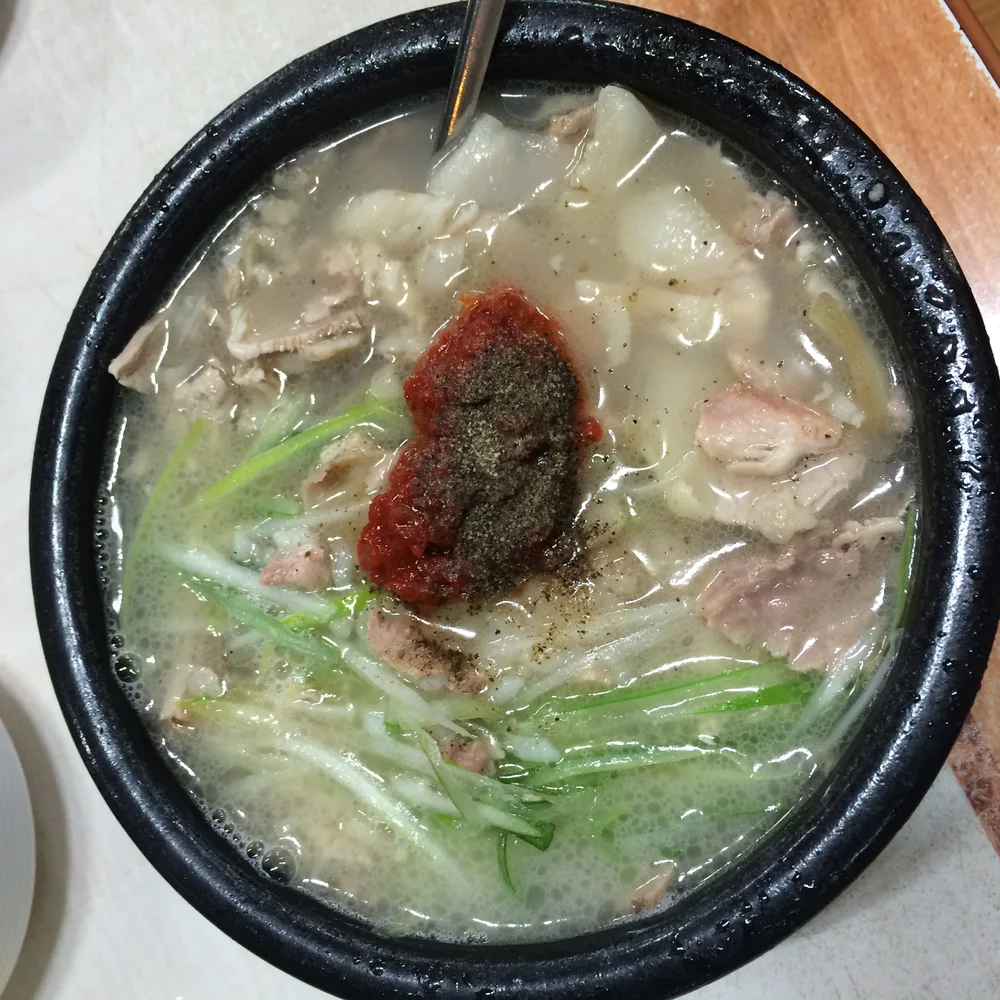
Dwaeji-gukbap, a pork and rice soup, is Busan’s defining dish, and its origin traces back to the Korean War, when refugees who fled to Busan cooked pork bones and meat, sourced partly from nearby US military bases, into a soup that stretched limited food further. It’s cheap, filling, and served everywhere in the city, including on a street unofficially named for it.
Milmyeon, cold wheat noodles in a tangy chilled broth, is the summer counterpart, also tracing back to the same postwar period. For something higher-end, bokeo (pufferfish) shows up on menus across the city prepared as soup or a spicy stew, a specialty that requires a licensed chef given the fish’s toxicity if improperly cleaned.
The Visit Busan Pass: Is It Worth It?
The pass comes in time-based (24-hour, 48-hour) and attraction-based (Big3, Big5) versions, running roughly 35,000 to 55,000 KRW for 24 hours and 55,000 to 85,000 KRW for 48 hours depending on where you buy it. It covers free entry to more than 40 attractions, including Gamcheon Culture Village and several paid lookout points, plus discounts at over 160 partner restaurants and shops, and the Big3/Big5 versions stay valid for 180 days from first use rather than expiring on a fixed clock.
Whether it pays off comes down to how many paid attractions you’ll actually visit. Since Gamcheon and the beaches themselves are already free, the pass mainly earns back its cost through skylines, towers, and paid lookout points, so it’s worth totaling up your planned paid stops before buying rather than assuming it’s automatically worth it.
Busan: Quick Answers
By KTX, as little as 2 hours 15 minutes, though most trains run closer to 2 hours 45 minutes to 3 hours. An express bus takes about 4 hours and costs less.
Yes, entry itself is free. The optional stamp map booklet that guides a walking route through the village costs 2,000 KRW.
Haeundae is larger, busier, and backed by high-rise hotels. Gwangalli is smaller and quieter, with a direct view of the illuminated Gwangan Bridge, especially at night.
Dwaeji-gukbap, a pork and rice soup with Korean War-era origins, is the city’s signature dish. Milmyeon (cold noodles) and bokeo (pufferfish) are the other two most commonly mentioned.
It depends on how many paid attractions are already on your itinerary. Since major free stops like Gamcheon and the beaches don’t need it, the pass mostly pays for itself through paid lookout points and towers.
Planning to eat your way through Busan’s markets? Our traditional markets guide covers Jagalchi Fish Market’s buy-then-eat system in detail.



Comments
Leave a comment