
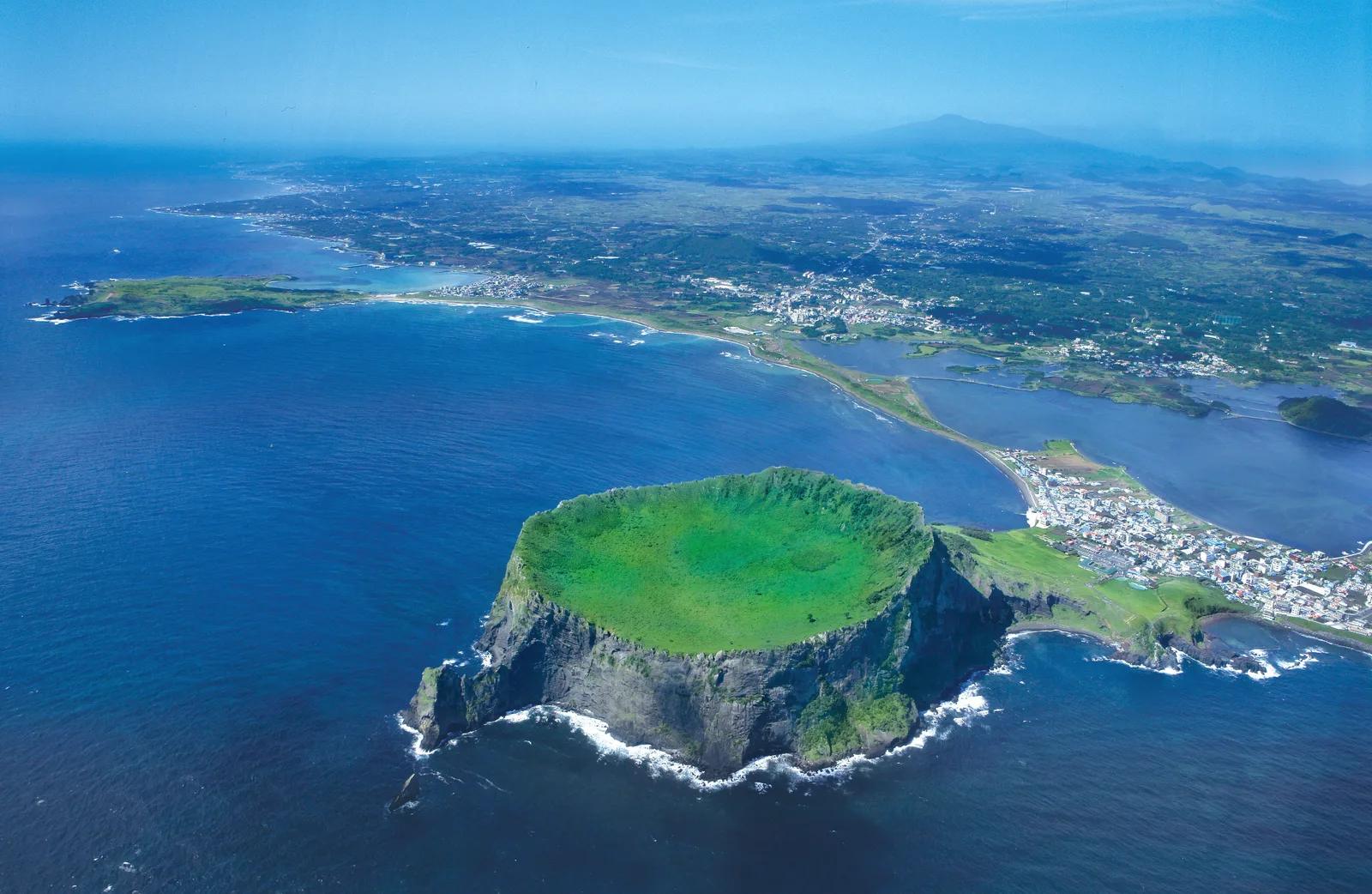
Jeju is a volcanic island off Korea’s south coast, and it doesn’t feel much like the rest of the country. The dialect is different enough that mainland Koreans sometimes struggle with it, the landscape is basalt and citrus groves instead of rice paddies and apartment towers, and the pace runs noticeably slower.
It’s also popular enough that treating it as a single destination rather than a specific plan will waste a chunk of a short trip. Where you base yourself and how you get around end up mattering more here than in Seoul or Busan.
Jeju at a Glance
The island formed from volcanic activity centered on Hallasan, South Korea’s tallest mountain, and that volcanic history shapes almost everything worth seeing, from lava tube caves to black basalt coastlines to the tuff cone at Seongsan. It’s roughly circular, about 73 km across at its widest, small enough to circle by car in a day but large enough that Jeju City and Seogwipo, its two main urban centers, feel like genuinely separate bases rather than neighborhoods of the same town.
Getting There and Getting Around
Flying is the standard way in. Jeju International Airport connects to Seoul’s Gimpo Airport in about 55 minutes, with departures every 15 to 30 minutes, one of the busiest domestic air routes in the world, and fares typically run 30,000 to 80,000 KRW one way depending on airline and timing. A ferry is the slower alternative, sailing from Mokpo (about 4.5 hours) or Wando (about 3 hours) rather than Busan directly, and it mainly makes sense if you’re bringing a car or simply prefer a sea crossing to flying.
Once you’ve landed, Jeju has no subway and no train, and the bus network, while it technically reaches most of the island, runs on infrequent schedules that don’t suit a short trip. A rental car is the practical default for anyone planning to leave Jeju City or Seogwipo, and typically runs 45,000 to 150,000 KRW per day depending on vehicle and season.
Foreign licenses need a physical International Driving Permit
Bring your passport, home driving license, and a paper IDP issued by your home country before you fly, from a country that’s a signatory to the Geneva or Vienna Convention. It can’t be issued in Korea, and a digital copy or photo of one isn’t accepted at the counter.
Taxis fill the gap for shorter hops: roughly 5,000 to 8,000 KRW within Jeju City, and 40,000 to 55,000 KRW for a ride out to Seogwipo.
Where to Base Yourself
Jeju City, on the north coast, is where the airport sits and where most visitors start. It’s compact, easy to navigate on foot in the older downtown core, and has the island’s best transit and shopping access if you’re not renting a car for the whole trip.
Seogwipo, on the south coast, is quieter and greener, closer to waterfalls and the island’s southern coastline, and a better fit if the trip is built around nature over nightlife.
Seongsan, on the east coast near Seongsan Ilchulbong (Sunrise Peak), has grown into its own base over the past several years, full of boutique pensions and converted farmhouse stays. It’s the natural choice if catching the sunrise at Ilchulbong or taking the ferry to Udo Island are trip priorities.
When to Go: Jeju’s Four Seasons
| Season | What to expect |
|---|---|
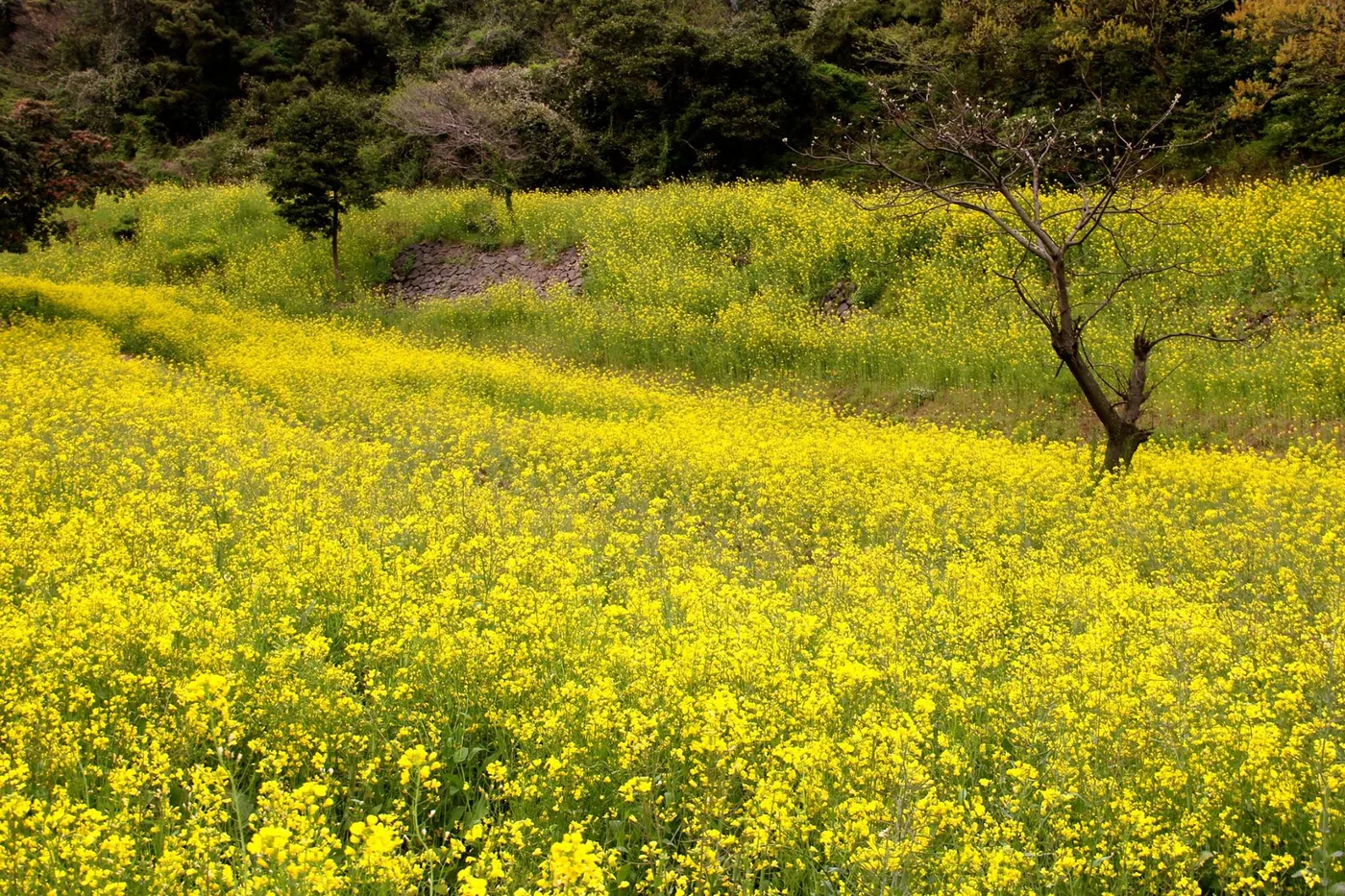
| Spring (Mar-May) | Canola fields from late March, cherry blossoms by early April, thin crowds, the year’s best accommodation rates |
| Summer (Jun-Aug) | Hot and humid, with typhoon season running June through September that can delay or cancel ferries |
| Autumn (Sep-Nov) | Mild, 15 to 25°C, low rainfall, strong foliage color, generally considered the other prime window alongside spring |
| Winter (Dec-Feb) | Mild by Korean mainland standards but cold and windy on the coast, with snow possible on Hallasan |
Two Living Heritages: Hallasan and the Haenyeo Divers
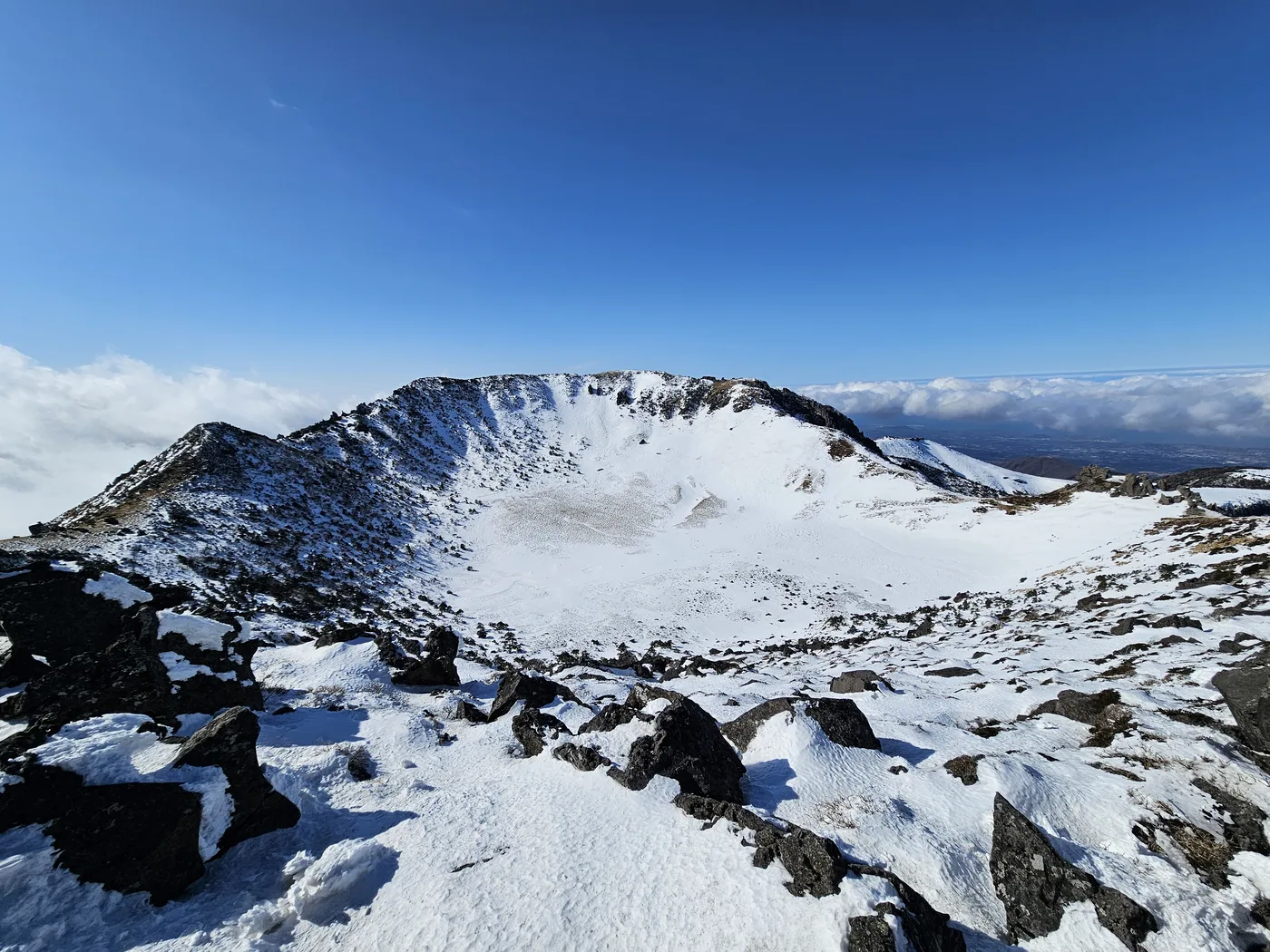
Hallasan is a dormant volcano and, at 1,950 meters, the highest point in South Korea. It last erupted around the year 1007 and forms the core of Jeju’s UNESCO World Heritage listing as a volcanic island. Reaching the crater rim requires a permit booked online in advance, since daily hiker numbers are capped, and the Seongpanak and Gwaneumsa trails are the two routes that reach the summit area.
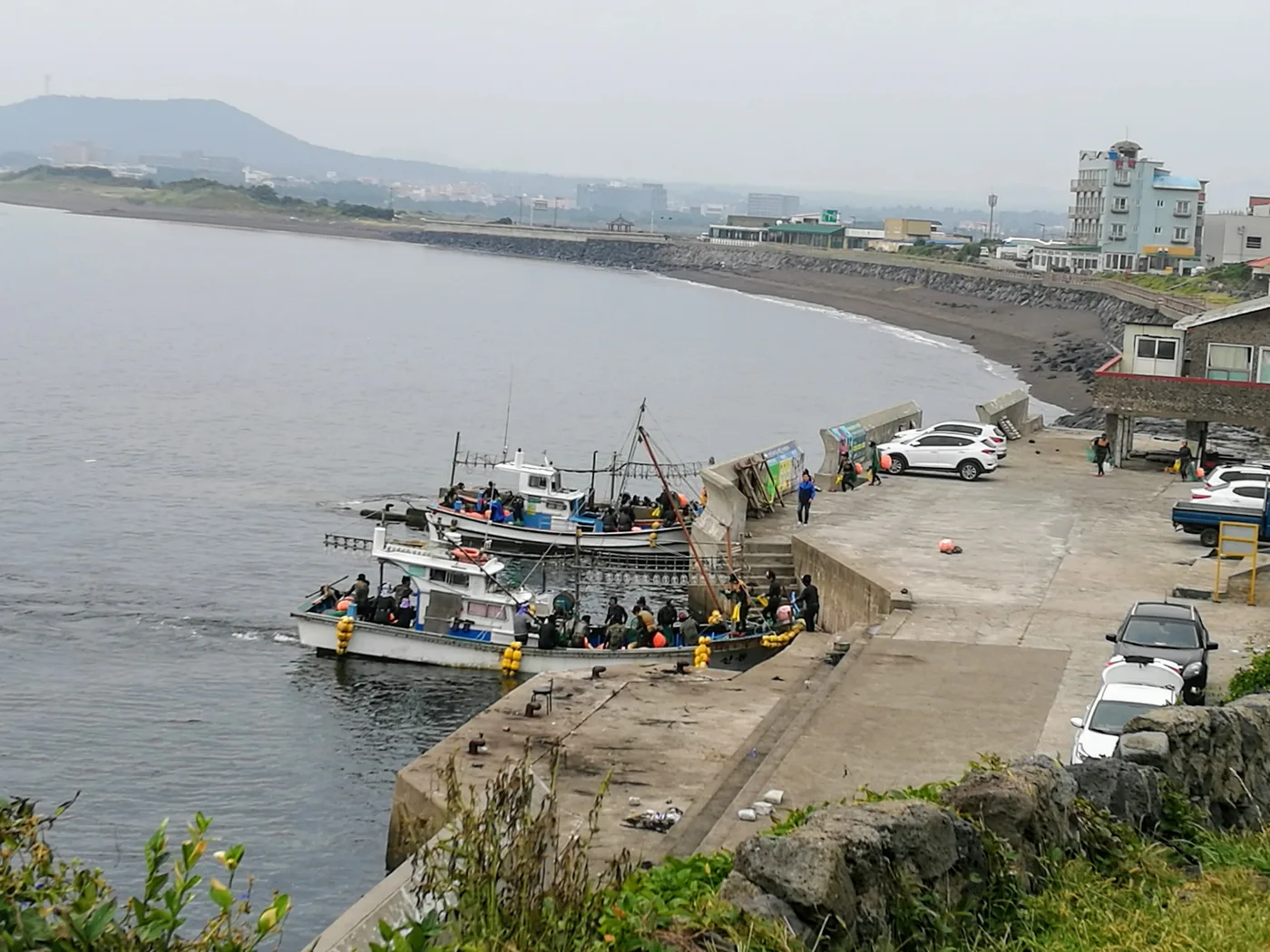
The haenyeo, Jeju’s free-diving women, are a separate UNESCO recognition entirely, listed under Intangible Cultural Heritage of Humanity in 2016 rather than the World Heritage Sites list Hallasan belongs to. They dive up to 10 meters without oxygen tanks to gather abalone, sea urchin, and other shellfish by hand, some into their 80s, working up to seven hours a day across roughly 90 days a year. Their numbers have fallen sharply for decades as the work passes out of fashion with younger generations, which is part of why the UNESCO listing exists at all.
Curious what Jeju’s volcanic underground actually looks like? Our UNESCO World Heritage guide covers Manjanggul Cave’s lava tube in detail, including its 2026 reopening.
Jeju Island: Quick Answers
Effectively yes. Jeju has no subway or train, and buses run on infrequent schedules, so a rental car is the practical way to reach most of the island beyond Jeju City and Seogwipo.
A passport, your home country driving license, and a physical International Driving Permit issued before you travel. Digital copies aren’t accepted, and it can’t be issued once you’re already in Korea.
No. Ferries currently run from Mokpo (about 4.5 hours) and Wando (about 3 hours) instead. Flying from Seoul or Busan remains faster for most visitors.
Spring (March to May) and autumn (September to November) offer the mildest weather and lowest rainfall. Summer brings heat, humidity, and typhoon risk; winter is mild but windy, with occasional snow on Hallasan.
They’re recognized under two different UNESCO programs. Hallasan is part of the Jeju Volcanic Island World Heritage Site (2007). The haenyeo divers are listed separately, under Intangible Cultural Heritage of Humanity (2016).
Planning to combine Jeju with a wider Korea itinerary? Our daily budget guide breaks down costs by travel style across multiple cities.



Comments
Leave a comment