
The DMZ is a buffer zone, not a museum, which is part of why visiting it takes more planning than most day trips. You can’t just show up and wander in. What follows is what a standard tour actually includes, and a straight answer on the one part of a DMZ trip that’s genuinely unpredictable right now.
DMZ Tours at a Glance
Most of the DMZ sits beyond the Civilian Control Line, so independent tourists can’t just drive up and walk in. A guided tour, whether a private bus tour or KORAIL’s own train tour, is required for practically everyone. Bring a physical passport; digital copies aren’t accepted at the checkpoints. Standard tours run daily except Monday, departing Seoul around 7 to 8 AM, and typically cost from about 50,000 to 65,000 KRW for a 6 to 9 hour trip, depending on how many stops are included.
The Standard Route: Imjingak, the Third Tunnel, Dora Observatory
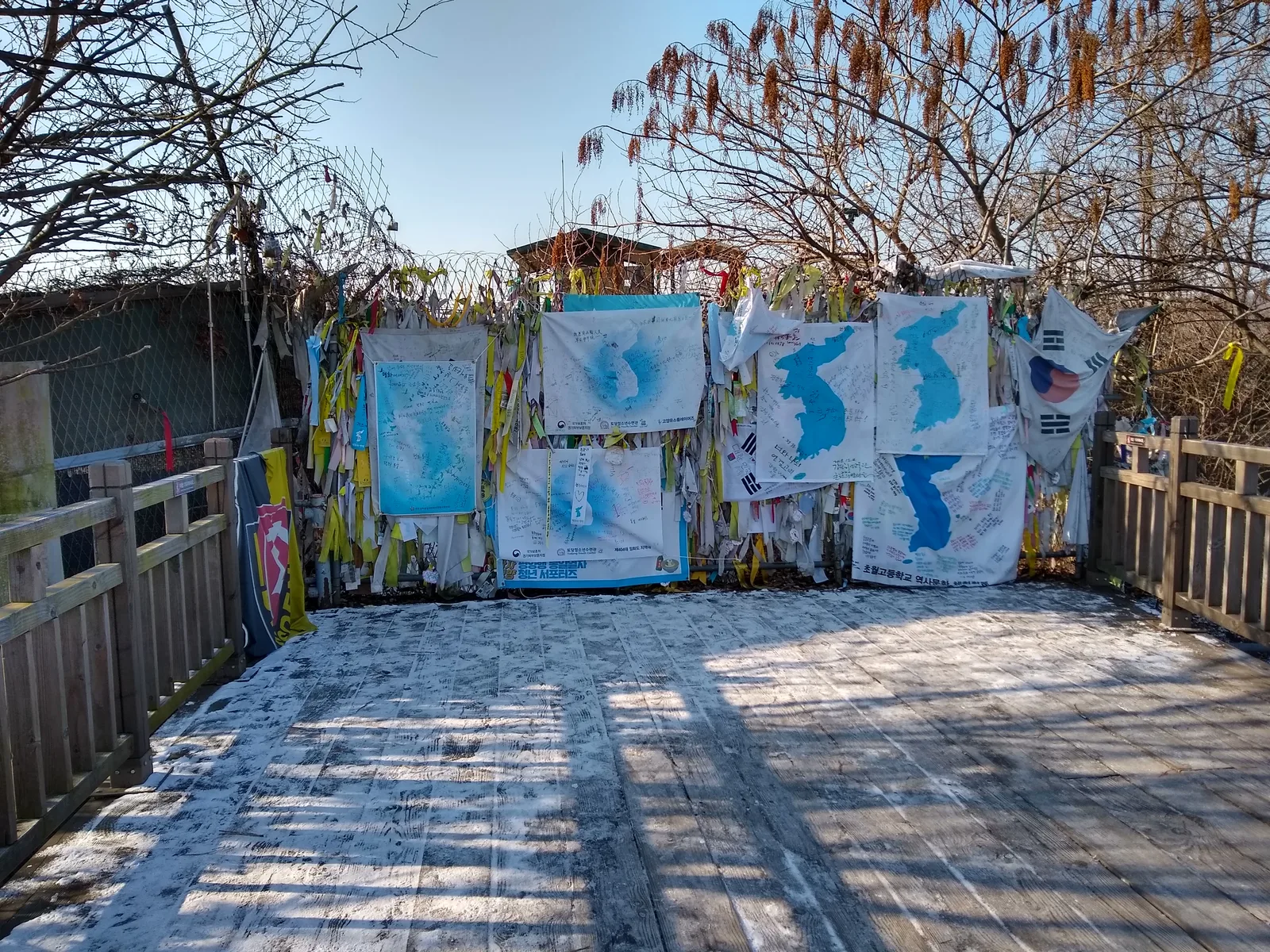
Imjingak is the free, publicly accessible starting point for most tours, a park built around the Freedom Bridge, where the wire fencing is still covered in ribbons and messages left by visitors. It’s outside the Civilian Control Line, so it’s one of the only DMZ-adjacent sites you could technically reach without a tour, though almost everyone visits it as the first stop on a guided route.
The Third Tunnel of Aggression is one of four known infiltration tunnels dug by North Korea and discovered in 1978. Visitors descend on foot or by monorail (an extra 3,000 KRW, recommended if stairs are a concern) to a point close to the Military Demarcation Line. Phones, cameras, and bags are stored in lockers before entering, since photography inside the tunnel is banned, and a hard hat is mandatory, the ceiling is low enough that most adults have to duck.
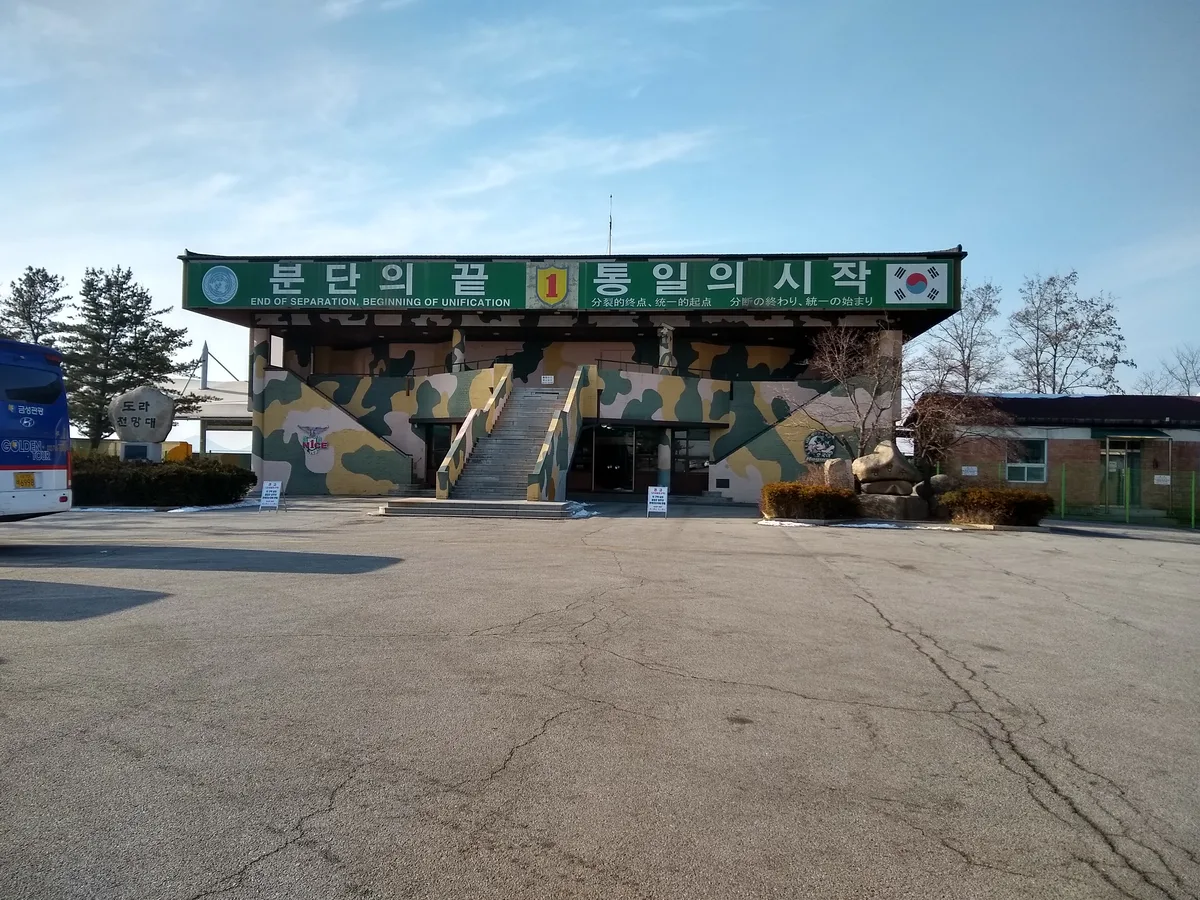
Dora Observatory is the viewing point where visitors look out over the DMZ toward North Korean territory through coin-operated binoculars. On a clear day you can make out Kaesong and the Kijong-dong propaganda village. Most standard tours bundle these three stops together with a stretch at Camp Greaves or a suspension bridge crossing, along with a defector Q&A session on some itineraries.
The DMZ Peace Train: A KORAIL Alternative
If a private bus tour isn’t your preference, KORAIL runs its own DMZ Peace Train, a round-trip, one-day rail tour with three separate route options: the Dorasan Security Tour, the Yeoncheon Dreaming Tour, and the Cheorwon Security Tour. The Dorasan Security Tour, the most established of the three, departs Yongsan and Seoul Station mid-morning, stops at Imjingang Station for an identity check, then continues by connecting bus to Dorasan Peace Park, Dora Observatory, and the Third Tunnel before returning to Seoul in the early evening.
Fares on the Dorasan Security Tour run 36,000 KRW for adults and teenagers, 34,000 KRW for seniors, and 33,000 KRW for children. Reservations go through KORAIL Travel’s own booking site, which is Korean-language only, or in person at a KORAIL Travel Center counter at Seoul or Yongsan Station.
About the JSA and Panmunjom
A visit to the Joint Security Area at Panmunjom, the spot where North and South Korean soldiers stand face to face, is the part of a DMZ trip most people picture. We’re deliberately not giving firm details on it here, because its access has genuinely been unstable since a July 2023 incident led the United Nations Command to suspend civilian tours, and reporting since then has been inconsistent about exactly what’s since reopened and in what form. Some operators with UNC ties, like Koridoor through its USO connection, have offered modified visits at various points, but restrictions can change with little notice.
If a JSA visit matters to your trip, treat the standard DMZ tour above as the reliable part of the plan, and confirm current JSA availability directly with a licensed operator before you book anything around it specifically.
DMZ Peace Tour: Quick Answers
Only Imjingak, which sits outside the Civilian Control Line. Everything past that, including the Third Tunnel and Dora Observatory, requires a guided tour.
A physical passport is required at checkpoints; digital copies aren’t accepted. Most operators also ask for booking at least a week in advance.
No. Phones and cameras are stored in lockers before entry, and photography inside the tunnel itself is banned.
Yes. The KORAIL Dorasan Security Tour runs 36,000 KRW for adults, against roughly 50,000 to 65,000 KRW for a typical private bus tour, though the bus tours often include more stops.
It depends on current conditions, which have changed repeatedly since 2023. Confirm directly with a licensed operator before planning a trip around it.
Basing a DMZ day trip around Seoul? Our 100 must-visit spots guide covers where Imjingak and the DMZ fit alongside the rest of Gyeonggi-do’s day-trip options.



Comments
Leave a comment