
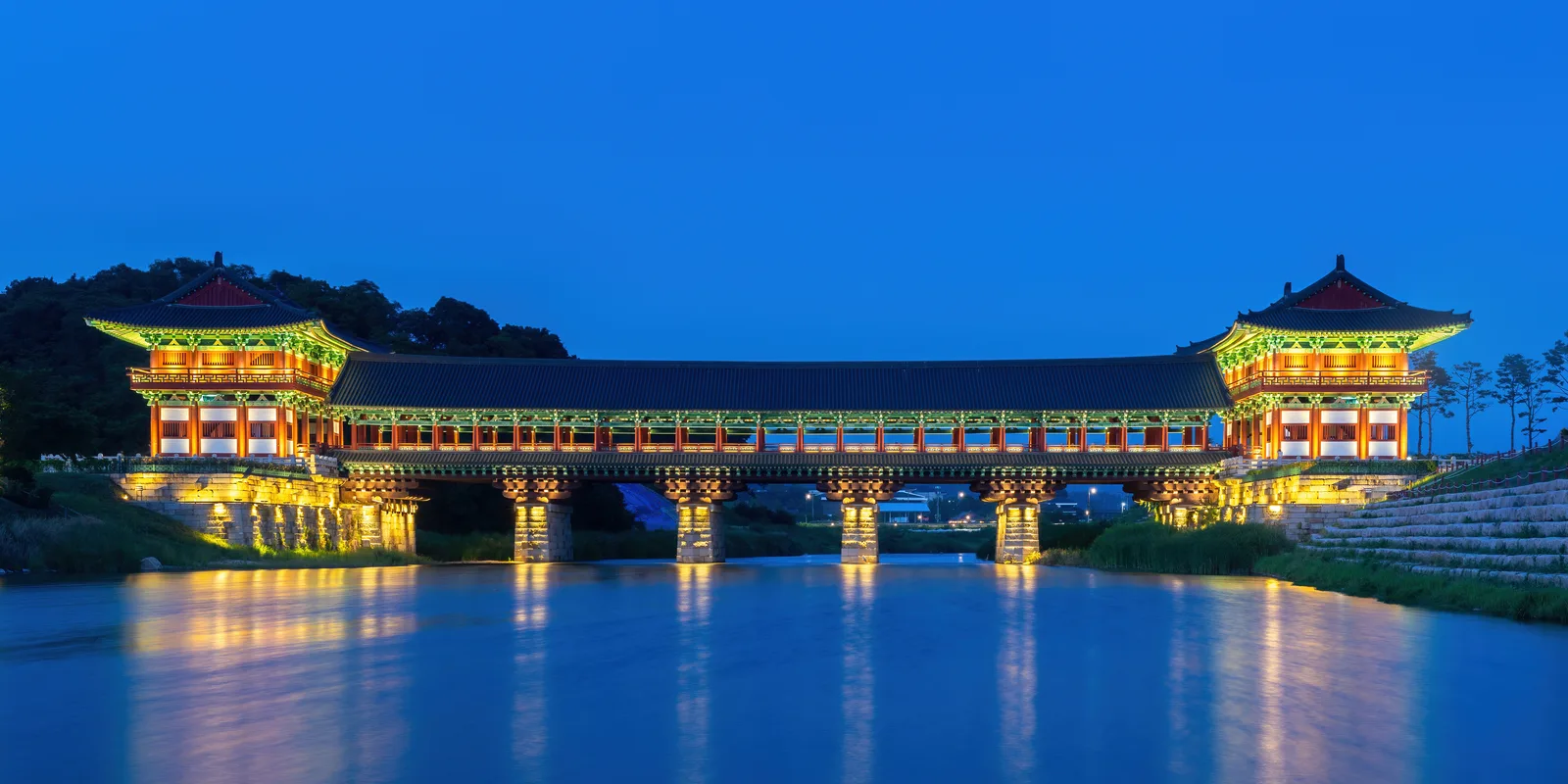
Gyeongju was the capital of the Silla kingdom for close to a thousand years, and it’s often described as a museum without walls, since royal tombs, an ancient observatory, and a restored palace pond all sit inside the modern city rather than fenced off in a separate historical district.
That density is what makes it work as a single, full day out from Seoul or Busan. Most of what matters is walkable once you’re downtown.
Gyeongju at a Glance
The historic core clusters around Daereungwon’s royal tombs, close enough to Cheomseongdae, Donggung Palace, and Woljeonggyo Bridge that a single afternoon covers all four on foot. Bulguksa Temple and Seokguram Grotto, Gyeongju’s UNESCO-listed pair, sit further out and need their own trip out of town, typically by bus.
Getting There: One Station, Renamed
This trips up a lot of visitors reading older guides. Gyeongju used to have two train stations: a downtown stop for regional trains, and Singyeongju Station for KTX, roughly 10 km outside the city center. The downtown station closed in 2021, and in December 2023 Singyeongju was officially renamed Gyeongju Station. There’s now only one station, it’s the same building that used to be called Singyeongju, and it’s still that same distance from downtown.
Book under “Gyeongju,” not “Singyeongju”
Korail’s booking system no longer recognizes the old name. If an older blog post tells you to search for Singyeongju specifically, search “Gyeongju” instead, since that’s the only station left.
KTX from Seoul takes roughly 1 hour 55 minutes to 2 hours 10 minutes, with fares around 43,800 to 50,200 KRW. From Busan, it’s about 35 minutes for around 11,000 KRW. From the station, local buses (routes 60 or 61, about 30 minutes) or a taxi (roughly 12,000 to 15,000 KRW, about 15 minutes) cover the last stretch into downtown Gyeongju.
The Tomb Park and Observatory
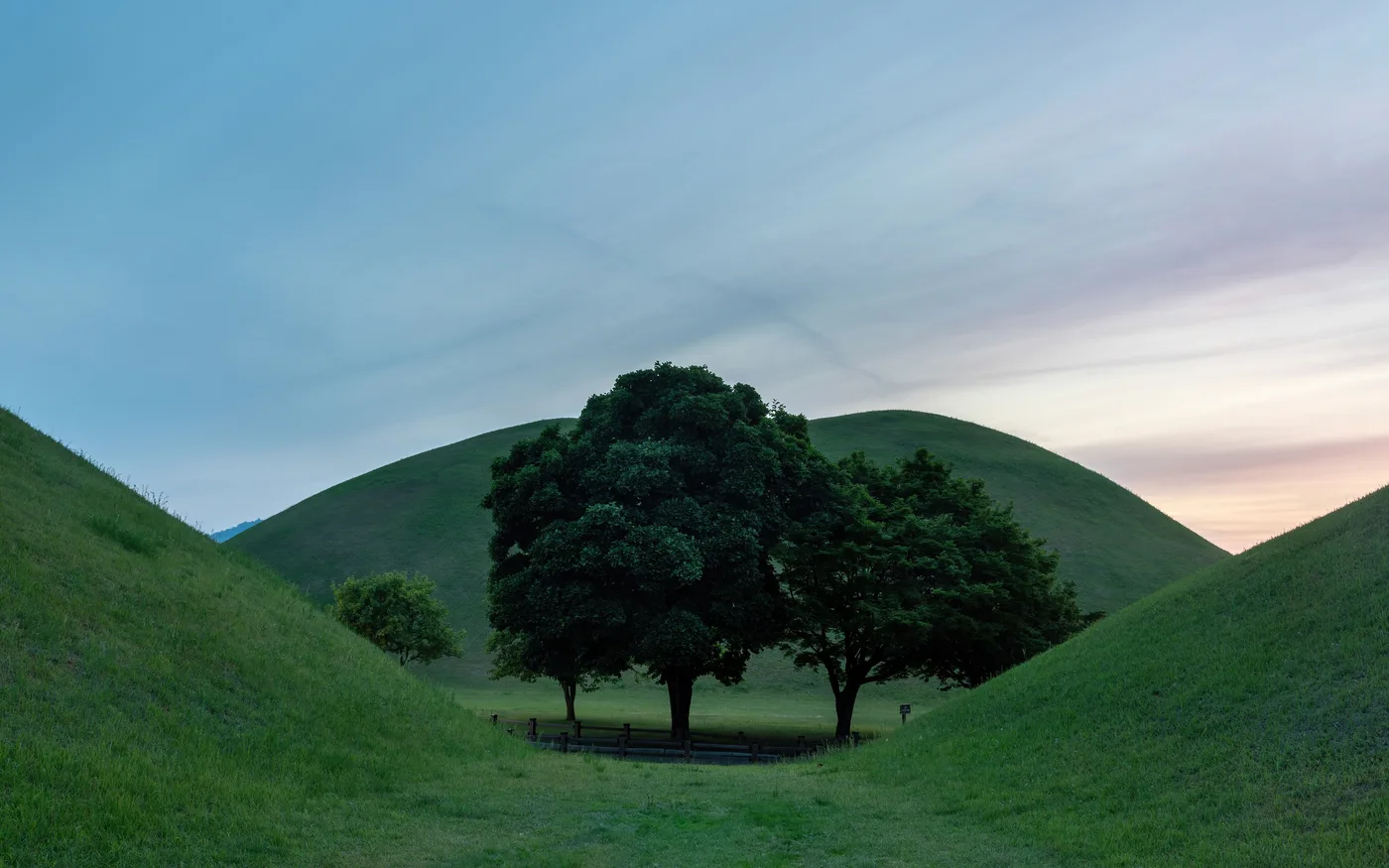
Daereungwon is a park of grass-covered royal burial mounds from the Silla period, admission 3,000 KRW. One tomb, Cheonmachong (the Tomb of the Heavenly Horse), is open to walk inside, with a reconstructed burial chamber and replicas of the gold crown and the painted flying-horse saddle flap found during excavation, the artifacts that gave the tomb its name.
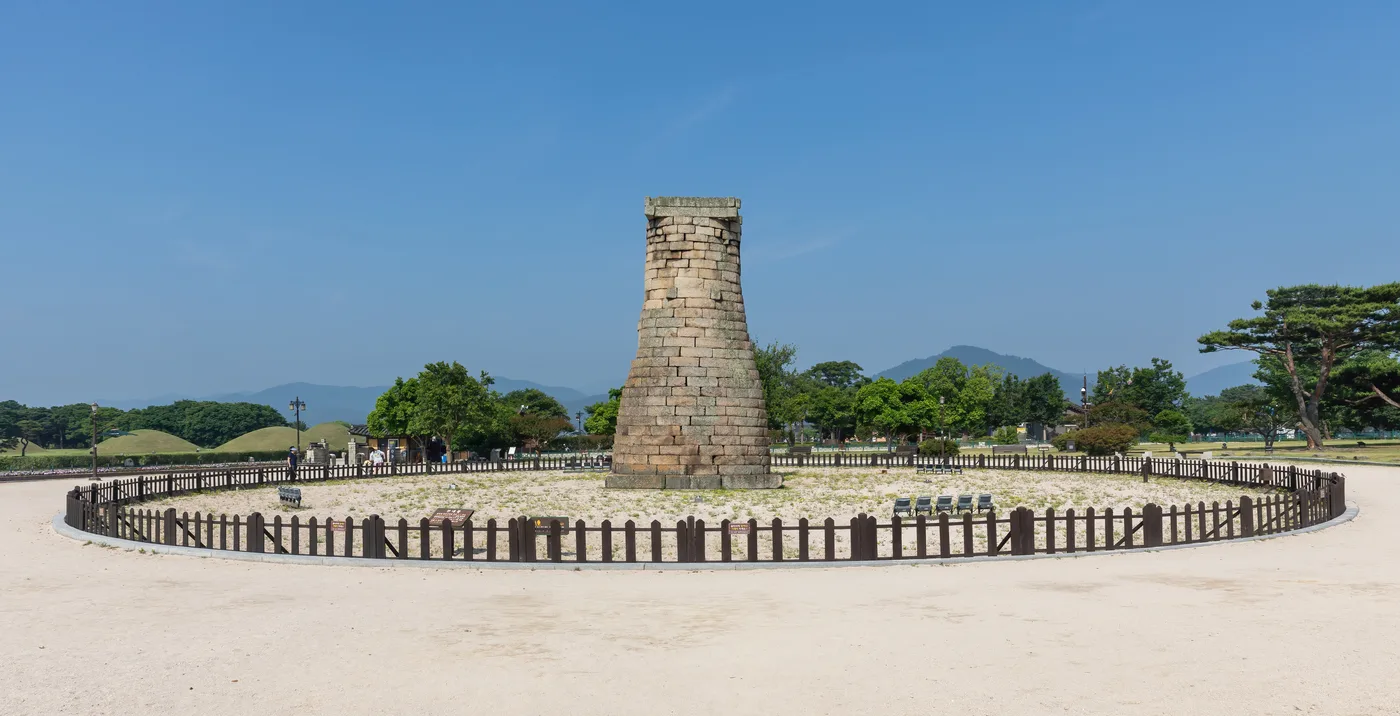
A two-minute walk away, Cheomseongdae is a stone observatory tower built under Queen Seondeok, free to view from outside (the interior isn’t open to visitors), and lit at night alongside a walking path that continues past nearby royal tomb sites.
Gyeongju’s Best Night Views
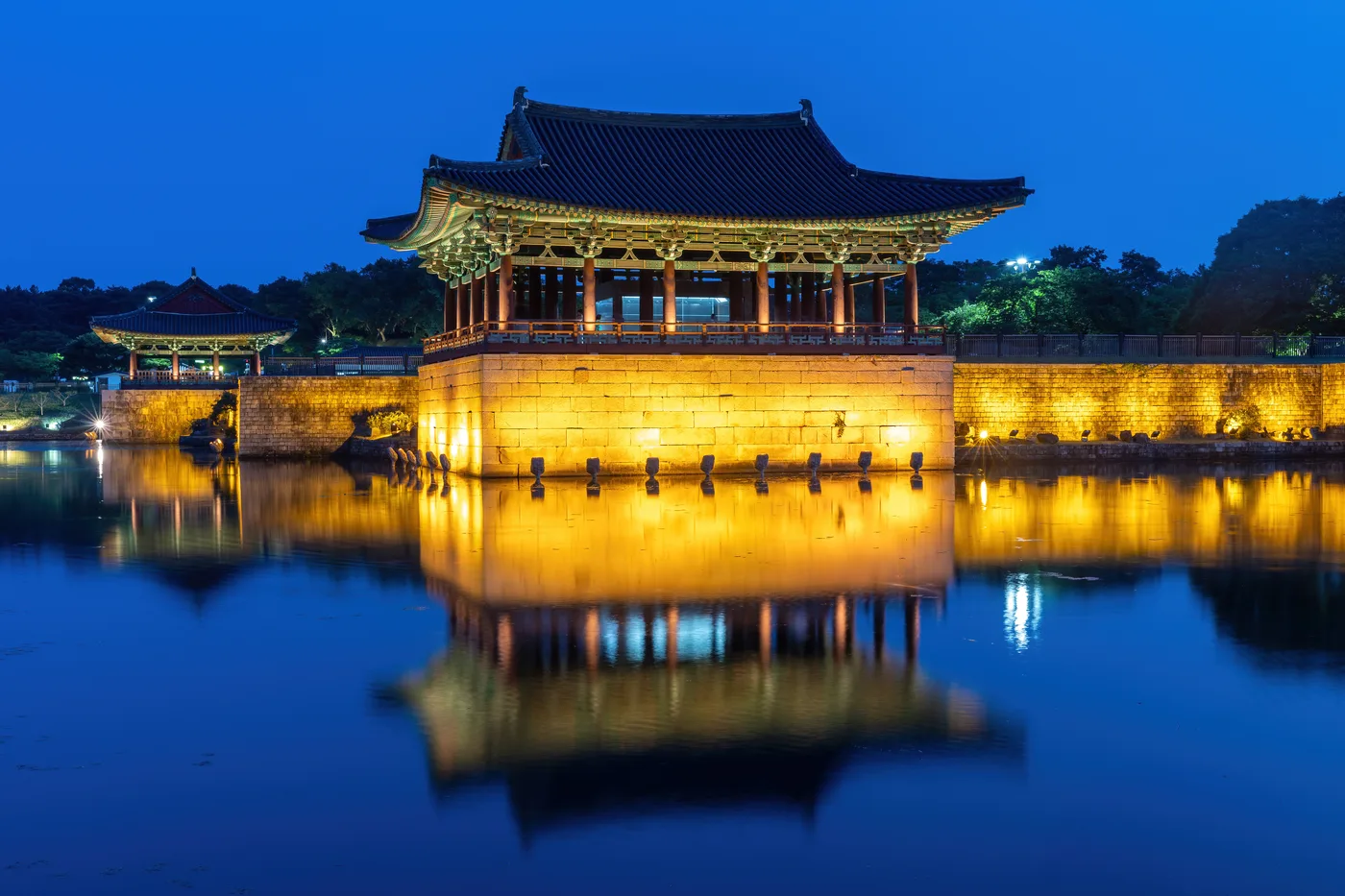
Donggung Palace and Wolji Pond, a former Silla-era secondary palace, is the city’s signature night scene: once the lights come up after sunset, the palace halls reflect across the pond in warm gold. Admission is 3,000 KRW, open 9 AM to 10 PM with last entry at 9:30 PM, about 10 to 15 minutes by bus or taxi from the station area.
Woljeonggyo Bridge, a roughly 61-meter covered wooden bridge over the Namcheon River, is a 2018 reconstruction of a bridge originally built in 760 under King Gyeongdeok. It’s free to visit and, like Donggung Palace, considerably more striking after dark, when the structure and its reflection light up together.
Bulguksa Temple and Seokguram Grotto
Gyeongju’s other major draw sits outside the downtown cluster: Bulguksa Temple and the granite grotto Buddha at Seokguram, both part of Korea’s UNESCO World Heritage list and both free to enter since 2023. Our UNESCO World Heritage guide covers admission, seasonal hours, and how the two sites connect for a half-day visit.
Gyeongju: Quick Answers
No. It was renamed Gyeongju Station in December 2023, after the old downtown station closed in 2021. Search “Gyeongju” when booking trains, not “Singyeongju.”
Roughly 10 km. A local bus (routes 60 or 61) takes about 30 minutes, and a taxi runs about 12,000 to 15,000 KRW and 15 minutes.
Yes, one: Cheonmachong (Tomb of the Heavenly Horse), which has a reconstructed burial chamber and replica artifacts, including the gold crown and painted saddle flap the tomb is named for.
Daytime for Daereungwon and Cheomseongdae, but Donggung Palace and Wolji Pond and Woljeonggyo Bridge are both built around night lighting and are considerably less impressive before dark.
No, they’re outside the main historic cluster and require a separate bus trip, though they’re free to enter and often combined into the same day if you start early.
Combining Gyeongju with Busan on the same trip? Our Busan travel guide covers the 35-minute KTX connection between the two.



Comments
Leave a comment