
There isn’t one “right” transit card for Korea. There are three. Pick the wrong one and you lose a little money or a discount, not your trip.
A regular T-money card covers 90% of visitors. The other two are for specific situations: a Travel Card if you want tourist discounts built in, a Climate Card if you’re staying long enough to ride constantly.
Which Transit Card Should You Actually Buy in Korea?
For most trips, a regular T-money card is the right call. It’s the cheapest to buy, sold everywhere, and works on every subway and bus line in the country.
Reach for a Travel Card instead if you already know you’ll visit the attractions or duty-free shops it discounts. The Climate Card tourist pass is narrower still: it suits people based in Seoul for several days who take four or more rides a day.
All three run on the same T-money network, so none of them is really a wrong choice. The pricier two just trade a higher upfront cost for a particular kind of saving. Here’s what each one buys you.
Regular T-money: Buy It at Any Convenience Store, No ID Needed
A standard T-money card costs about ₩3,000, plus whatever balance you load onto it. Convenience stores sell them: GS25, CU, 7-Eleven, E-Mart24. So do the vending machines in subway stations.
No ID. No sign-up. No app. Hand over cash or a card, say “T-money card, please” and name the amount you want loaded, and the clerk sells and charges it in one go.
How much to load
For a 3-4 day trip, an initial load of ₩30,000-40,000 (roughly ₩10,000/day) covers typical subway and bus use without needing to reload mid-trip. Any unused balance is refundable before you leave.
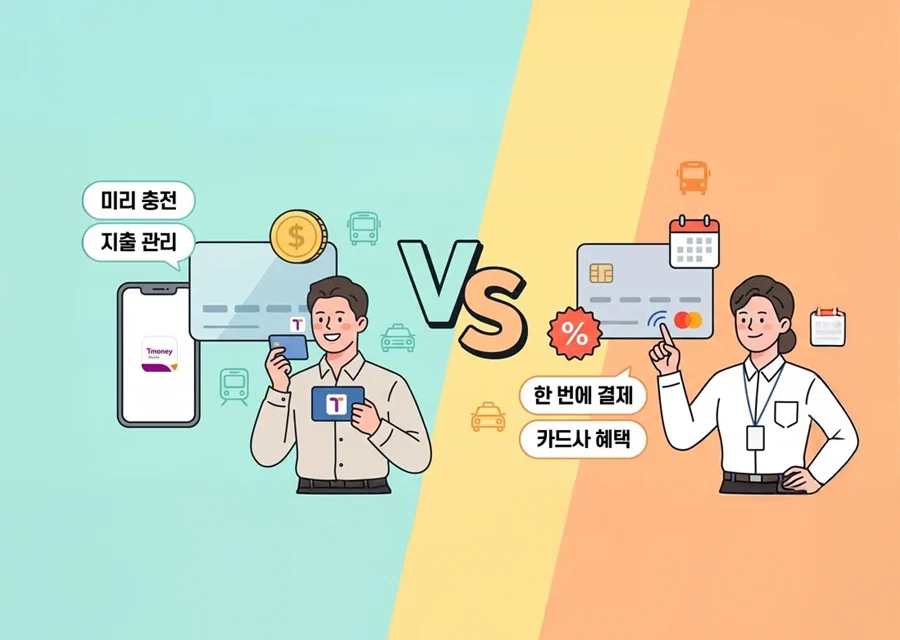
Where does it work? Every subway and bus in Korea, taxis with a card reader, and convenience stores as ordinary payment.
Topping up is just as easy. Use the same convenience stores, or the reload machines in subway stations. Most of those machines speak English, Chinese and Japanese. A few older ones take cash only.
T-money Travel Card and Travel Card Plus: Are the Extra Perks Worth It?
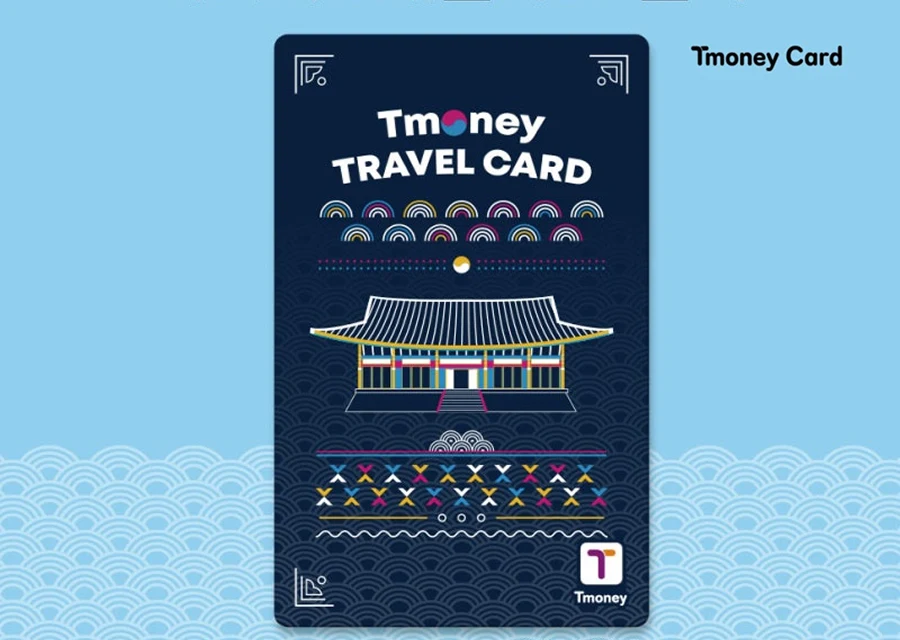
The T-money Travel Card (about ₩4,000) is a regular T-money card with tourist discounts layered on top. You’ll find it at convenience stores and the Incheon Airport bus ticket counters. It unlocks partner discounts at attractions and shops across Seoul, Gyeonggi and Busan.
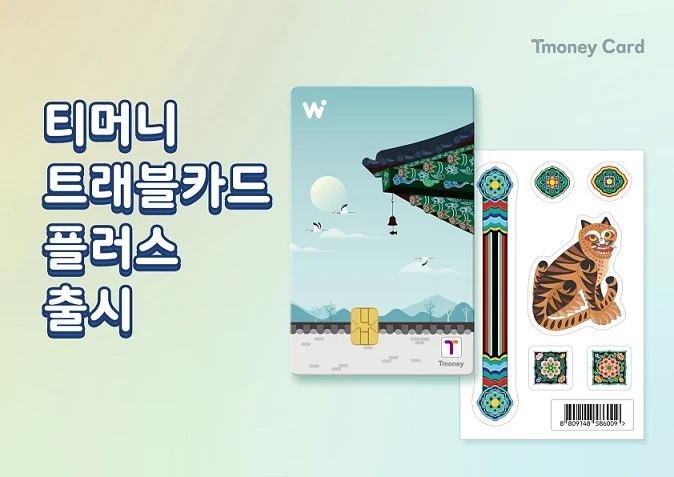
The step up is Travel Card Plus, about ₩6,000. It adds currency exchange, IC payment, and WOWPASS app integration.
Its discount list is specific enough to plan around: 10% off N Seoul Tower, 30% off Everland, 6% cashback at airport duty-free, and up to 5% cashback on mobile gift cards at Olive Young, Daiso and convenience stores.
The math is simple. That extra ₩1,000-3,000 only pays for itself if you actually visit the partner attractions.
Not going to N Seoul Tower or Everland this trip? Then skip the Travel Card. A regular T-money does the exact same job for transit.
Climate Card Tourist Pass: Unlimited Rides If You’re Moving a Lot
Seoul’s 기후동행카드 (Climate Card) tourist pass is an unlimited-ride ticket, not a rechargeable balance. Pick a duration and ride as much as you want inside that window, on Seoul’s subway and its city and village buses.
Prices run ₩5,000 for 1 day, ₩8,000 for 2, ₩10,000 for 3, ₩15,000 for 5, and ₩20,000 for 7. Buy it at the Myeong-dong or Seoul Tourism Plaza tourist information centers, at customer service desks on subway lines 1-8, or at convenience stores near stations.
Since March 2026 the new-model ticket machines on lines 1-8 sell it straight to a foreign credit or debit card, with roughly a 3.7% service fee.
Two limits to know. The Climate Card doesn’t cover the Sinbundang Line, express buses, airport buses, or anything outside Seoul. And the mobile version still isn’t available on iPhone.
Does the math work out for you?
A 1-day pass (₩5,000) breaks even against a regular T-money card at around 4 rides in a day (4 × ₩1,550 subway fare ≈ ₩6,200). That’s realistic if you’re sightseeing across multiple neighborhoods. For a slower trip with 2-3 rides a day, a regular T-money card stays cheaper. See our Seoul subway and bus guide for current fares and how transfers work.
Korea Transit Cards: Quick Answers
T-money (₩3,000) is a plain rechargeable transit card usable nationwide. T-money Travel Card (₩4,000) and Travel Card Plus (₩6,000) are the same card with tourist-attraction discounts added. Climate Card (₩5,000-20,000 by duration) is a separate unlimited-ride ticket valid only on Seoul subway and city/village buses.
Yes, every time. Tapping only when boarding and skipping the exit tap is the single most common mistake foreign travelers make with Korean transit cards. It blocks the transfer discount and can add an extra charge. The subway doesn’t require an exit tap except on the Sinbundang Line.
No, on the subway each rider needs to tap their own card. If you’re traveling as a group, buy one T-money card per person. That’s the simplest way to avoid trouble at the gate.
Yes, as of March 2026, new-model ticket machines on Seoul subway lines 1-8 accept foreign credit and debit cards directly, with about a 3.7% service fee. Before that, cash or a Korean payment method was required at the sales counters listed above.
An insufficient balance can get you turned away at a subway gate or bus door, so check your balance (shown on the card reader after each tap, or in the T-money app) before setting out, especially before your last ride of the day.
Curious how these three stack up against WOWPASS specifically? See our T-money vs WOWPASS vs Climate Card comparison. Or check whether your foreign credit card can tap directly on Seoul transit yet.
Safe travels!



Comments
Leave a comment