
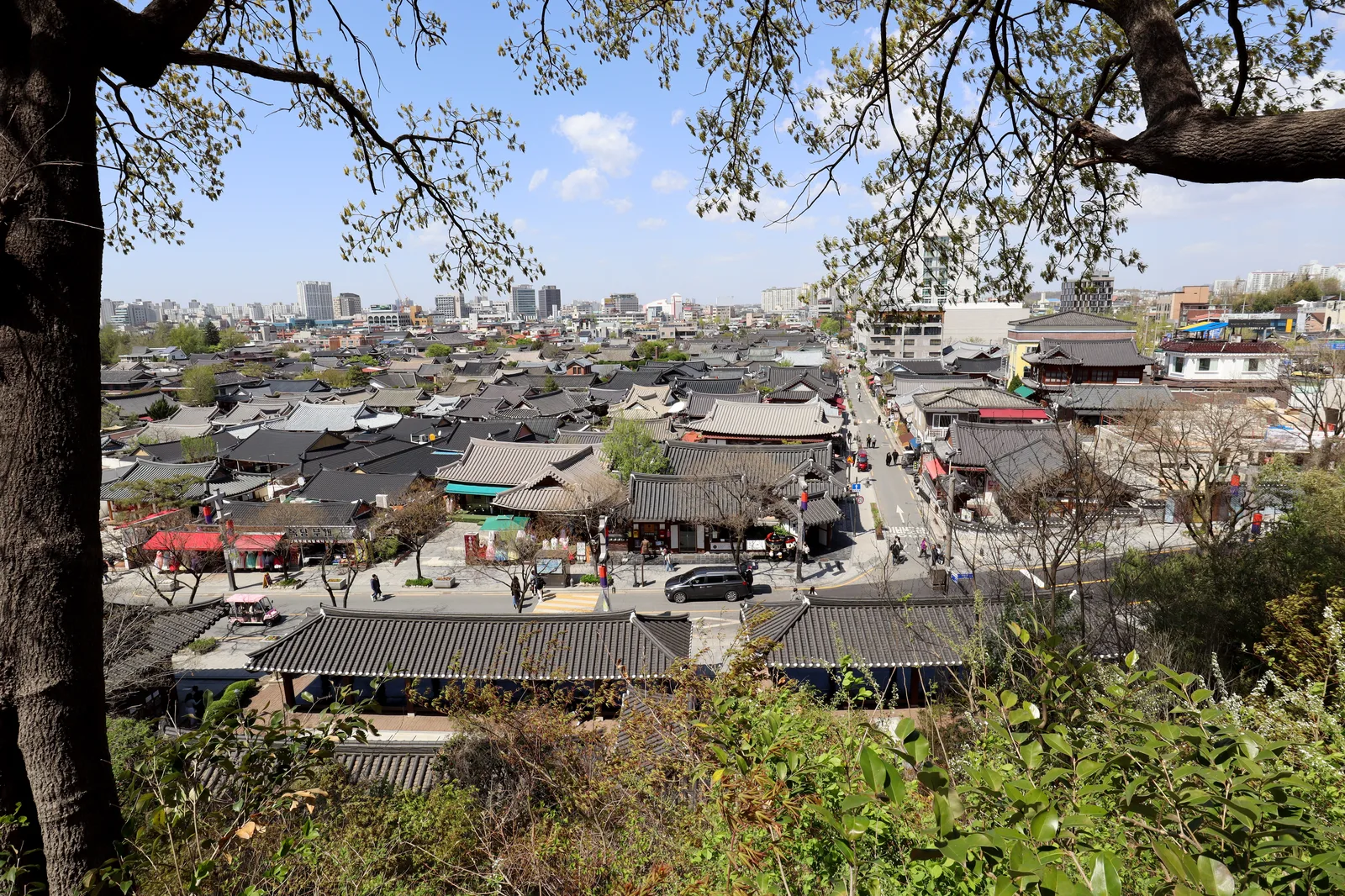
Jeonju has been called Korea’s “city of art” for centuries, and it earned that reputation partly through hanji, traditional mulberry paper, which the city produced in such volume during the Joseon dynasty that a majority of Korea’s hanji supply reportedly came from here. That same craft-city identity is why roughly 700 hanok houses still stand together in one neighborhood today, most of them built in the 1910s.
The village isn’t a museum reconstruction. It’s a lived-in district that happens to have kept its traditional roofline, and that’s most of why it draws visitors at all.
Jeonju at a Glance
The hanok village sits in the Gyo-dong and Pungnam-dong neighborhoods, walkable as a single unit, with the city’s major landmarks, a Joseon-era royal shrine, a colonial-era cathedral, and a 14th-century gate, standing within a few minutes of each other rather than spread across the city.
Getting There
A direct KTX runs from Seoul’s Yongsan Station to Jeonju Station in about 1 hour 42 minutes. An express bus from Seoul’s Central City Terminal takes roughly 2 hours 40 minutes, departing every 15 minutes, a reasonable alternative if train tickets are sold out. Jeonju Station itself sits a short taxi or bus ride from the hanok village, not directly inside it.
The Hanok Village: Gyeonggijeon, Jeondong Cathedral, and Pungnammun
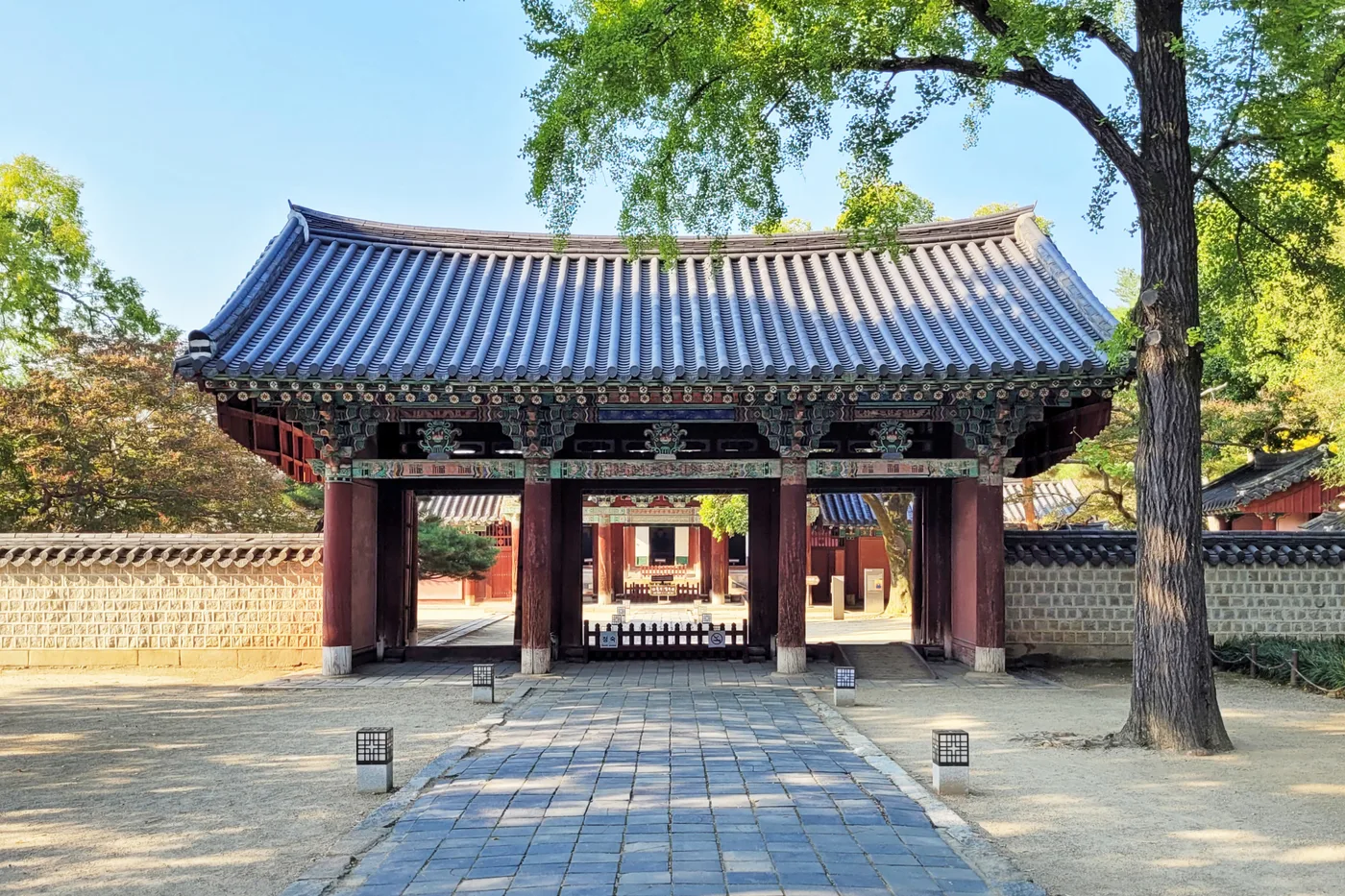
Gyeonggijeon, built in 1410, houses a portrait of King Taejo, founder of the Joseon dynasty, and its palace-style construction makes it the only building of its kind south of the Han River. Admission is 3,000 KRW for adults, hours run 9 AM to 7 PM from March through October and 9 AM to 6 PM the rest of the year, closed Mondays and January 1st.
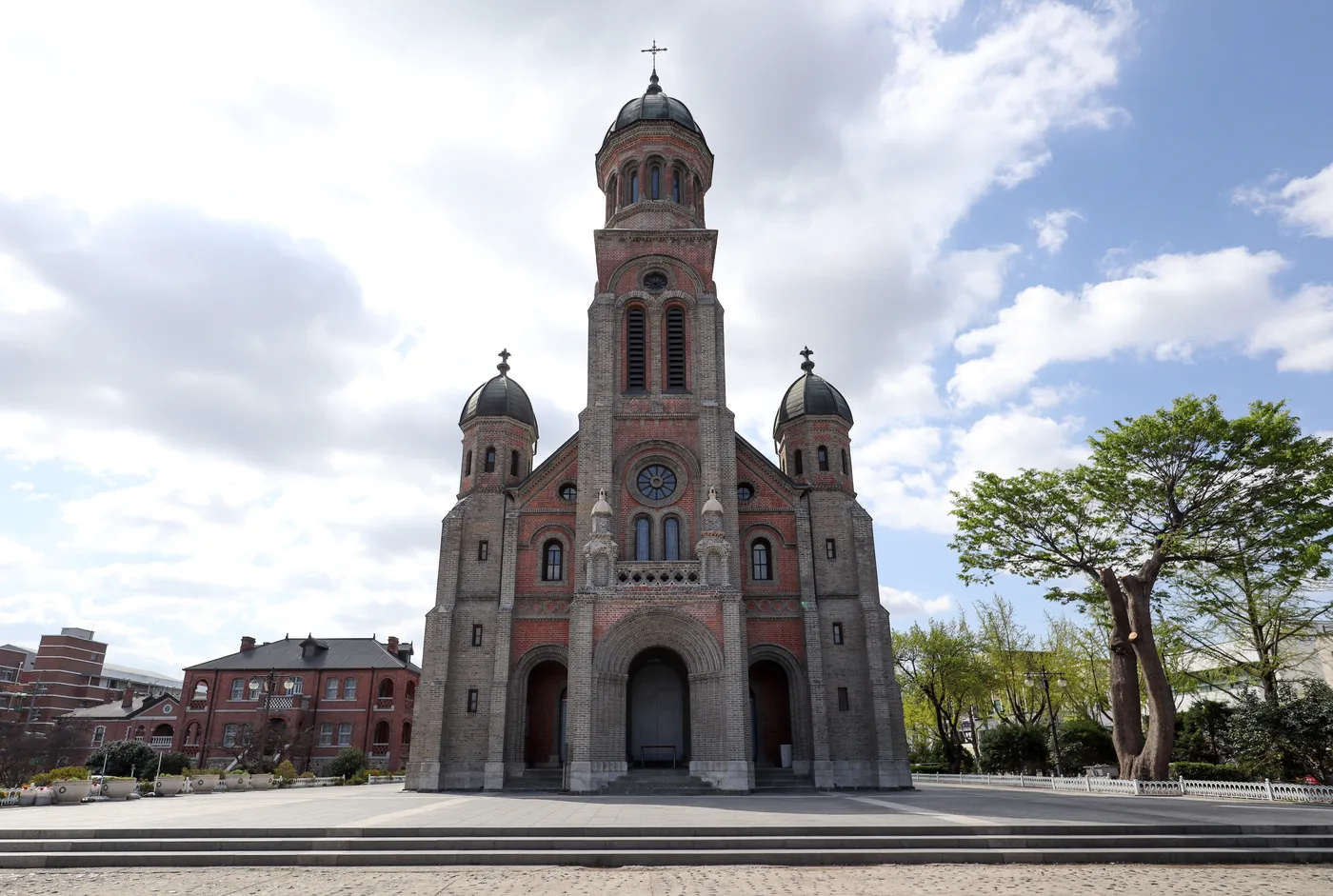
A short walk away, Jeondong Cathedral, completed in 1914 in Romanesque style, stands on the execution ground where Korea’s first Catholic martyrs, Yun Ji-chung and Kwon Sang-yeon, were put to death for their faith. The building’s brick towers look distinctly European against the hanok rooflines surrounding it, a contrast similar to Seoul’s Deoksugung Palace mixing a Western stone hall in with traditional halls.
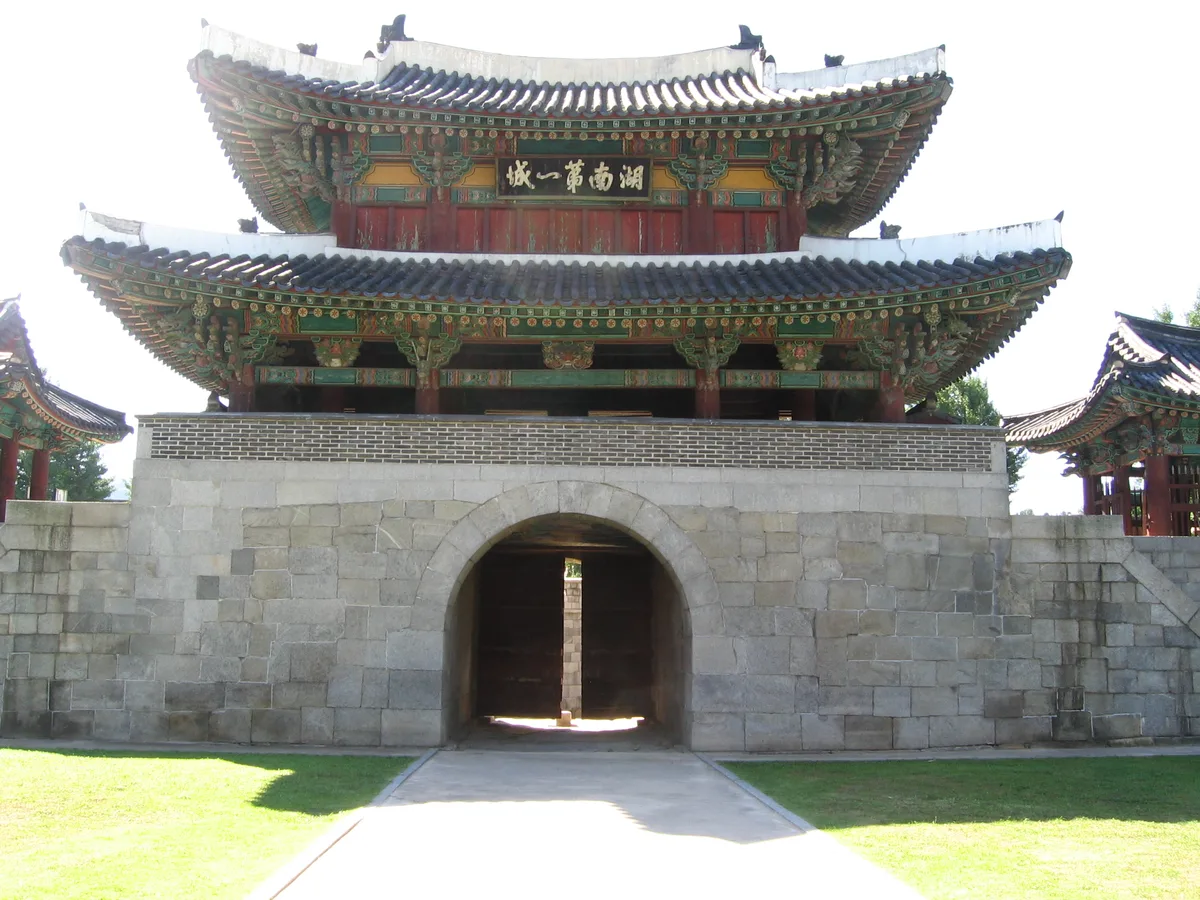
Pungnammun Gate, first built in 1389, is Jeonju’s most significant surviving landmark and one of the few old city gates left standing in Korea, designated Korea Treasure No. 308.
Wearing Hanbok Gets You In Free
Rental shops cluster around the village, with Hanboknam, about a 3-minute walk from Gyeonggijeon, stocking roughly 1,000 sets in sizes from XS to XXL, plus children’s hanbok starting from age one. A rental runs 10,000 to 20,000 KRW for 2 to 4 hours.
The rental fee usually pays for itself
Wearing hanbok gets you free admission to Gyeonggijeon and most other paid sites in the village, the same rule that applies at Seoul’s palaces. Between two or three stops, the admission you’d otherwise pay can cover most of the rental cost.
What to Eat: Bibimbap and Two Local Classics
Jeonju bibimbap is the dish the city is built around, historically counted as one of Joseon Korea’s three great regional foods alongside Pyongyang naengmyeon and Gaeseong tangban. The Jeonju version is served in a brass bowl, rice topped with beef tartare, bean sprouts, and a raw or fried egg, mixed together at the table.
Kongnamul gukbap, a bean sprout soup served with rice, is the local hangover cure, clean-tasting but with a spicy kick, and a strip of specialist restaurants for it clusters near Nambu Market. Moju, a warm, sweet rice wine simmered with medicinal herbs and brown sugar, is the drink that traditionally follows either meal.
Jeonju: Quick Answers
About 1 hour 42 minutes by direct KTX from Yongsan Station, or roughly 2 hours 40 minutes by express bus from Central City Terminal.
Often, yes. Hanbok rental runs 10,000 to 20,000 KRW for a few hours, and wearing it gets you free admission to Gyeonggijeon and most other paid sites in the village, which can offset a meaningful chunk of the rental cost.
A Joseon-dynasty shrine built in 1410 to house a portrait of King Taejo, the dynasty’s founder. Its palace-style architecture makes it the only building of its kind south of the Han River.
Jeondong Cathedral, completed in 1914, was built on the site where Korea’s first Catholic martyrs were executed. It predates the modern hanok village’s tourism identity and stands as its own historical layer.
Kongnamul gukbap (bean sprout soup) for a savory, hangover-friendly meal, and moju, a warm sweet rice wine simmered with medicinal herbs, as the drink that traditionally follows it.
Curious what else counts as essential Korean food beyond Jeonju’s specialties? Our must-try Korean food guide covers the dishes worth prioritizing nationwide.



Comments
Leave a comment