
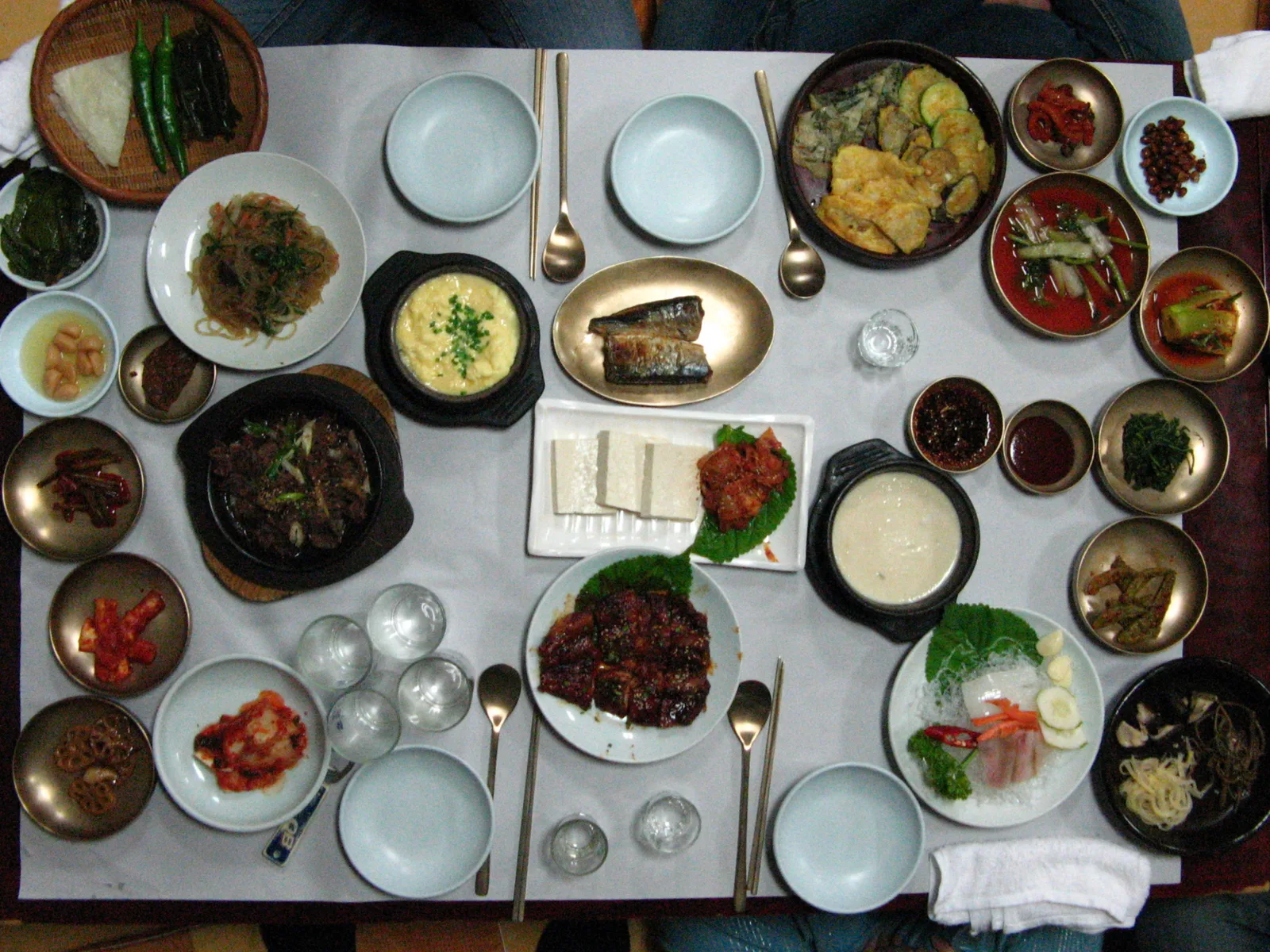
Most Korean etiquette rules trace back to one idea: age and seniority set the order of almost everything, from who eats first to who speaks first in a meeting. You don’t need to memorize all of it as a visitor, but a handful of rules come up often enough on an ordinary trip that knowing them in advance avoids an awkward moment.
Korean Etiquette at a Glance
Korea’s social etiquette is rooted in Confucian tradition, where age determines a clear senior-junior relationship even between people just a year apart. That single idea explains why the eldest person at a table eats first, why younger people pour drinks for older ones rather than the other way around, and why so many gestures (bowing, handing something over, receiving a drink) involve visibly showing respect with the body rather than just words.
At the Table
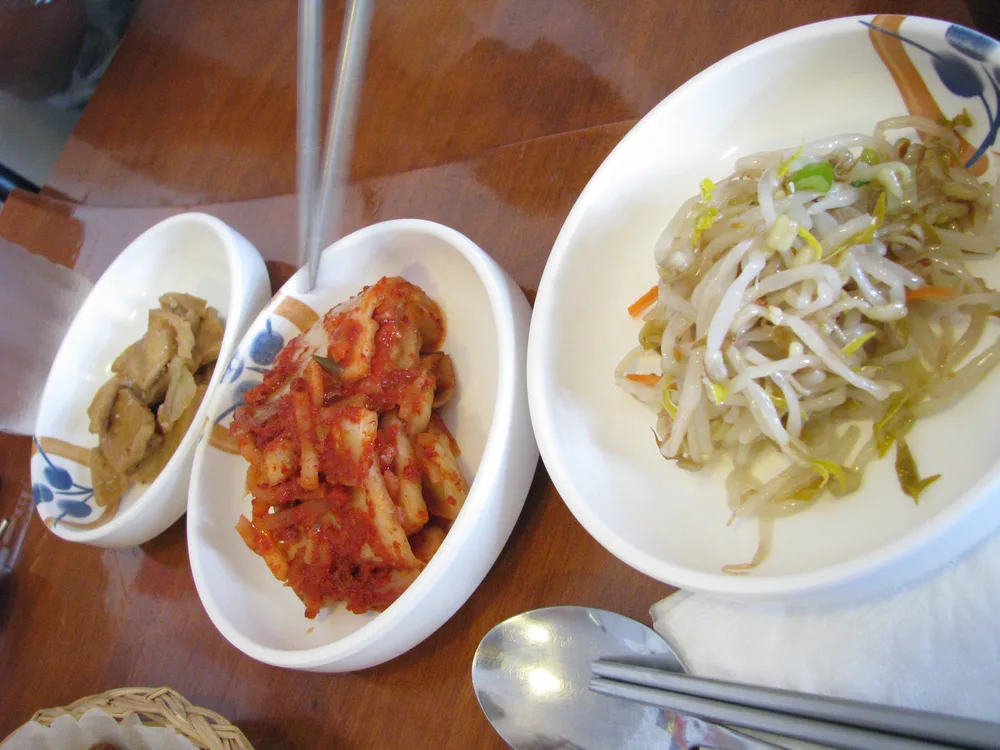
The spoon and chopsticks each have a job and don’t mix: the spoon handles rice and soup, chopsticks handle everything else, and holding both in one hand at the same time reads as sloppy table manners. Never leave chopsticks standing upright in a bowl of rice, since that specifically resembles incense offered to the dead and reads as a genuine bad omen, not just poor manners. When they’re not in use, lay them flat on the table or a rest rather than across a bowl.
If you’re eating with elders, it’s polite to wait for the eldest person to start first and to still be eating (or at least at the table) when they finish, rather than getting up right away. Drinks work on the same logic: pour with both hands (or one hand supported at the wrist by the other) when serving someone older, and hold your own glass with both hands when someone older pours for you. Turning your head slightly away from the table when you actually drink is a small additional courtesy in more formal settings. Pouring your own drink is generally avoided; the expectation is that whoever you’re eating with pours for you, and you return the gesture for them.
Everyday Manners
Shoes come off before entering a home, a traditional restaurant with floor seating, a temple, or a clothing store’s fitting room, so it’s worth wearing shoes you can slip off easily and socks without holes on any day you’ll be visiting one of these. A slight bow, 15 to 20 degrees, covers most everyday greetings with shopkeepers or casual acquaintances; save a deeper bow of around 30 degrees for more formal situations or when greeting someone clearly senior to you.
Handing something to someone, whether it’s cash at a register, a gift, or a business card, is more polite done with both hands, or with one hand supported at the wrist or forearm by the other. The same applies when receiving something back. Business cards specifically get a bit more ceremony: take a moment to actually look at what’s handed to you rather than pocketing it immediately, and if you’re sitting down, set it on the table in front of you rather than putting it away right away.
Korean Etiquette: Quick Answers
Yes, this one is taken seriously rather than being a minor manners issue. Upright chopsticks in a rice bowl resemble incense offered at a memorial, so it reads as a genuine bad omen, not just clumsy table manners.
It’s considered polite, especially in a more traditional or family setting. In casual restaurant meals among friends of similar age, it matters much less.
It’s generally avoided in a group setting. The expectation is that people pour for each other, using both hands when serving someone older.
Private homes, traditional restaurants with floor seating, temples, and fitting rooms are the most common places. Most modern restaurants and cafes with regular chairs don’t require it.
A small nod of 15 to 20 degrees covers most everyday interactions. Save a deeper 30-degree bow for formal situations or clearly senior people.
Planning to eat your way through Korea? Our must-try Korean food guide covers what to order alongside these table manners.



Comments
Leave a comment