
Three numbers cover almost everything that can go wrong on a trip to Korea. Knowing which one to dial before you need it saves the panic of guessing in the moment.
None of them require fluent Korean. Here’s how each one actually works, and what to do about the two situations they don’t cover directly: a lost passport and a natural disaster alert.
What Number Do You Call in an Emergency in Korea?
Call 112 for police, crime or a safety threat. Call 119 for fire, a medical emergency or an ambulance. Call 1330 for everything travel-related that isn’t life-threatening, from a language barrier to lost items to general trip questions.
| Number | What it’s for | Language support |
|---|---|---|
| 112 | Police, crime, immediate danger | Say “English please” for a 3-way interpreter |
| 119 | Fire, ambulance, medical emergency | Say “English please” for a 3-way interpreter |
| 1330 | Travel help, non-emergency questions | Korean, English, Japanese, Chinese, Russian, Vietnamese, Thai, Indonesian |
112 and 119: What Each One Actually Handles
Both numbers work free from any phone, including one without a Korean SIM, and both connect to a live operator immediately. Neither requires you to speak Korean to get help moving.
If the operator doesn’t speak English, say “English please” or “Interpreter please.” That triggers a 3-way call bringing in a professional interpreter, so you end up describing your situation in your own language while the interpreter relays it to the dispatcher in real time.
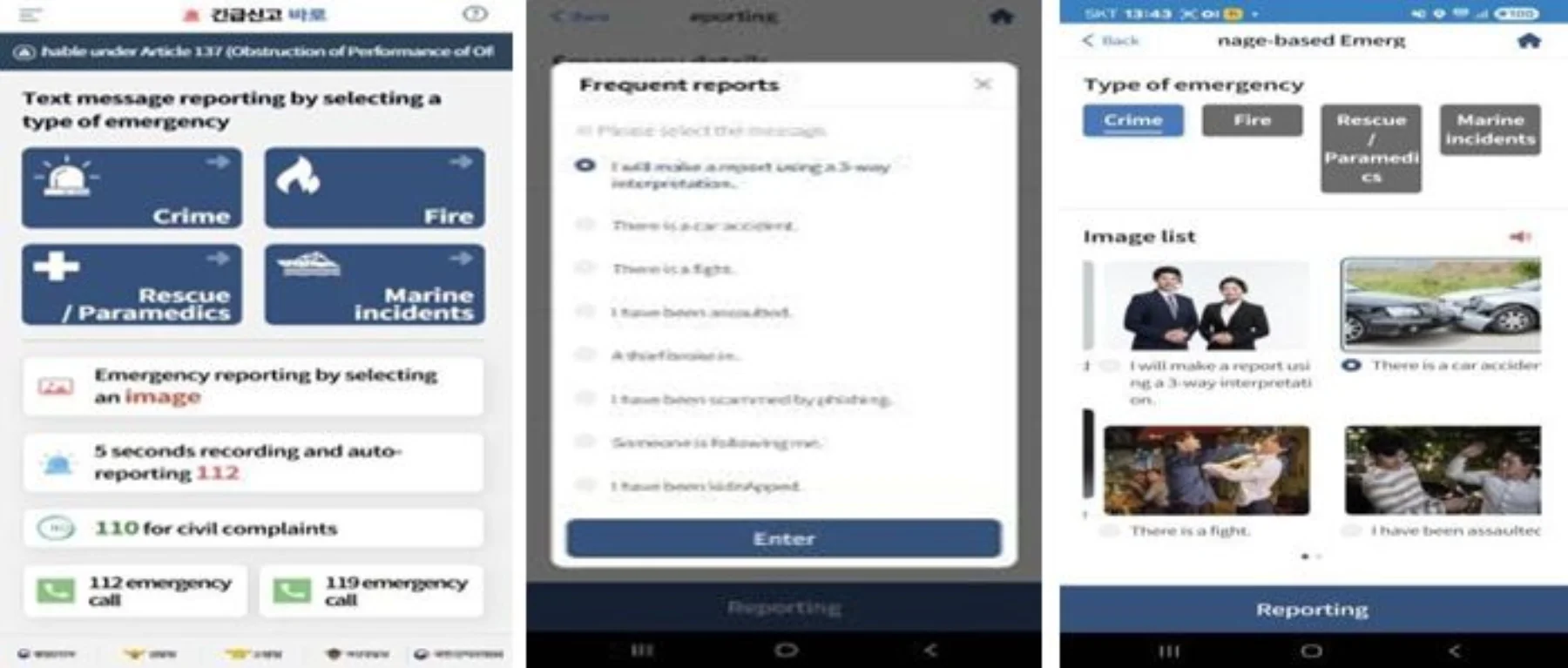
If speaking isn’t an option, the Baro Emergency Reporting App lets you file a report by selecting a category, crime, fire, or rescue and paramedics, and either typing a message or choosing from a list of common situations shown as images. It also picks up your GPS location automatically, so you don’t have to describe where you are.
112 also handles theft and scams, not just active danger
Had something stolen, or think you’ve been scammed? That’s still 112, not 1330. The travel helpline can guide you through the process in your language, but the actual police report goes through 112 either way.
1330: The Number for Everything That Isn’t Life-Threatening
The Korea Travel Helpline runs 24 hours a day in eight languages: Korean, English, Japanese, Chinese, Russian, Vietnamese, Thai and Indonesian. It’s free over Wi-Fi, though your carrier’s normal data rates can still apply.
Use it for anything that needs a human who speaks your language but isn’t a police or medical emergency. A taxi driver dispute, directions when you’re completely lost, help booking something, a translation you’re stuck on. It also works over chat, not just a phone call, if you’d rather type than talk.
Lost Passport, Hospital Visits, and Natural Disaster Alerts
None of the three numbers above directly replace your passport, though 1330 can help you figure out the right next step in English if you’re not sure where to start.
A lost or stolen passport always goes through your own country’s embassy or consulate in Korea, not a Korean government office. Most are based in Seoul. Look up your specific embassy’s emergency contact before you travel, since the process and required documents vary by nationality.
For a medical situation that isn’t quite a 119-level emergency, larger hospitals in Seoul and other major cities run dedicated international clinics with English-speaking staff, aimed specifically at foreign patients and often able to help with travel insurance paperwork directly. For anything urgent, 119 dispatch can also direct you to the nearest emergency room and arrange transport.
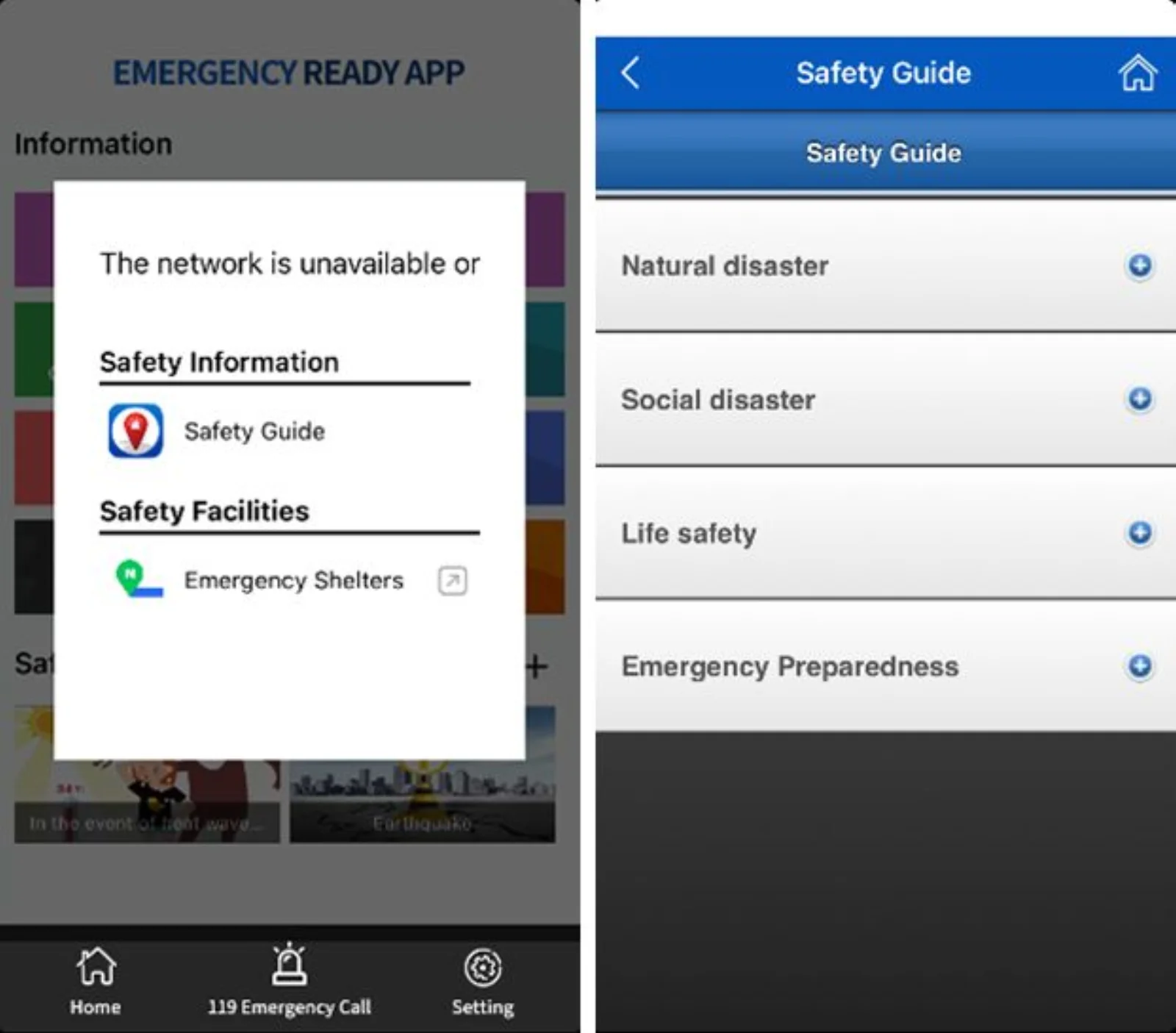
For typhoons, earthquakes and other natural or social disasters, the Emergency Ready App runs in 14 languages and pushes alerts along with a safety guide covering natural disasters, social disasters, general life safety and emergency preparedness. It also maps the nearest emergency shelters and links straight to 119.
Korea Emergency Numbers: Quick Answers
112 for police and crime, 119 for fire, ambulance and medical emergencies. Both are free, work without a Korean SIM, and connect you to an English interpreter if you say “English please.”
The Korea Travel Helpline, a 24-hour, 8-language line for non-emergency travel problems: language barriers, general questions, disputes, or help figuring out what to do next. It’s not a substitute for 112 or 119 in an actual emergency.
Not always directly, but saying “English please” or “Interpreter please” connects a professional interpreter to the call within moments, so a language barrier doesn’t block you from getting help.
Contact your own country’s embassy or consulate in Korea, not a Korean government office. Most are in Seoul. Requirements differ by nationality, so it’s worth noting your embassy’s contact details before you travel. 1330 can help you navigate the process in English if you’re unsure where to start.
Yes. The Baro Emergency Reporting App lets you file a police, fire or medical report by selecting categories and pre-written situations instead of speaking, with automatic GPS location. The Emergency Ready App separately covers natural disaster alerts and safety guidance in 14 languages.
Planning ahead for the trip itself? Our Korea travel budget guide and entry requirements guide cover the basics before you land.
Safe travels.



Comments
Leave a comment