
Korea runs a genuinely packed festival calendar year-round, not just during cherry blossom season. Dates shift slightly every year around a few fixed anchors (the lunar calendar for Buddha’s Birthday, bloom forecasts for flowers), so treat the 2026 dates below as accurate for this year specifically rather than a fixed annual pattern.
Korea’s Festival Calendar at a Glance
Spring belongs to cherry blossoms and Buddha’s Birthday lantern displays. Summer shifts toward water, beaches, and music festivals as a break from the heat. Autumn is arguably the most festival-dense season, mixing food festivals with lantern displays and film. Winter turns the calendar over to light installations and ice and snow festivals, mostly in Gangwon-do’s colder mountain towns.
Spring: Cherry Blossoms and Lanterns
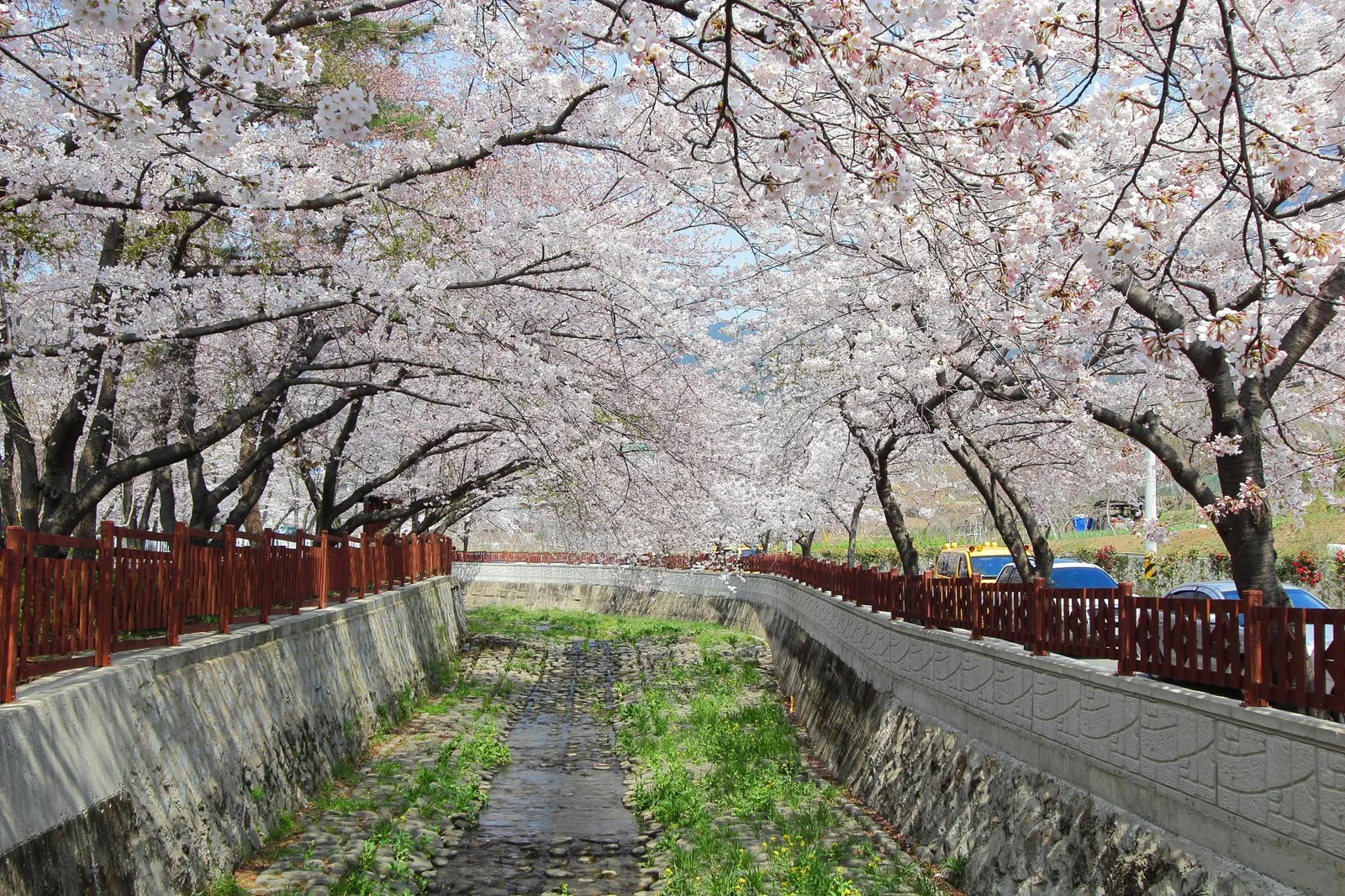
The Jinhae Gunhangje Festival (March 27 to April 5, 2026), in Changwon’s Jinhae district, is Korea’s largest cherry blossom festival, running for 60 years and drawing over 2 million visitors to see roughly 360,000 cherry trees. Beyond the blossoms along Yeojwacheon Stream and the tunnel at Gyeonghwa Station, the festival includes rare public access to the Korea Naval Academy, an Admiral Yi Sun-sin memorial and victory parade, and a Black Eagles air show. Admission is free, though some individual programs carry their own fees.
Buddha’s Birthday (May 24, 2026) brings Yeon Deung Hoe, the Lotus Lantern Festival, to several cities at once. Seoul’s version (May 8 to 25) is the largest, drawing around 300,000 people for a roughly 3-kilometer lantern parade on May 16 from Heunginjimun Gate through Jongno to Jogyesa Temple, with over 100,000 lanterns lit citywide. Busan (May 1 to 17), Jeonju (April 25 to May 24, set against the hanok village), and Gyeongju (May 14 to 31, with lanterns reflected on the Hyeongsan River) run their own versions on a similar timeline. All are free to attend, though joining the Seoul parade itself requires advance registration.
Summer: Mud, Music, and Water
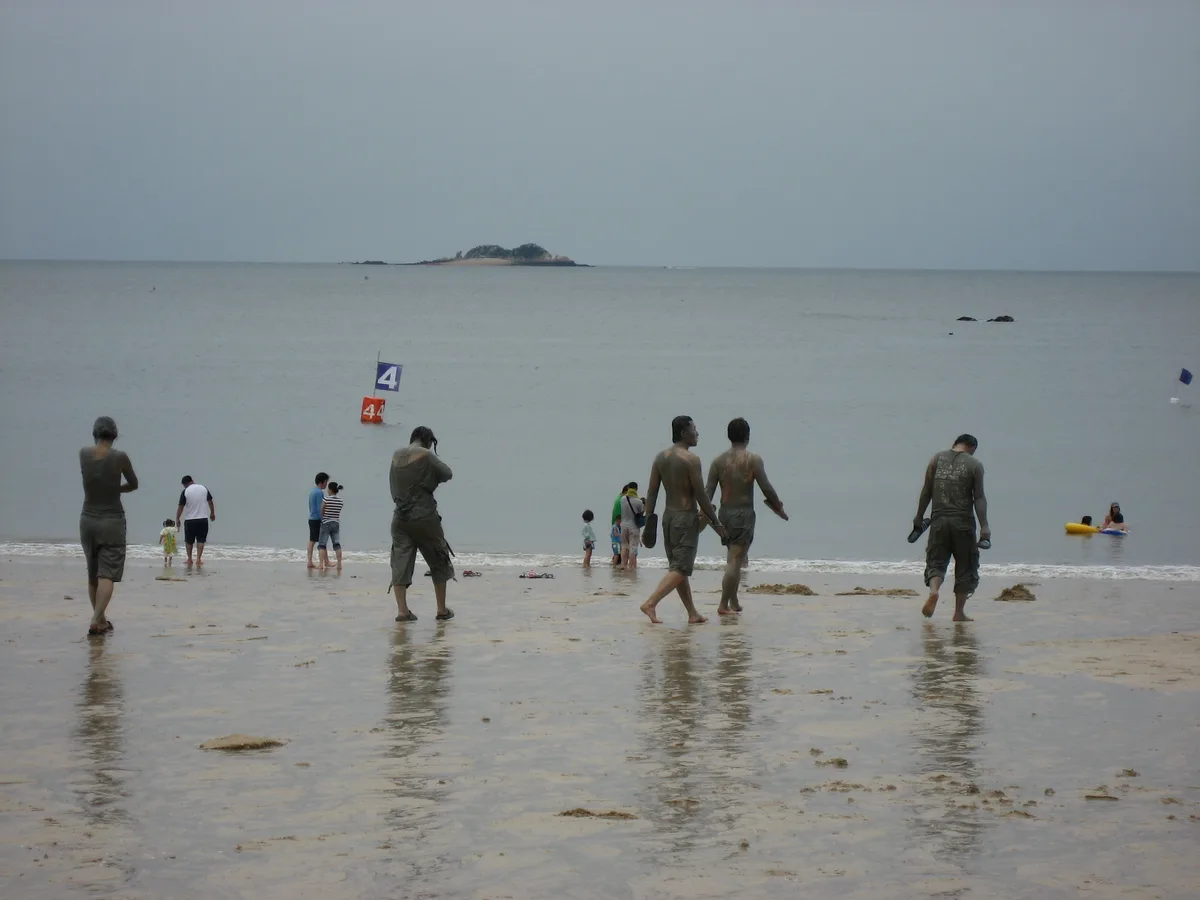
The Boryeong Mud Festival (July 24 to August 9, 2026) at Daecheon Beach in Chungcheongnam-do is the festival most international visitors already know by name, built around mineral-rich mud pools, mud wrestling, and general beach chaos. The Incheon Pentaport Rock Festival (July 31 to August 2) is Korea’s largest outdoor music festival, pulling in international rock acts alongside domestic ones. Seoul’s own Hangang River Festival (August 1 to 16) spreads across the city’s Han River parks with water activities, outdoor films, and concerts, a lower-key option if a beach trip isn’t in the plan.
Autumn: Lanterns, Film, and Fermented Everything
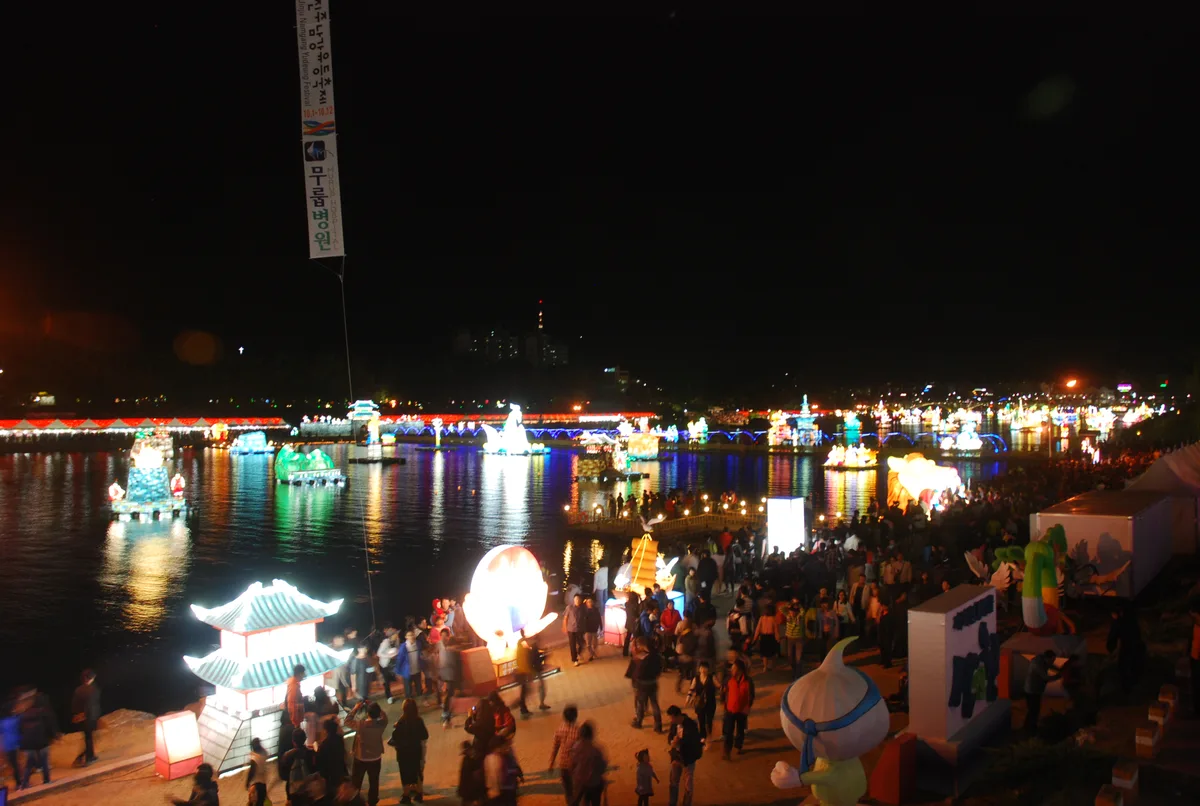
The Jinju Namgang Yudeung Festival (October 3 to 18, 2026) floats over 70,000 lanterns down the Namgang River alongside fireworks and drone shows, one of the most visually distinct festivals on the calendar. Film fans have the Busan International Film Festival (October 6 to 15) in Haeundae-gu, billed as Asia’s largest, while the Andong Maskdance Festival (September 24 to October 4) covers both Korean and international mask dance traditions.
Autumn is also when Korea’s food festivals cluster: the Sunchang Jangryu Festival (October 15 to 18) celebrates fermented pastes like gochujang and doenjang, the Gwangju Kimchi Festival (October 23 to 25) and Gimcheon Gimbap Festival (same dates) run hands-on food-making sessions, and the Gumi Ramyeon Festival (November 6 to 8) closes out the season. The Seoul International Fireworks Festival (September 5) at Hangang Park draws international fireworks teams for a single big night rather than a multi-day run.
Winter: Light Festivals and Ice
The Seoul Lantern Festival (December 12, 2025 to January 18, 2026) lights up the Cheonggyecheon and Uicheon streams with illuminated art installations, while Haeundae Light Festival in Busan (November 29, 2025 to January 18, 2026) turns the beach itself into a lit-up display starting with an opening fireworks ceremony. The Garden of Morning Calm in Gapyeong runs its own lighting festival from December 5 to March 15, the longest-running of the winter light displays.
For ice and snow specifically, the Hwacheon Sancheoneo Ice Festival (January 10 to February 1) draws over a million visitors annually for ice fishing, sledding, and ice soccer, while the Taebaeksan Mountain Snow Festival (January 31 to February 8) features a new set of large-scale snow sculptures each year. Multiple coastal cities also run New Year’s sunrise festivals on December 31 to January 1, including Pohang’s Homigot Sunrise Festival, now in its 25th year and drawing over 2 million visitors on its own.
Festival Calendar: Quick Answers
March 27 to April 5, 2026, though actual bloom timing can shift the best viewing days within that window depending on the year’s weather.
Advance registration is required to walk in Seoul’s parade itself, but watching from the street doesn’t require booking anything.
No, it draws a large domestic crowd too, though it’s become one of the festivals most heavily marketed toward international visitors specifically.
The Jinju Namgang Yudeung Festival’s floating lanterns and the Jinhae cherry blossom tunnel at Yeojwacheon Stream are two of the most consistently photographed, for very different reasons.
Yes. Lunar-calendar-linked events like Buddha’s Birthday shift each year, and bloom-dependent festivals like Jinhae’s can move by a week or more depending on the season’s weather, so always check the current year’s confirmed dates before booking travel around one.
Building a trip around one of these dates? Our itinerary guide by trip length covers how to structure a Korea trip around a specific window of days.



Comments
Leave a comment