
Seoul’s transit map looks intimidating. Riding it isn’t.
It comes down to two habits: tap a card when you get on, and tap again when you get off a bus. (The subway skips that second tap.)
Fares, color codes, transfer discounts. All of it follows from that one rule.
How Do You Actually Ride the Subway and Bus in Seoul?
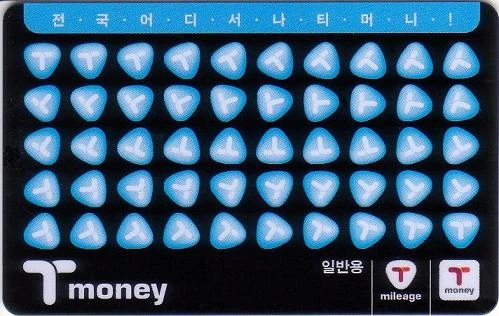
You board with a rechargeable transit card. Most visitors use T-money. Tap it on the reader at the bus door or subway gate and the fare comes straight out of the balance.
A single-ride paper ticket works too. It costs more, though, so it only makes sense if you’re taking one or two rides all trip.
On the current fare schedule, an adult card fare is ₩1,550 on the subway (effective June 28, 2025) and ₩1,500 on a standard city bus (effective August 12, 2023). Each covers the base distance before surcharges start. Teens and children pay less on both.
Still choosing between a physical T-money card, Mobile T-money and WOWPASS? Our Korea travel apps guide compares them.
Buses: Colors, Fares, and How Boarding Works
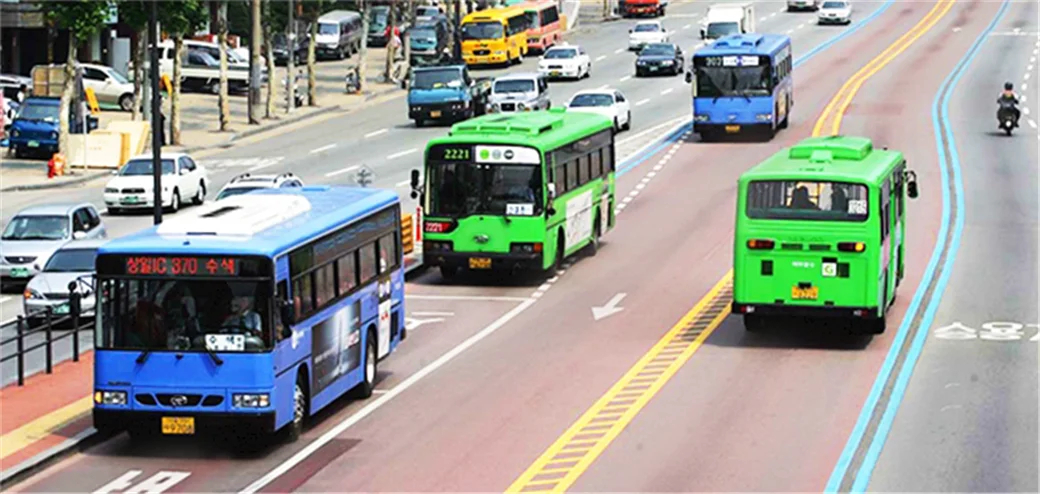
Seoul buses are color-coded by role. The color tells you what kind of route you’re on before you even read the number.
Board through the front door and tap your card by the driver. Exit through the rear door and tap again. That second tap does two jobs: it works out any distance surcharge, and it makes a free transfer possible.
What Seoul’s bus colors mean
Blue (간선, trunk): long routes connecting districts across the city.
Green (지선, branch): shorter routes feeding into subway stations and blue-line buses.
Red (광역, express): non-stop routes to satellite cities like Incheon or Gyeonggi-do, higher fare.
Yellow (순환, circular): short loops through a single district’s core.
Village buses: small buses on neighborhood routes, cheapest fare tier.
Night buses (심야, marked with an “N”): run late-night routes when the subway is closed.
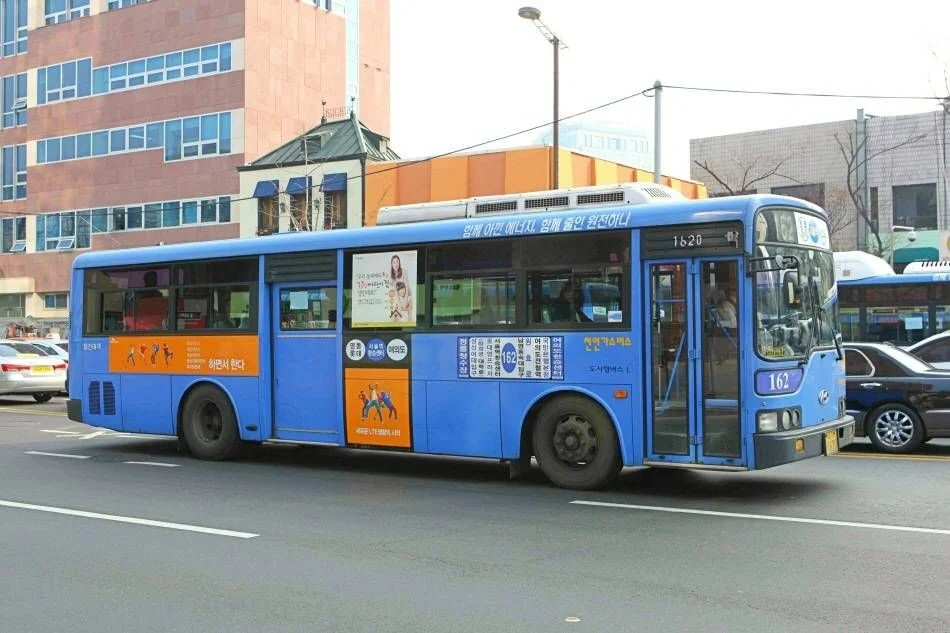
Cash still works on some Seoul buses. Bring exact change, because drivers don’t carry a float, and cash fares miss out on the transfer discount below.
Outside Seoul, don’t count on it at all. Incheon, Daegu and Gwangju have gone card-only on every bus.
One more thing if you’re travelling with luggage: avoid weekday rush hour, roughly 7:30-9:00 AM and 6:00-8:00 PM. Platforms and buses both get genuinely packed, and a rolling suitcase is hard work in that crowd.
Subway: Lines, Tickets, and Getting Through the Gate
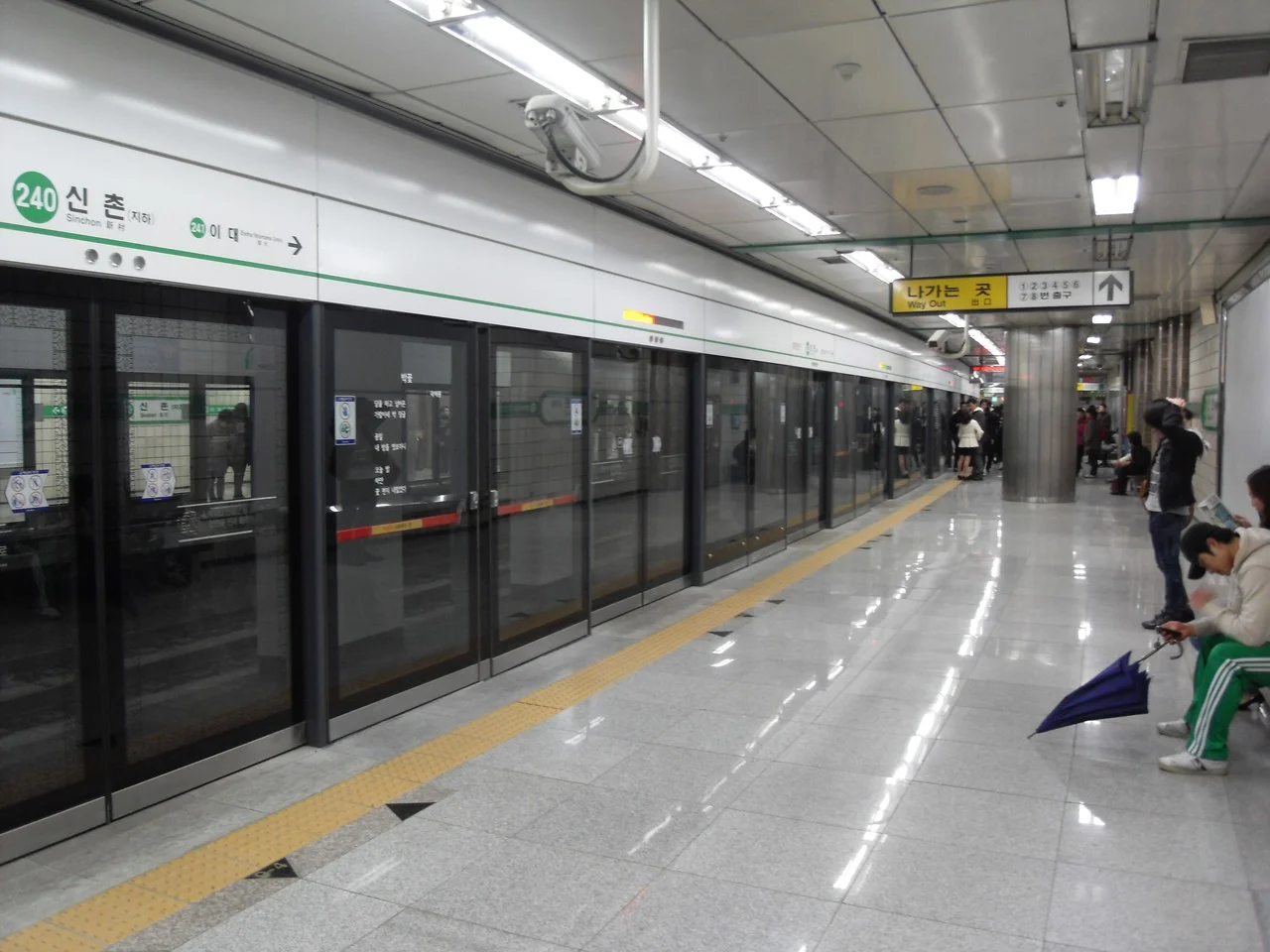
Every Seoul subway line has its own number and color. You navigate by color first, station name second. Platform signs, train doors and map apps all use the same scheme.
Korea has five subway systems, in Seoul, Busan, Daegu, Daejeon and Gwangju. Seoul’s is by far the largest, and some of its lines run well past the city limits into Incheon and Gyeonggi-do.
T-money vs. a single-ride ticket
A T-money card gets you the cheaper fare and every transfer discount below.
A single-use paper ticket from a station machine costs the same base fare plus a ₩500 deposit. You get that back by returning the ticket to a refund machine before you leave the station.
Taking exactly one subway ride all trip? Then the paper ticket is fine. Otherwise T-money wins.
Tap your card once on the way in. There’s no second tap on the way out, with one exception: the Sinbundang Line, which runs its own transfer-fare gates and charges extra by distance.
Every other line-to-line transfer is free. Just stay inside the paid zone and change platforms without walking out through an exit turnstile.
How the Bus-Subway Transfer Discount Actually Works
Tag on and off every bus, and tag on at every subway gate. Do that, and the free transfer between bus and subway (or bus to bus) applies by itself, as long as you catch the next ride inside the window.
No app. No ticket. Nobody to tell. The discount comes purely from your tap history.
The window is 30 minutes between 7:00 AM and 9:00 PM, and 60 minutes overnight from 9:00 PM to 7:00 AM. You get up to 4 free transfers per fare, so five rides on one base fare plus any distance surcharge.
One exception is worth knowing. Re-boarding the same bus route number doesn’t count as a transfer. The system reads it as a new fare.
Staying a week or more? Consider the Climate Card
Seoul’s 기후동행카드 (Climate Card) is an unlimited-ride pass covering the subway, city and village buses, and the public bike-share. It’s ₩62,000 for 30 days, or ₩55,000 for ages 19-39.
It excludes the Sinbundang Line, GTX, and express and airport buses.
Break-even is roughly 40 single fares in the period. Worth the math if you’re here a full week or longer and moving daily. For a short trip, T-money’s pay-per-ride is simpler.
Look near each subway door and you’ll see priority seats in pink, yellow or blue. Pink is for pregnant passengers, the others for elderly and disabled riders and general priority use.
They stay empty by custom, even on a packed train. Korean riders leave them alone no matter how crowded the car gets, and it’s worth doing the same as a visitor.
Need to sort out how to pay for a top-up? See our currency exchange guide. Heading to Busan as well? Its card system works differently, and our Busan bus guide covers it.
Seoul Subway & Bus: Quick Answers
With a T-money card, the subway base fare is ₩1,550 (since June 28, 2025) and a standard city bus is ₩1,500 (since August 12, 2023), each covering a base distance before per-5km surcharges apply. Teens and children pay reduced fares on both.
T-money is cheaper per ride and is required to get any transfer discount. A single-ride paper ticket works for the subway, sold at station ticket machines, but costs the same fare plus a refundable ₩500 deposit and gives you no transfer benefit, so it only makes sense for one-off rides.
Tap your T-money card on and off every bus and on entering every subway station. If you tap your next ride within 30 minutes (60 minutes overnight, 9 PM-7 AM), the transfer is free, for up to 4 transfers on a single base fare. Re-boarding the same bus route number doesn’t count as a transfer.
Blue buses run long trunk routes across the city, green buses are shorter branch routes feeding subway stations, red buses are express routes to satellite cities like Incheon, yellow buses circle a single district, and small village buses cover neighborhood routes. Night buses are marked with an “N”.
Yes. Mobile T-money works the same way on both buses and the subway, and it accepts international card top-ups directly, so it skips the convenience-store line entirely. See our Korea travel apps guide for how to set it up.
Tap on, tap off, and Seoul opens up. Most visitors have the rhythm down by their second day.
Payment still undecided? See whether your foreign credit card can tap directly yet. For anything else, the Korea Travel Hotline runs 24/7 on 1330.



Comments
Leave a comment