
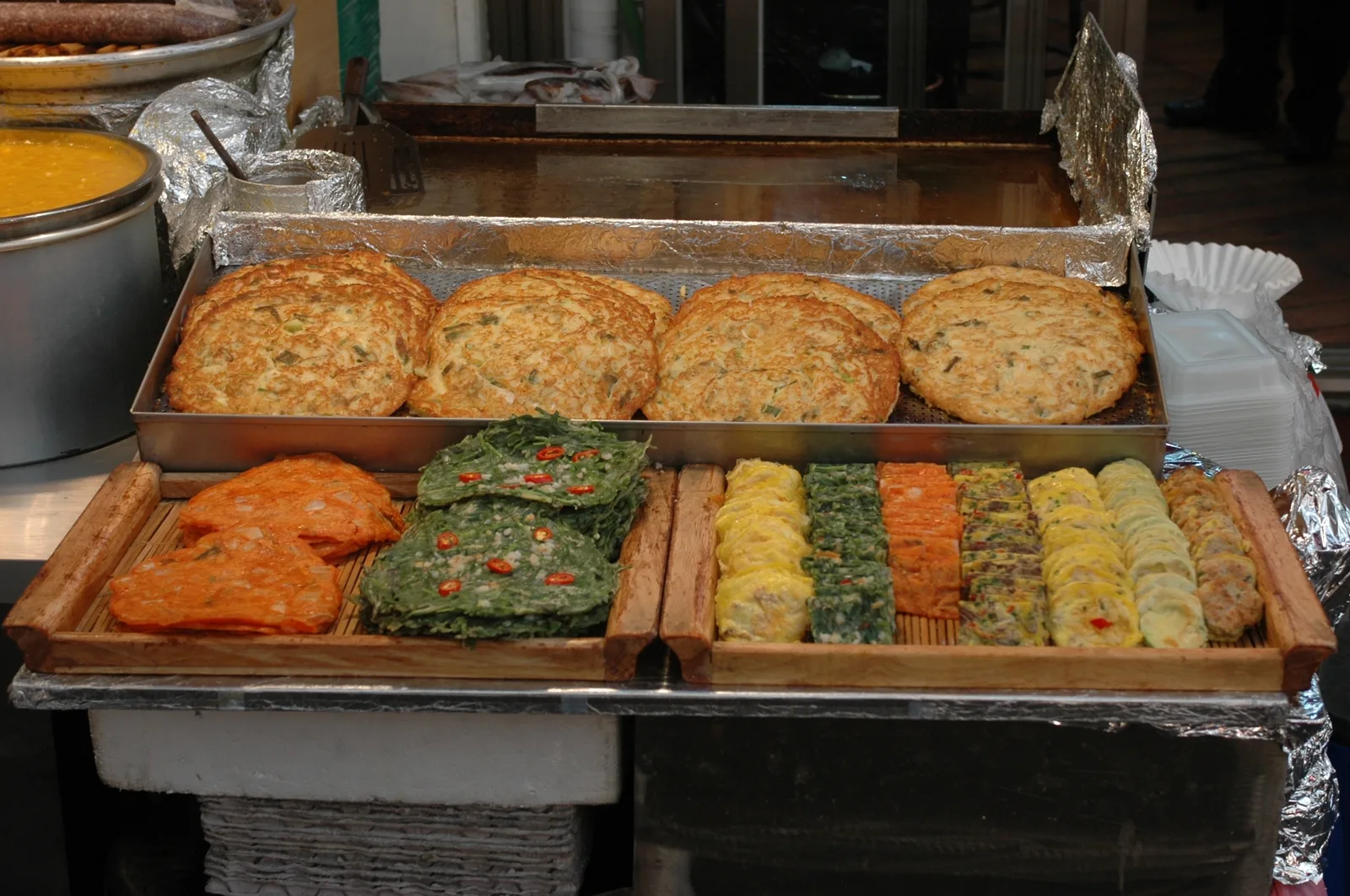
A traditional market in Korea isn’t a tourist recreation of an old market. It’s a working one, usually decades or centuries old, where the food stalls exist because locals actually eat there, not because a visitor might wander through.
Four stand out enough to plan a stop around, each for a different reason. One is a food crawl, one is sheer scale, one is a genuinely different kind of meal, and one is a seafood market that still runs on a fisherman’s schedule.
Gwangjang Market: Seoul’s Most Famous Food Market
Gwangjang Market earned its reputation almost entirely on food. Most shops run 9 AM to 6 PM, but the food stalls stay open until midnight, and that’s the part worth building a visit around.
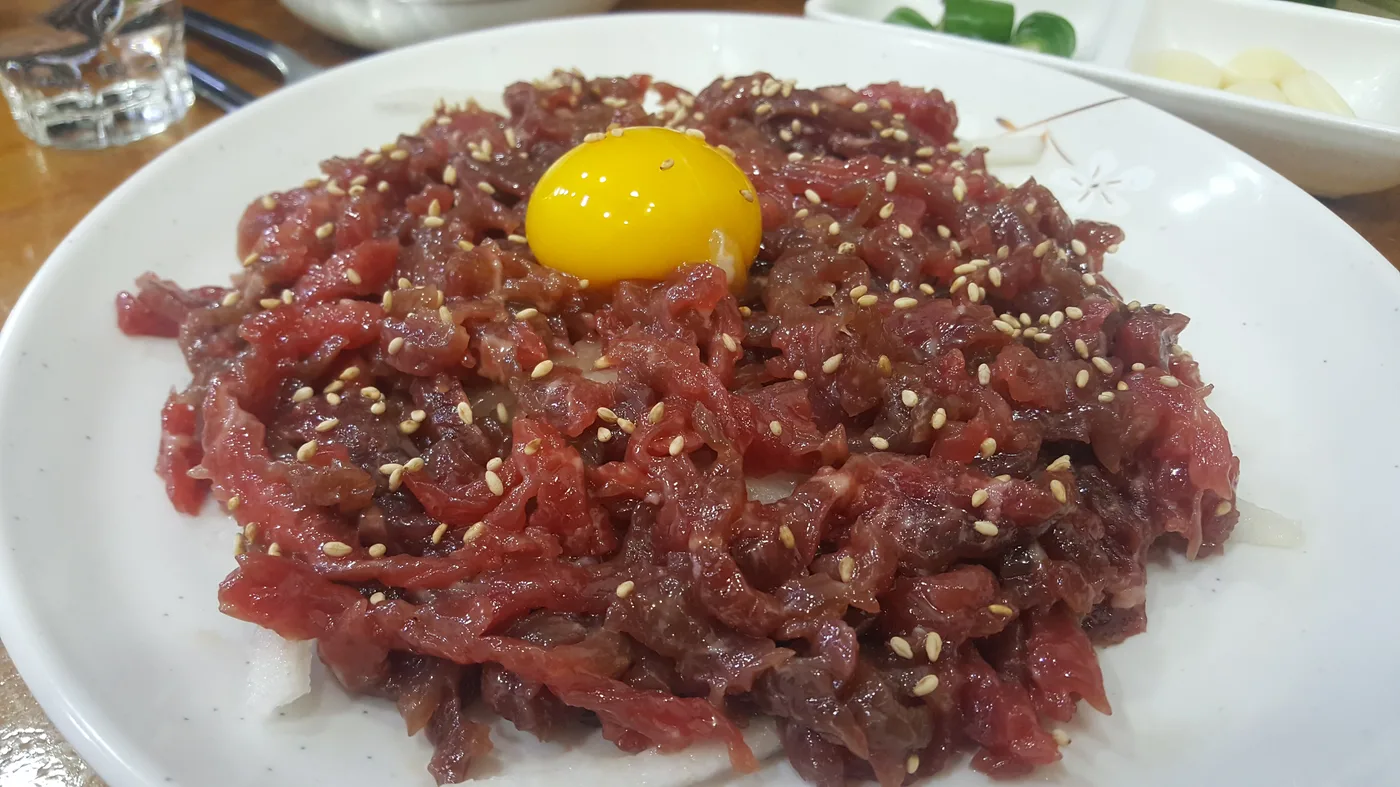
Start with bindaetteok, a mung bean pancake fried until the outside turns deeply crisp while the inside stays dense and slightly creamy. Add mayak gimbap, small seaweed rice rolls nicknamed “addictive gimbap” for how easy they are to keep eating, not for anything actually in them. If raw beef doesn’t put you off, yukhoe, beef tartare seasoned with sesame oil and garlic and topped with a raw egg yolk, is a Gwangjang specialty specifically, this is the market most Koreans associate with the dish.
Timing matters here more than at most markets
Weekday lunch, roughly 11:30 AM to 1:30 PM, is when stalls are freshest and least crowded. Weekend afternoons get genuinely packed, and some stalls close early on Monday evenings.
Take Line 1 to Jongno 5-ga Station and leave through exit 8 (exit 7 lands on the same block). Walk straight for about a minute to reach North Gate 2, which drops you directly into the food alley.
Namdaemun Market: Korea’s Largest, Nearly Around the Clock
Namdaemun spreads beneath the historic Great South Gate with more than 10,000 stalls across several buildings, and a genuine chunk of them operate 24 hours. Food here is one part of a much larger market, alongside clothing, kitchenware, imported goods, and eyewear sold by the alley.
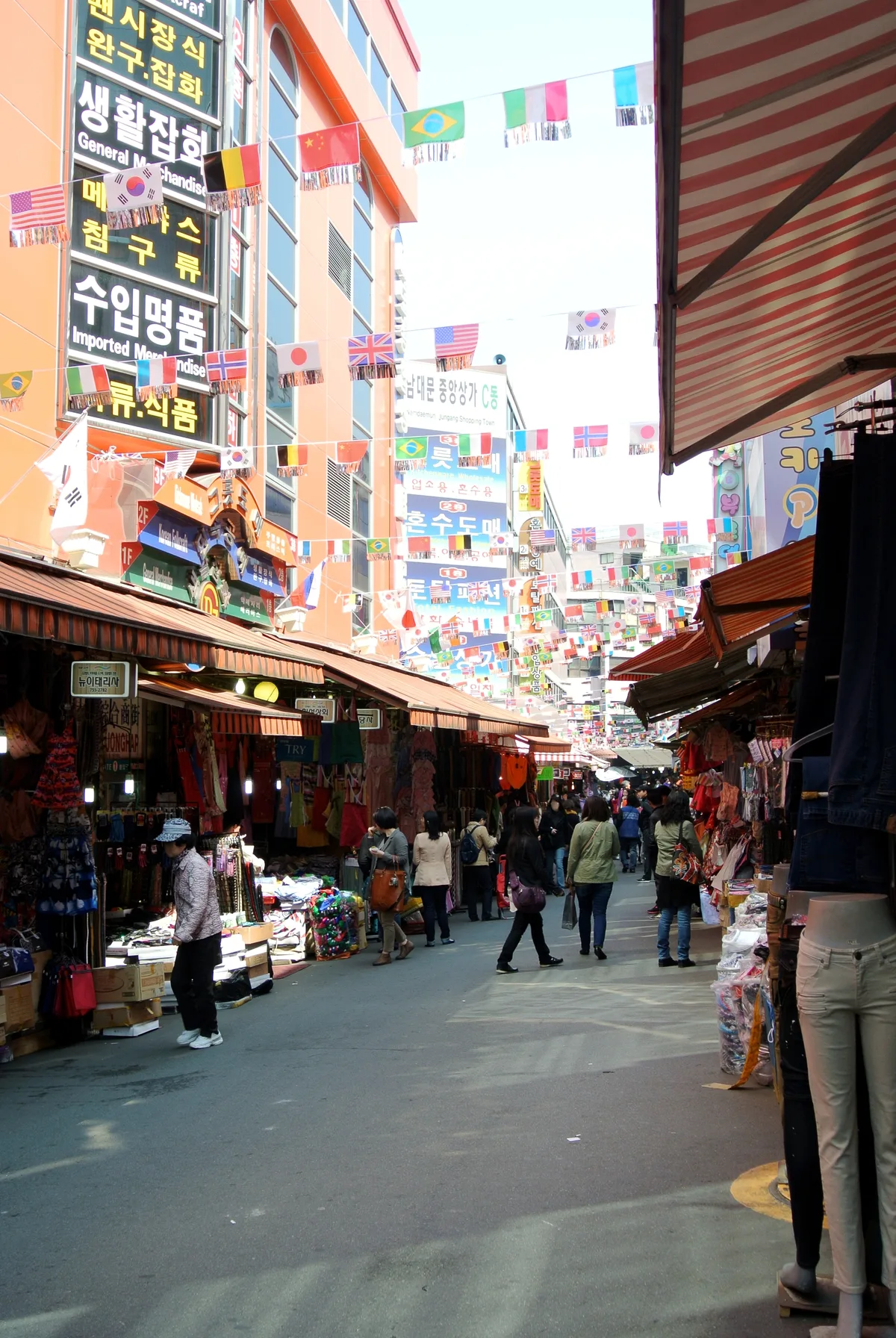
Two food alleys are worth seeking out by name. Kalguksu Alley specializes in hand cut knife noodles, and Galchi Jorim Alley serves braised hairtail fish, a dish that rarely makes it onto tourist-facing menus elsewhere. Since Namdaemun is enormous and not laid out in a single obvious loop, naming these two in advance saves real wandering time.
Tongin Market: A Lunch You Build Yourself with Coins
Tongin Market, near Gyeongbokgung Palace, runs a system unlike anything else on this list. Buy a set of brass coins called yeopjeon at the market’s exchange counter, then walk the stalls swapping coins directly for food, and eat everything you collect at the upstairs cafe.
5,000 KRW gets you 10 coins and an empty lunch tray, though buying 20 coins (10,000 KRW) per person is the more realistic amount for an actual meal. Most dishes cost two coins, and some banchan side dishes cost just one. The exchange runs Tuesday through Sunday, 10:30 AM to 2:30 PM, closed Mondays, and it shuts early whenever a stall sells out, so arriving earlier on a weekend visit matters more here than at the other markets on this list.
Jagalchi Fish Market: Busan’s Seafood Icon
Jagalchi is Korea’s largest fish market and the one entry here outside Seoul, right on the Busan waterfront. It runs daily from 5 AM to 10 PM, closed the first and third Tuesday of each month, and the earliest hours, roughly 5 to 11 AM, are when the freshest catch is still being unloaded.
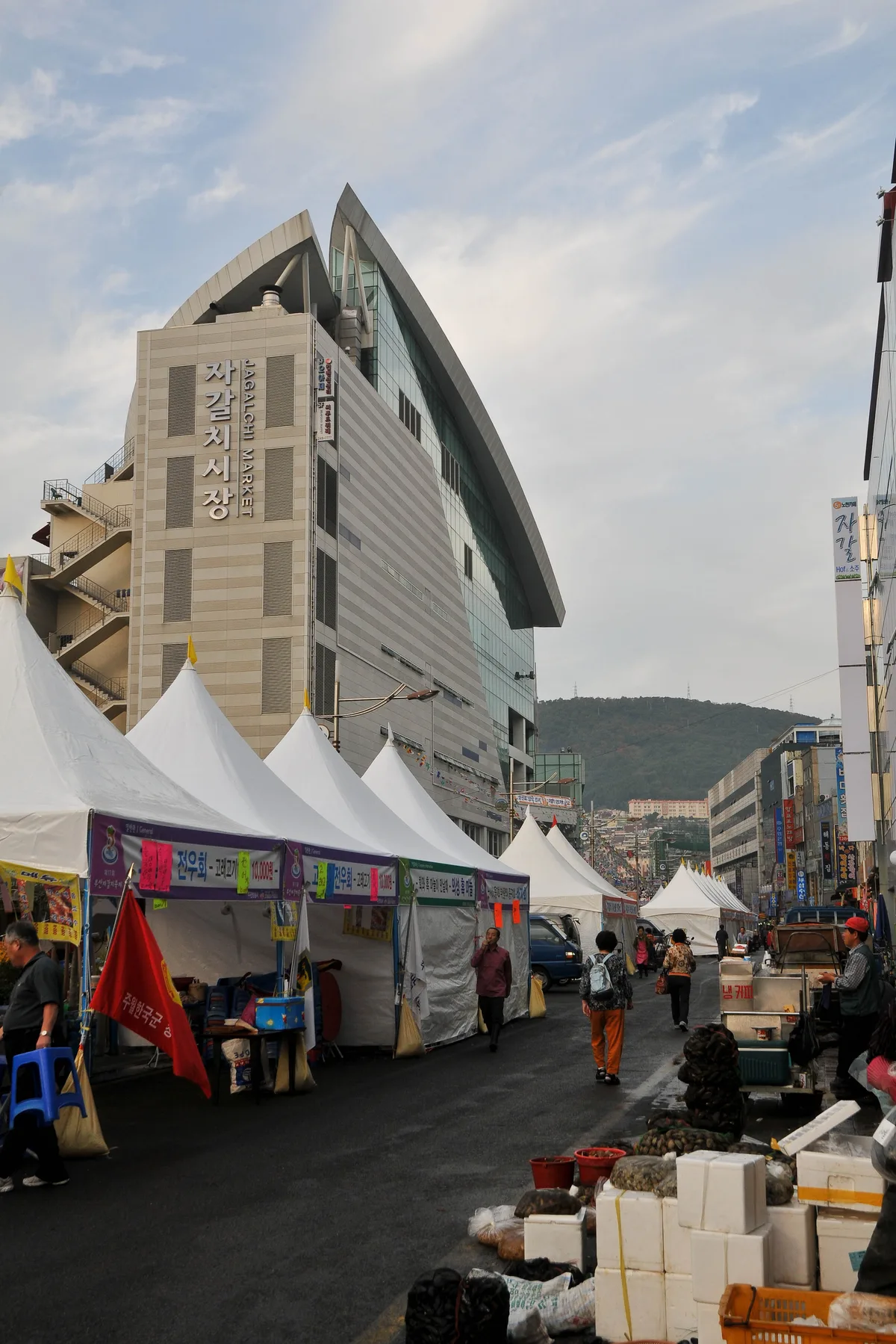
The market works on a buy-then-eat system. Pick your seafood on the ground floor, raw fish, king or snow crab, abalone, live octopus, or Busan’s own spicy grilled eel, then carry it upstairs to a chojang house, pay a preparation fee, and have it cut or cooked to eat on the spot. Reach the market from Jagalchi Station, exit 10, turning right onto Jagalchi 3-gil.
Traditional Markets: Quick Answers
Gwangjang Market in Seoul. It’s compact enough to cover in a couple of hours, entirely food focused, and easy to reach directly from Jongno 5-ga Station.
Buy brass yeopjeon coins at the exchange counter (roughly 20 coins, or 10,000 KRW, per person is a realistic amount), trade them directly with stalls for food, and eat what you collect at the market’s upstairs cafe.
Early morning, between 5 and 11 AM, when the freshest seafood has just been unloaded. It’s closed on the first and third Tuesday of every month.
Large sections of it are. A meaningful share of stalls, especially clothing and general goods, operate 24 hours, though individual food stalls keep their own hours.
Inconsistently. Smaller food stalls in particular often expect cash, so carrying some Korean won is worth doing before you go.
Carrying enough cash for stalls that don’t take cards? Our currency exchange and payment methods guide covers where to withdraw and exchange money before you go.



Comments
Leave a comment