
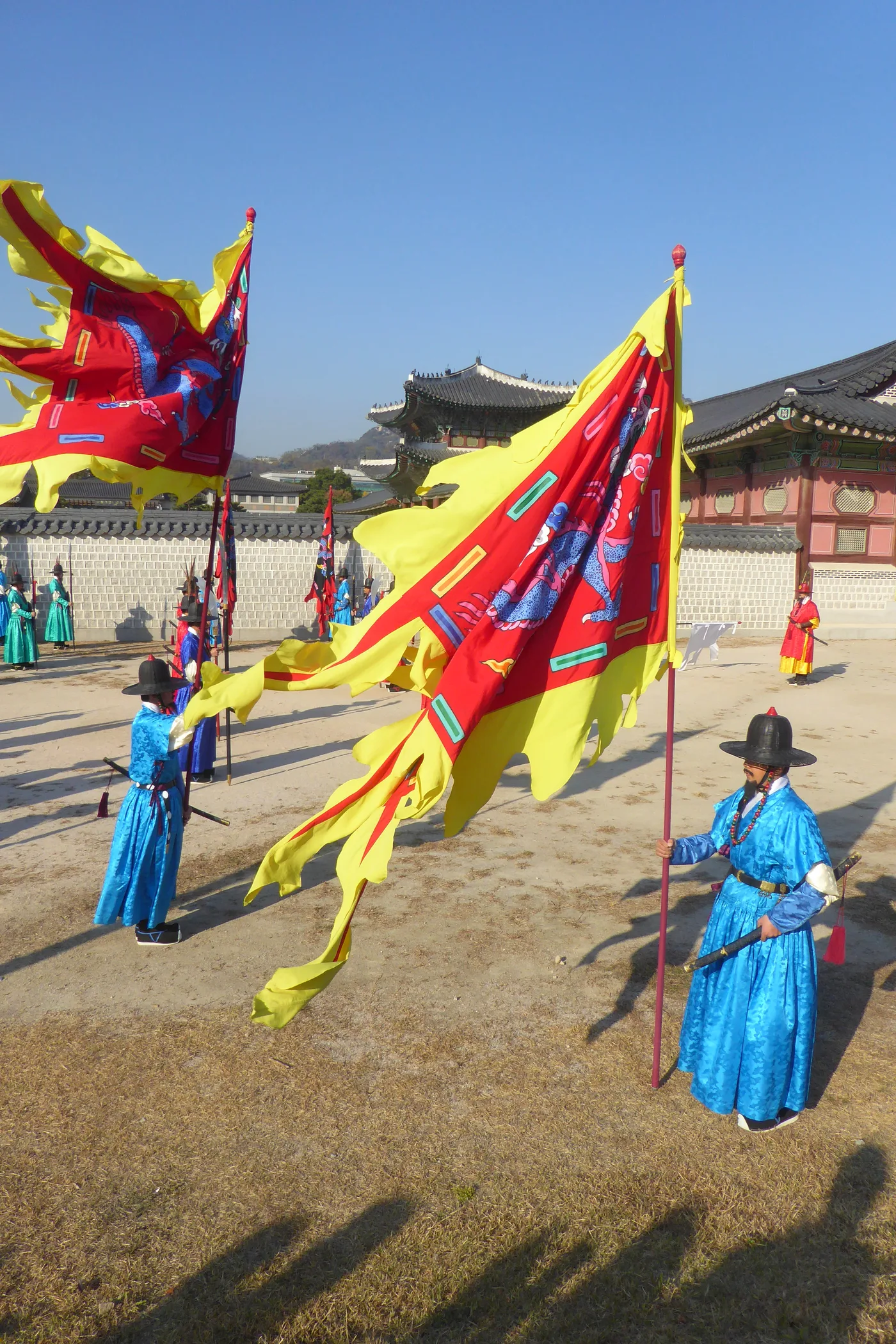
Seoul has five surviving royal palaces from the Joseon dynasty, all within a fairly short distance of each other. Almost nobody visits all five, and almost nobody needs to.
Each one has a genuinely different reason to go, from the one with the changing-of-the-guard ceremony to the one that’s free specifically because barely anyone shows up.
Seoul’s Five Grand Palaces at a Glance
| Palace | Admission | Closed | Known for |
|---|---|---|---|
| Gyeongbokgung | 3,000 KRW | Tuesday | Changing of the Guard, largest scale |
| Changdeokgung | 3,000 KRW (+5,000 for Secret Garden) | Monday | UNESCO-listed Secret Garden |
| Changgyeonggung | 1,000 KRW | Monday | Quieter grounds, garden layout |
| Deoksugung | 1,000 KRW | Monday | Seokjojeon, a Western-style stone hall |
| Gyeonghuigung | Free | Monday | Smallest, least crowded |
Free entry applies at every palace to anyone wearing hanbok, and on Culture Day, the last Wednesday of each month.
Gyeongbokgung: The Biggest, Not the UNESCO One
Gyeongbokgung is the one on every postcard, and it’s the largest and most rebuilt of the five. It’s also, somewhat counterintuitively, not the palace on Korea’s UNESCO World Heritage list. That distinction belongs to Changdeokgung, whose more intact layout and Secret Garden made it the one UNESCO recognized in 1997. Gyeongbokgung’s scale and its Guard ceremony are still worth the visit, just don’t expect a UNESCO plaque here.
The Changing of the Royal Guard Ceremony runs at 10 AM and 2 PM for about 20 minutes, with two shorter related ceremonies, a gate-duty ceremony at 11 AM and 1 PM and a gatekeeper training display at 9:35 AM and 1:35 PM. Hours shift with the season, roughly 9 AM to 5 PM in winter, stretching to 9 AM to 6:30 PM in summer, with last admission an hour before closing.
Looking for the Secret Garden?
That’s Changdeokgung, not Gyeongbokgung. Our UNESCO World Heritage guide covers Changdeokgung’s ticket and reservation details in full.
Changgyeonggung and Deoksugung: Each With Its Own Character
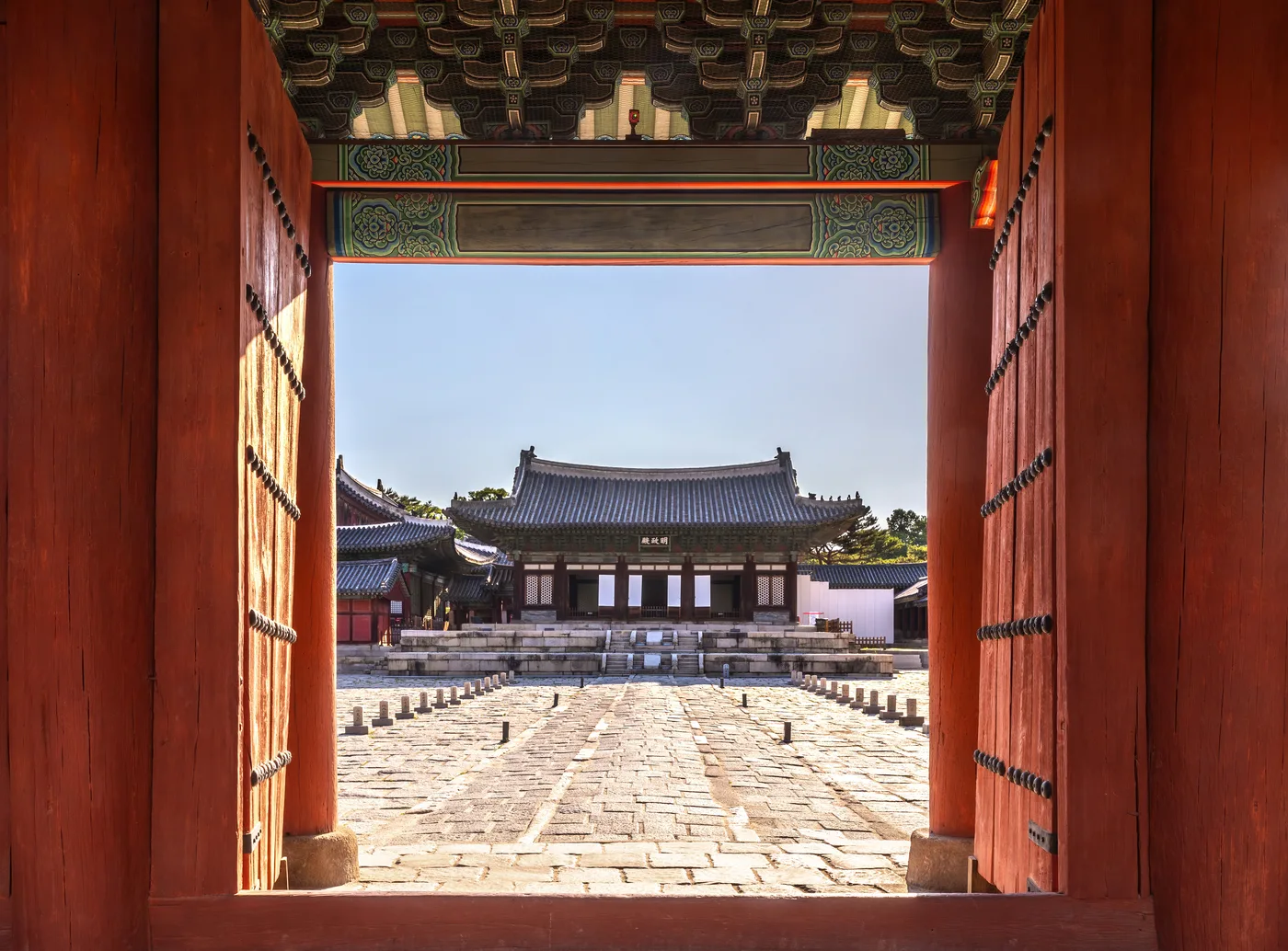
Changgyeonggung, right next to Changdeokgung and connected by an internal path, was originally built as a residence for royal family members rather than a seat of government, which shows in its more residential, garden-forward layout. At 1,000 KRW admission and long daily hours, 9 AM to 9 PM with last entry at 8 PM, it’s an easy add-on to a Changdeokgung visit rather than a separate trip.
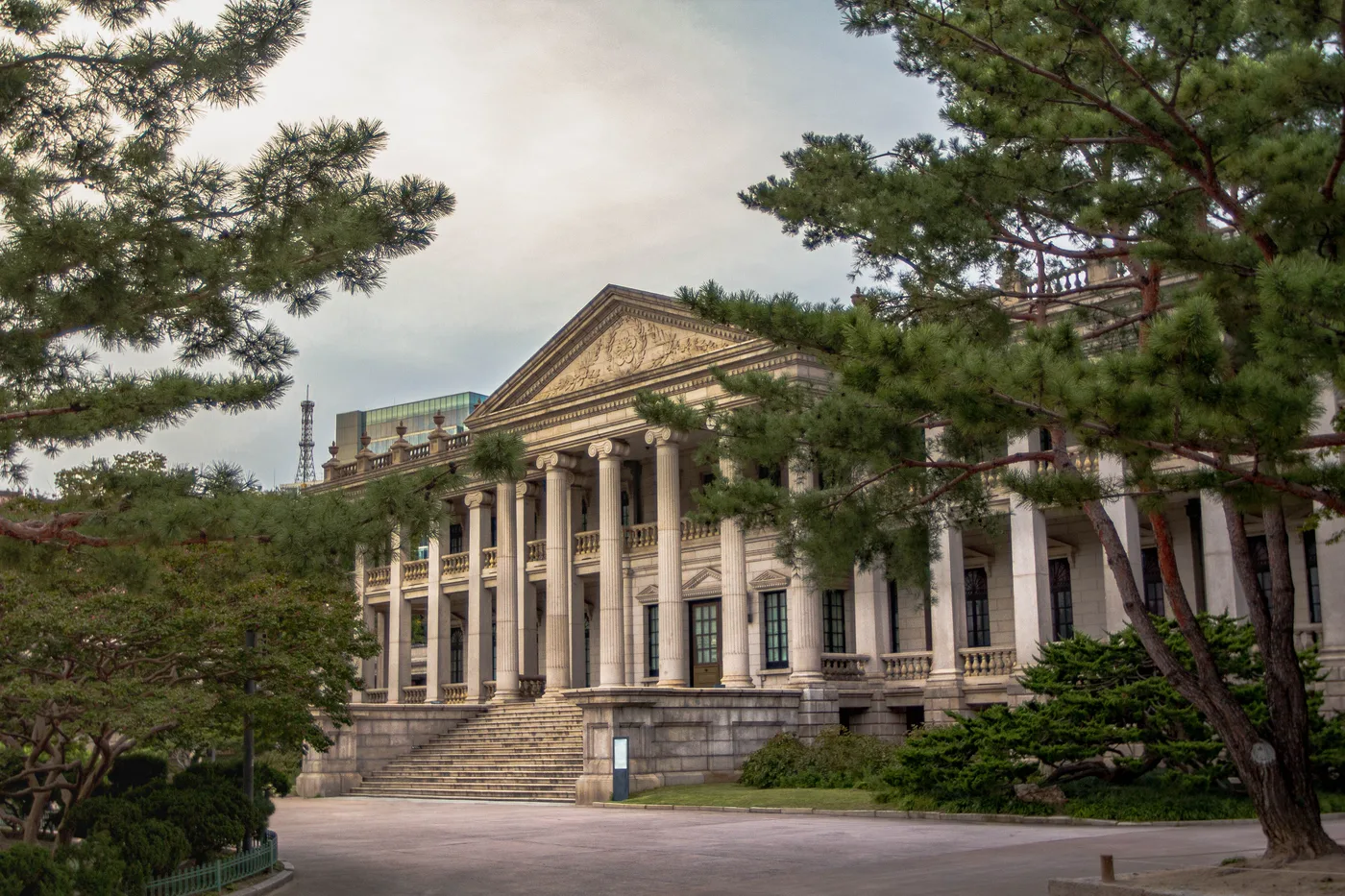
Deoksugung stands out for one building specifically: Seokjojeon, a neoclassical stone hall with columns and a pediment that looks lifted from European architecture, built in the early 1900s as Korea’s monarchy was adapting to Western influence late in the Joseon period. It sits right beside traditional wooden halls, so the contrast is immediate. Same admission and hours as Changgyeonggung, 1,000 KRW, 9 AM to 9 PM, closed Mondays.
Gyeonghuigung: The Free One Almost Nobody Visits
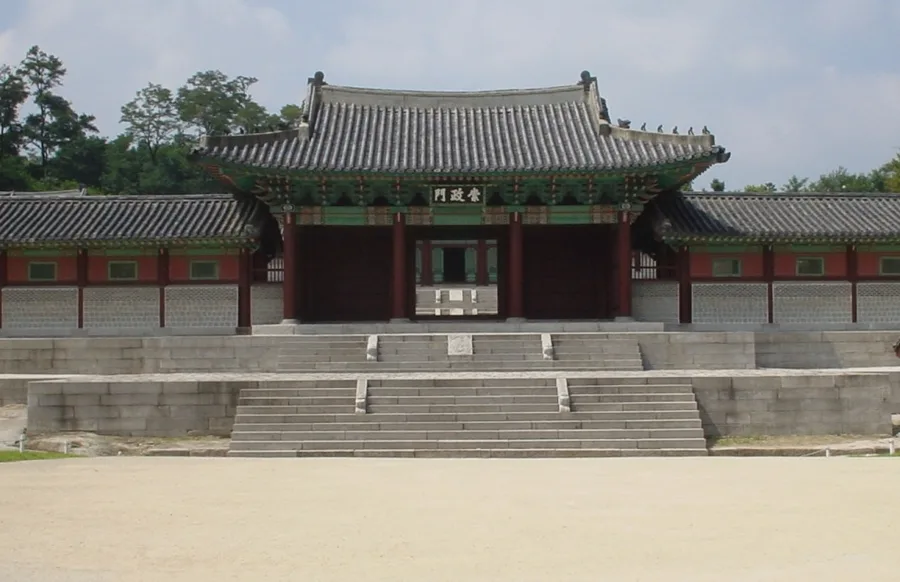
Gyeonghuigung is the smallest of the five and the only one with no admission fee at all, a reflection of how much less of the original complex survived compared to the other four. What’s left is modest, a few reconstructed halls and open courtyards, but it’s also genuinely quiet in a way none of the other palaces are anymore. Open 9 AM to 6 PM, closed Mondays, same as the others.
It works best as a short stop rather than a destination on its own, it sits close to the Seoul Museum of History, so pairing the two fills an afternoon without needing to fight a single tour group.
The Royal Palace Pass: One Ticket, Four Palaces
A single 10,000 KRW pass covers admission to Gyeongbokgung, Changdeokgung (including the Secret Garden’s entry fee, though you’ll still need to book the timed tour slot separately), Changgyeonggung, and Deoksugung, plus Jongmyo Shrine, valid for three months from purchase. Buying it saves a small amount over paying separately, but the real value is not having to queue at a ticket window every time you switch palaces mid-trip.
Gyeonghuigung isn’t included, since it’s already free on its own.
Seoul Palaces: Quick Answers
Gyeongbokgung for scale and the Guard ceremony, or Changdeokgung if the Secret Garden and UNESCO status matter more to you. Both are reasonable first choices for different reasons.
No. Changdeokgung is the palace on Korea’s UNESCO list, inscribed in 1997. Gyeongbokgung is the largest and most visited, but it isn’t UNESCO-listed.
A 10,000 KRW combination ticket covering Gyeongbokgung, Changdeokgung, Changgyeonggung, Deoksugung, and Jongmyo Shrine, valid three months. It’s worth it mainly for convenience if you’re visiting more than two of these sites.
Gyeonghuigung has no admission fee at any time. Every other palace waives its fee for hanbok wearers and on the last Wednesday of the month.
Four of the five, Changdeokgung, Changgyeonggung, Deoksugung, and Gyeonghuigung, are closed Mondays. Gyeongbokgung is the exception, closed Tuesdays instead.
Combining a palace day with the rest of central Seoul? Our must-try Korean food guide and traditional markets guide both cover spots within easy reach of Gyeongbokgung and Changdeokgung.



Comments
Leave a comment