
- Can You Bring Spare Batteries or Power Banks on a Flight to Korea?
- What Is Korea's 2-Battery Power Bank Rule?
- How Do You Check Your Battery’s Watt-Hour (Wh) Rating?
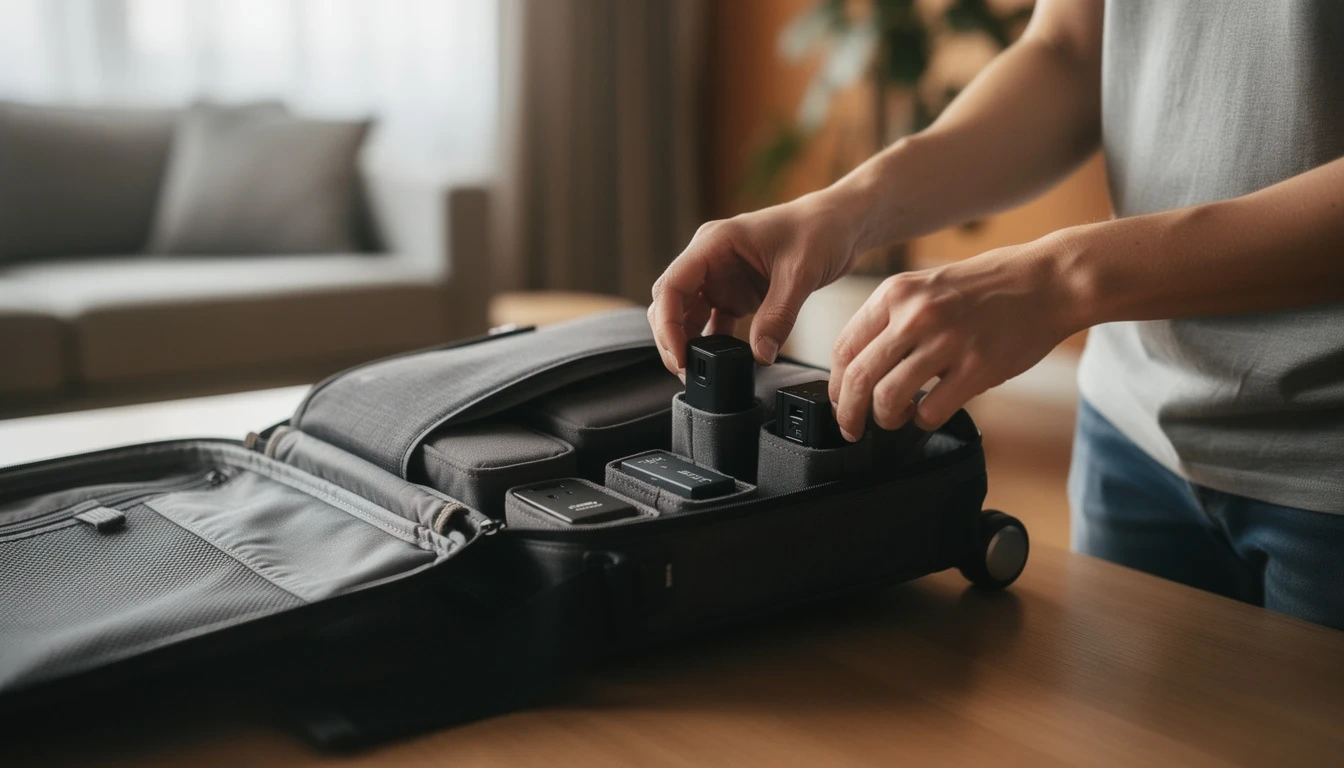
- How Should You Pack Spare Batteries and Power Banks?
- What About Batteries Built Into Your Phone, Laptop, or Camera?
- Pre-Flight Battery & Carry-On Checklist
- Need Help?
- Before You Pack: Battery Rule FAQs
- Can You Bring Spare Batteries or Power Banks on a Flight to Korea?
- What Is Korea's 2-Battery Power Bank Rule?
- How Do You Check Your Battery’s Watt-Hour (Wh) Rating?
- How Should You Pack Spare Batteries and Power Banks?
- What About Batteries Built Into Your Phone, Laptop, or Camera?
- Pre-Flight Battery & Carry-On Checklist
- Need Help?
- Before You Pack: Battery Rule FAQs
Packing a power bank for your Korea trip, or bringing a couple of spare camera batteries for a long day of sightseeing?
Korea’s airport security enforces a strict, watt-hour-based limit on spare lithium batteries, and getting it wrong can mean losing the item at the gate.
Below: exactly how many spare batteries or power banks you’re allowed, and how to pack them so they clear security without issue.
Can You Bring Spare Batteries or Power Banks on a Flight to Korea?
Yes, with limits. Spare lithium-ion batteries and power banks are allowed on flights to and from Korea, inside a strict cap on both quantity and watt-hours (Wh).
Korea’s Ministry of Land, Infrastructure and Transport sets that cap. Since April 20, 2026 it replaced the older tiered rule with one stricter limit, following an ICAO-endorsed international standard prompted by an Air Busan in-flight fire incident. It applies to all flights departing from or arriving in Korea, and it’s enforced the same way whether you’re flying out of Incheon, Gimpo, Busan, or any other Korean airport.
Bottom line: you can carry up to 2 spare batteries or power banks total, each rated 160Wh or less. Nothing above 160Wh is allowed at all, in either carry-on or checked baggage. In-flight charging of or from a power bank is also banned outright.
The quick answer
• Up to 2 spare batteries total, each ≤160Wh, carry-on only
• Anything over 160Wh is prohibited entirely: not allowed on the plane at all
• Charging a device from a power bank, or charging the power bank itself, is banned during the flight
What Is Korea’s 2-Battery Power Bank Rule?
Until April 2026 Korea ran a tiered system: up to 5 spare batteries at 100Wh or less, plus 2 more between 100Wh and 160Wh. That’s gone.
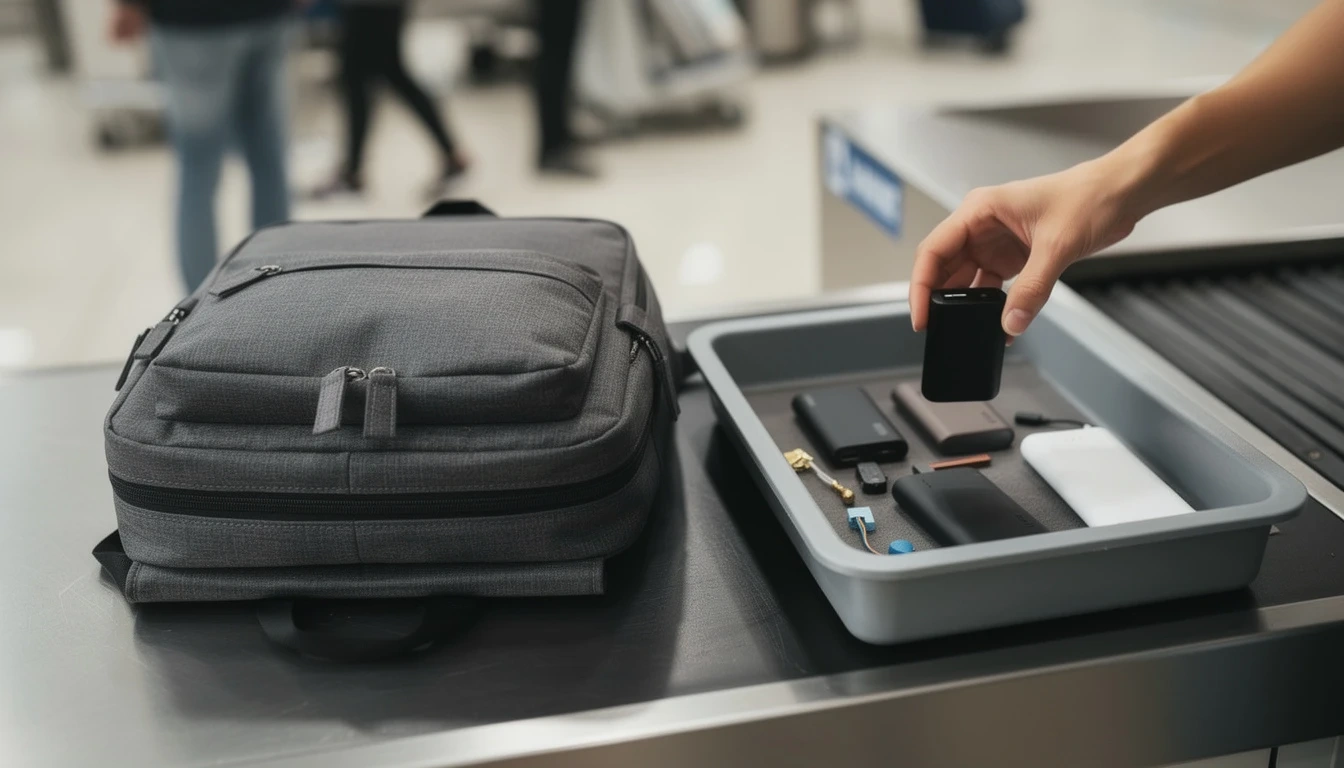
The current rule is simpler and stricter. One passenger may carry a maximum of 2 “spare” (uninstalled) lithium-ion batteries, including portable chargers, power banks, and loose camera or drone batteries, onto a flight to or from Korea, as long as each one is rated 160Wh or less.
Renting a WiFi egg or pocket WiFi router for your trip? Those run on the same kind of lithium-ion battery, so the same spare-battery carry-on rules apply to them too. See our SIM card, eSIM, and WiFi egg guide for how to pick one.
| Watt-hour (Wh) rating | Max quantity per passenger | Where it’s allowed |
|---|---|---|
| 160Wh or less | Up to 2 spare batteries total | Carry-on only |
| Over 160Wh | Not allowed | Prohibited in carry-on and checked baggage |
Most travel power banks, roughly 10,000-20,000mAh, sit well under the 160Wh ceiling. So for most travelers the real constraint is the 2-battery limit, not the Wh rating.
Camera and drone batteries count toward that same cap of 2. A power bank plus one spare camera battery already uses up your full allowance.
Anything above 160Wh is a different story. Large drone and e-bike batteries in that range aren’t permitted on passenger flights to or from Korea at all. Ship them separately if you truly need them there.
How Do You Check Your Battery’s Watt-Hour (Wh) Rating?
Look on the casing. Most manufacturers print the Wh rating right on the label, usually beside the mAh and voltage figures.
Only milliamp-hours (mAh) and voltage (V) listed? You can work out the watt-hours yourself.
Wh Formula (If Only mAh and V Are Listed)
Watt-hours = (mAh ÷ 1,000) × Voltage. Most portable chargers run a nominal voltage around 3.6-3.7V.
Run the numbers and a 10,000mAh power bank comes to roughly 37Wh, a 20,000mAh one to roughly 74Wh. Both sit comfortably under the 160Wh limit.
Watch the top end, though. Korean regulators cite a “160Wh/43,000mAh” figure, and anything creeping toward 43,000mAh is close to the line where it isn’t allowed at all. Read the exact label rather than estimating.
No Wh rating printed anywhere?
If you can’t find or calculate the watt-hour rating, airline staff or security screeners may deny the battery at the gate rather than guess. When in doubt, check the manufacturer’s product page or manual before you travel. Don’t rely on packaging that only shows mAh.
How Should You Pack Spare Batteries and Power Banks?
Pack every spare battery and power bank in your carry-on. Never in checked luggage, whatever the Wh rating.
The reason is fire risk. A lithium battery that ignites in the cargo hold won’t be spotted in time.
Two more Korean rules apply in the cabin. Spare batteries must stay within reach for the whole flight, not tucked into the overhead bin. And you can’t use a power bank to charge anything in the air, including itself. Charging your phone directly from the seat’s own USB port or power outlet is still fine; it’s only power-bank-to-device charging that’s banned.
- Confirm each spare battery’s Wh rating before you pack, and count your total: no more than 2 spare batteries/power banks, each 160Wh or less
- Pack all spare batteries and power banks in your carry-on bag only, never in checked luggage
- Protect each battery’s terminals from short-circuiting: use an individual plastic bag, a dedicated battery case or pouch, tape over the terminals, or a terminal safety cap
- Keep spare batteries easily accessible for the security screening tray, separate from the rest of your carry-on if asked
- During the flight, keep spare batteries on your person or in the seat-back pocket, not in the overhead bin, and don’t use them to charge anything mid-flight
Loose batteries with exposed terminals can be confiscated.
An unprotected battery bouncing around in your bag risks short-circuiting against keys, coins, or other metal objects. Security staff can refuse to let it through if the terminals aren’t protected, even if the Wh rating and quantity are within the allowed limits.
What About Batteries Built Into Your Phone, Laptop, or Camera?
Batteries that are installed inside a device you’re actively carrying, like your phone, laptop, tablet, or camera, are treated differently from loose “spare” batteries, since they’re not counted against the 2-battery spare limit.
As a general aviation safety practice, it’s still best to keep devices with built-in lithium batteries in your carry-on rather than checked luggage, since airlines and security authorities generally prefer battery-powered electronics to stay in the cabin where any issue can be spotted immediately.
Rules can vary by airline and route, so if you’re traveling with unusually large equipment, such as professional camera batteries, drone batteries, or medical devices with high-capacity batteries, it’s worth confirming directly with your airline before departure, in addition to checking the official guidance below.
For the full official rule text:
See the aviation security section on VisitKorea’s customs and flight restrictions page, which cites the Korea Transportation Safety Authority.
Pre-Flight Battery & Carry-On Checklist
Spare batteries are just one item on Korea’s restricted carry-on list. Run through this checklist before you head to the airport to avoid any last-minute surprises at security.
- All spare batteries and power banks are in your carry-on bag, not checked luggage
- You’ve counted no more than 2 spare batteries or power banks total
- None of your spare batteries exceed 160Wh
- Battery terminals are protected with a bag, case, tape, or terminal cap
- You won’t charge a device from a power bank (or charge the power bank itself) during the flight
- Liquids, gels, and aerosols are each ≤100ml and packed in one clear zip-top bag
- Any items exceeding Korea’s duty-free allowance are ready to declare on arrival
The battery rule is just one part of a longer list of items that are prohibited or restricted from entering or leaving Korea. Everything from weapons and protected wildlife products to cash over $10,000 falls under separate customs rules.
For the full picture of what you can and can’t bring through Korean customs, plus how the arrival card and duty-free allowance work, see our Immigration and Customs guide.
And if you haven’t sorted out your visa or K-ETA status yet, it’s worth handling that before you start worrying about battery limits. Check our Visa & K-ETA entry guide to confirm what you need before you fly.
Need Help?
Foreigners’ General Information Center 1345
- Phone Number: 1345 (Domestic) / +82-1345 (International)
- Hours: Weekdays 09:00-22:00
- 09:00-18:00: Supported in 20 languages including Korean, English, Chinese, Japanese, Vietnamese, Thai, and Mongolian
- 18:00-22:00: Korean, English, Chinese
Useful Official Websites
Before You Pack: Battery Rule FAQs
Up to 2 spare batteries or power banks total, each rated 160Wh or less, all carried in your cabin baggage. This replaced the older 5-plus-2 tiered rule on April 20, 2026.
It’s prohibited entirely. You cannot bring a spare battery over 160Wh in either carry-on or checked baggage on a flight to or from Korea. If you need to transport equipment with a battery that large, you’ll need to look into a separate cargo or shipping option.
No. Spare lithium-ion batteries and power banks must go in your carry-on bag, and must stay on your person or in the seat-back pocket during the flight, never in the overhead bin and never in checked luggage.
Check the manufacturer’s product page or manual, or calculate it yourself: Wh = (mAh ÷ 1,000) × Voltage. If you genuinely can’t determine the rating, airline staff may refuse the item rather than guess, so it’s worth confirming before you travel.
Batteries installed inside a device you’re carrying (not loose spares) aren’t counted against the 2-battery spare limit. It’s still good practice to keep any battery-powered electronics in your carry-on rather than checked luggage.
No. Since April 20, 2026, charging a device from a power bank, or charging the power bank itself, is banned during the flight. You can still charge your phone directly from the seat’s own USB port or power outlet if the aircraft has one.
It applies both ways: to flights departing from and arriving in Korea, including passengers transferring through a Korean airport.
Yes. A power bank that exceeds the Wh or quantity limits, or that’s packed in checked luggage, or has unprotected terminals, can be confiscated at security or refused by the airline at the gate.
Yes. Liquids, gels, and aerosols are capped at 100ml per container and must fit in one clear zip-top bag, and a longer list of prohibited/restricted items (weapons, certain plants and animal products, cash over $10,000, and more) applies at Korean customs. See our Immigration and Customs guide for the full rundown.
Battery rules change more often than most travel rules, and airlines can be stricter than the baseline. Check yours directly before you pack.
For general questions, the Foreigners’ General Information Center is on 1345, weekdays 09:00-22:00.



Comments
Leave a comment