
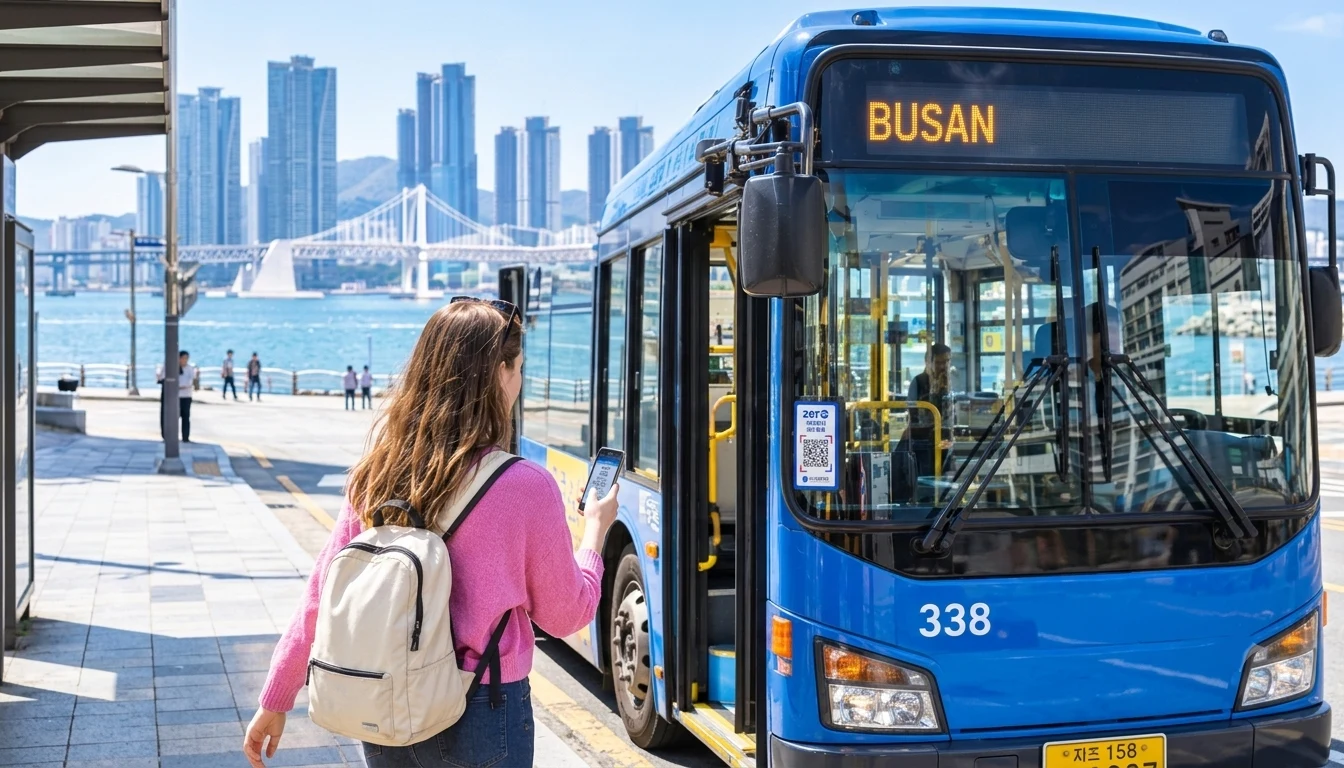
Busan expects more than 4 million foreign visitors this year. First-half arrivals were already up roughly 44 percent year over year.
Most of them land without a T-money card and without won in their pocket.
As of September 21, 2026, neither one is required to ride the bus.
How Do You Pay for a Busan Bus Without a T-money Card?
Look for a Zero Pay QR sticker near the front door of any Busan city bus. All 2,520 buses in the fleet carry one.
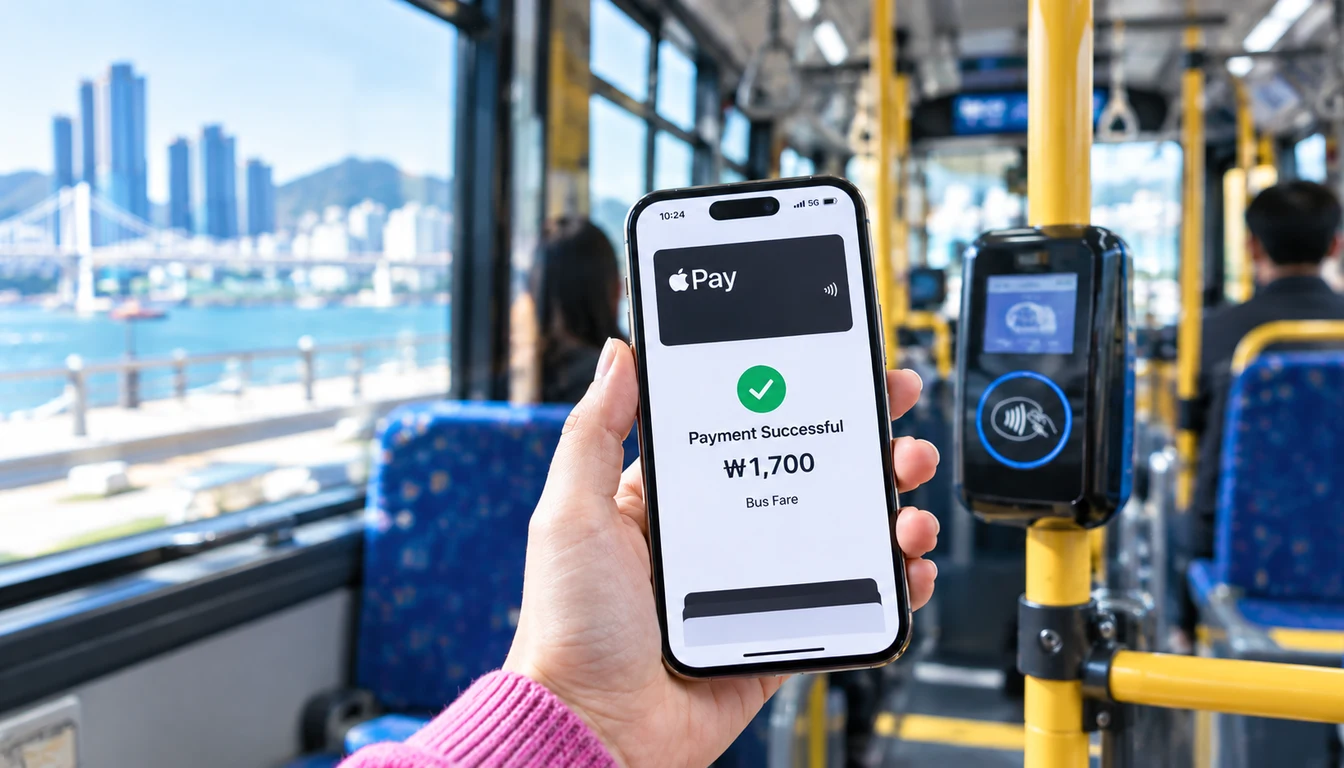
Open the mobile payment app you already use at home, scan the code, confirm. The fare converts from won to your card’s currency by itself, and your screen shows a confirmation you can hold up if the driver asks.
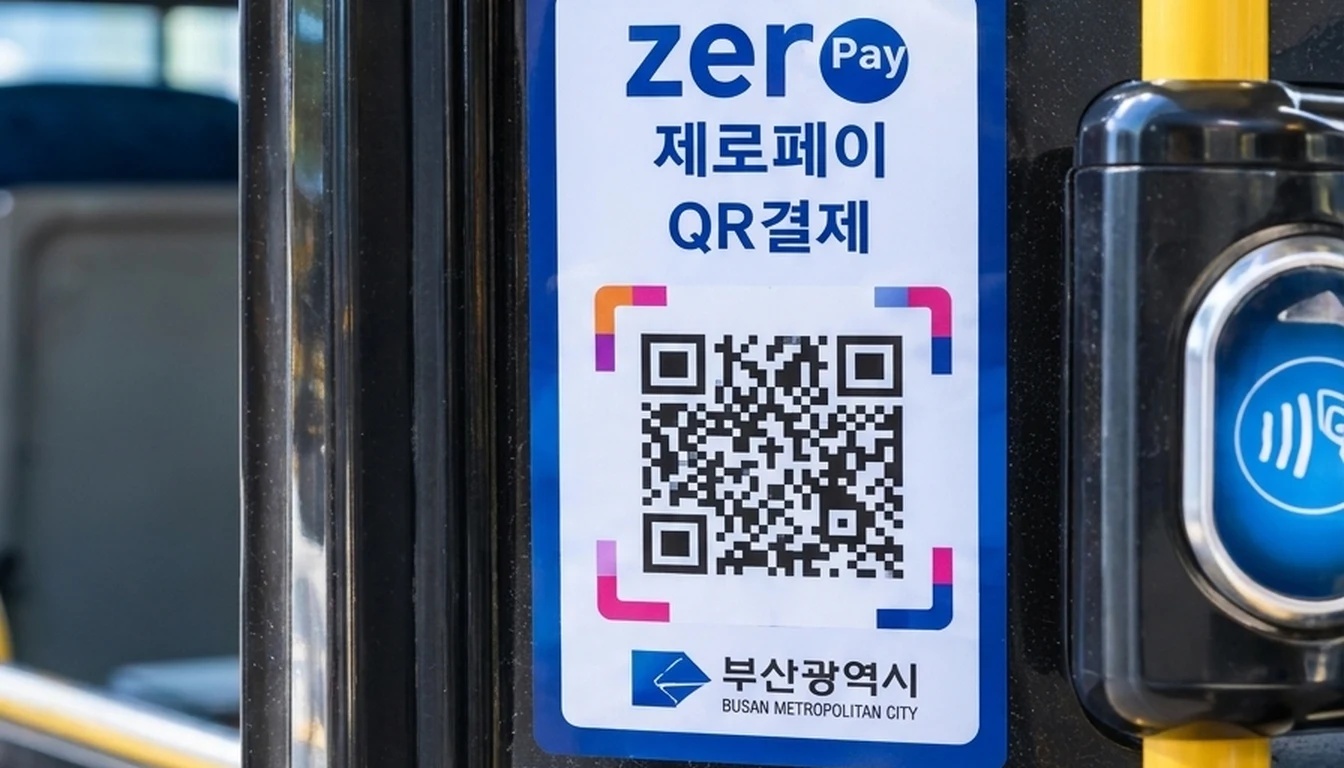
No new app, no account setup, and no trip to a convenience store for a T-money card. If you already have Alipay, WeChat Pay, or one of the other supported apps installed for shopping, you’re set.
Second city in Korea, not the first
Jeju launched the same Zero Pay QR system on its city buses back in August 2024. It’s since handled an average of about 41,000 foreign-card payments a month, with 761,000 total since launch, a reasonable sign the system holds up at real volume before Busan’s much larger tourist numbers hit it.
Which Apps Actually Work?
Zero Pay’s global network covers 76 payment apps across 24 countries, run through the Korea Financial Telecommunications and Clearings Institute. Alipay and WeChat Pay, the two apps most Chinese travelers already have installed, are both included, a meaningful detail given Chinese, Taiwanese, and Hong Kong visitors are expected to make up more than 60 percent of Busan’s foreign tourists this year.
If you’re not sure whether your regular payment app is on the list, the safest move is checking the app itself before you rely on it at the bus door, since most of these apps show supported countries or a Korea-specific QR payment option somewhere in their settings or travel section.
How Much Does It Cost, and What’s the Catch?
Fare is 1,700 won per rider, the same as the standard adult cash fare, charged individually, so a group of three pays three separate 1,700 won transactions, not a bundled rate.
There’s one real limitation. Zero Pay QR doesn’t carry T-money’s free-transfer discount.
The system reads it as a cash-equivalent payment. So switching from one bus to another, or from a bus to the subway, means paying full fare again on the second leg. A physical T-money card would waive that inside the transfer window.
Children and teenagers pay the full 1,700 won adult rate through Zero Pay too. The youth discount only applies with a registered T-money card.
Skip Zero Pay if your trip needs a transfer
For a single bus ride, Zero Pay QR is the easier option. For a multi-leg trip, bus to subway, or bus to bus, a T-money card or Mobile T-money app will actually cost less, since it applies Korea’s standard free-transfer discount and Zero Pay doesn’t.
Is This Available Anywhere Else in Korea?
For now, Jeju and Busan are the only two cities running Zero Pay QR bus payment. The Korea Financial Telecommunications and Clearings Institute, which operates it, has said it plans to expand to other regions’ public transit next, though no specific city or date has been announced.
Seoul is going a different way. Instead of QR, T-money is building EMV open-loop payment, so foreign Visa, Mastercard, UnionPay and JCB cards will tap directly on subway gates and bus readers. Our Seoul tap-to-pay guide has that timeline, which runs later than Busan’s.
Until one of the two systems reaches your city, Mobile T-money and WOWPASS stay the most reliable options nationwide. Our Korea travel apps guide covers both.
Busan Zero Pay Bus Payment: Quick Answers
No. If you already use Alipay, WeChat Pay, or one of the other 76 supported foreign payment apps, you scan the QR sticker on the bus with the app you have, and no separate Zero Pay app or account is needed.
1,700 won per person, the same as the standard adult cash fare, charged individually per rider. There’s no group or bundled rate.
No. Zero Pay QR payment is treated as cash, so it doesn’t carry T-money’s free-transfer discount between a bus and a subway or a second bus. A T-money card is cheaper if your route needs a transfer.
Jeju has run the same system on its city buses since August 2024. Other regions may follow, but none have been announced yet. Seoul is building a separate system instead, based on tapping foreign bank cards directly rather than QR codes.
Look for a Zero Pay sticker near the front door, where you’d normally tap a T-money card. All 2,520 buses in the Busan city fleet have one installed as of the September 21, 2026 launch.
Busan rewards wandering, and the buses make that cheap. Two numbers worth saving before you go: the Korea Travel Hotline on 1330 (multilingual, 24/7), and the Foreigners’ General Information Center on 1345.



Comments
Leave a comment