
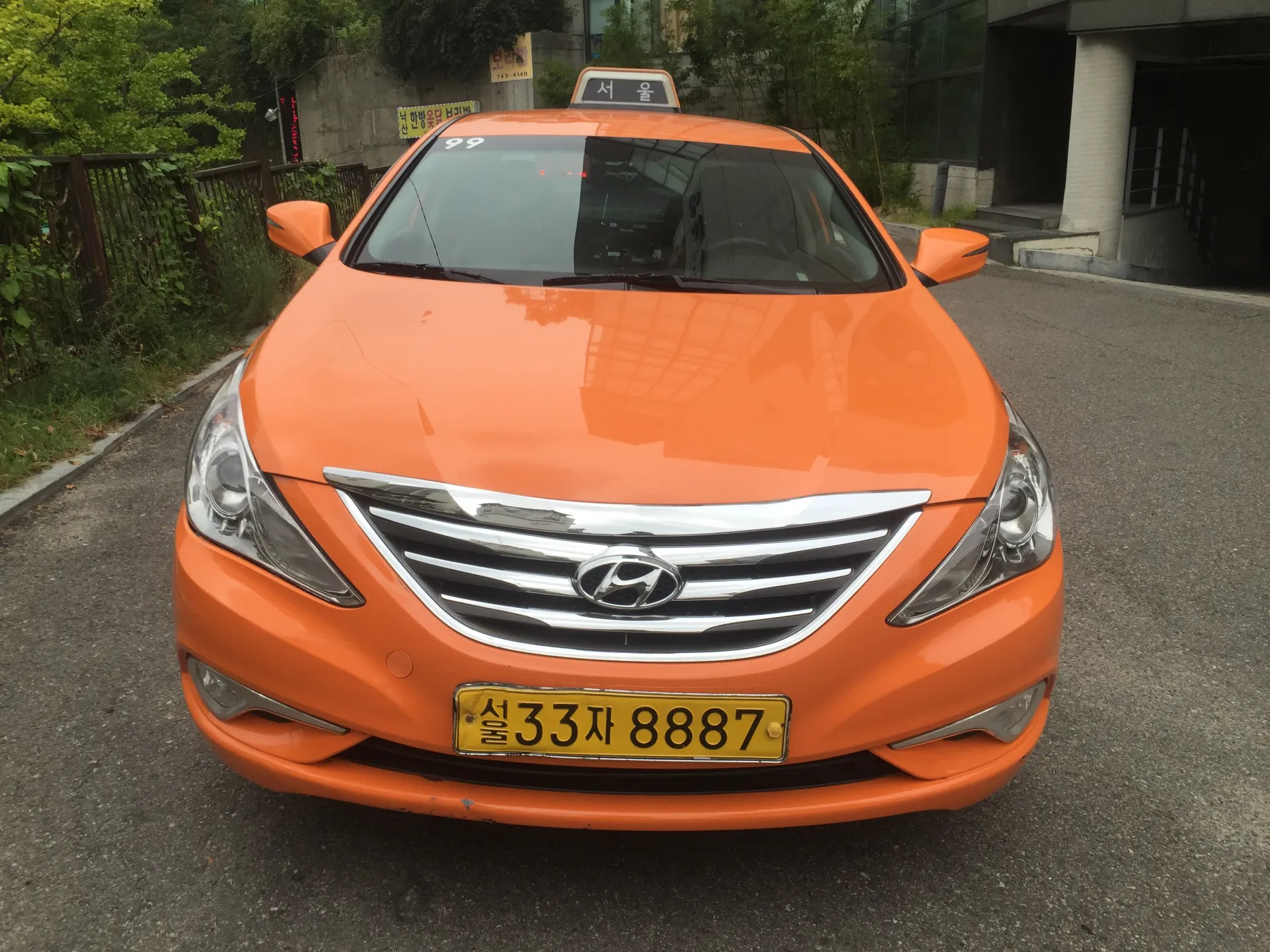
Street-hailing still works in Korea, but almost every local books a taxi through an app instead. For a visitor, the app you pick decides how smooth that ride actually goes.
Four names come up: Kakao T, Uber, TABA, and k.ride. They’re not interchangeable, and picking the wrong one for your situation is the difference between a five-minute booking and a frustrating one.
Which Taxi App Should You Actually Use in Korea?
If you already have a Korean phone number, Kakao T is the obvious choice, it’s what drivers expect and covers the whole country. Without one, k.ride or TABA is built specifically for that gap. Uber works too, but it isn’t the private-car service you might know from home.
| App | Best for | Korean number needed? |
|---|---|---|
| Kakao T | Anyone with a Korean number, nationwide coverage | Effectively yes |
| k.ride | Visitors anywhere in Korea, book ahead with a fare estimate | No |
| TABA | Seoul specifically, tourist spots built in | No |
| Uber (UT) | Familiar app flow, if you already use Uber elsewhere | No |
Kakao T: The Default, with One Real Catch
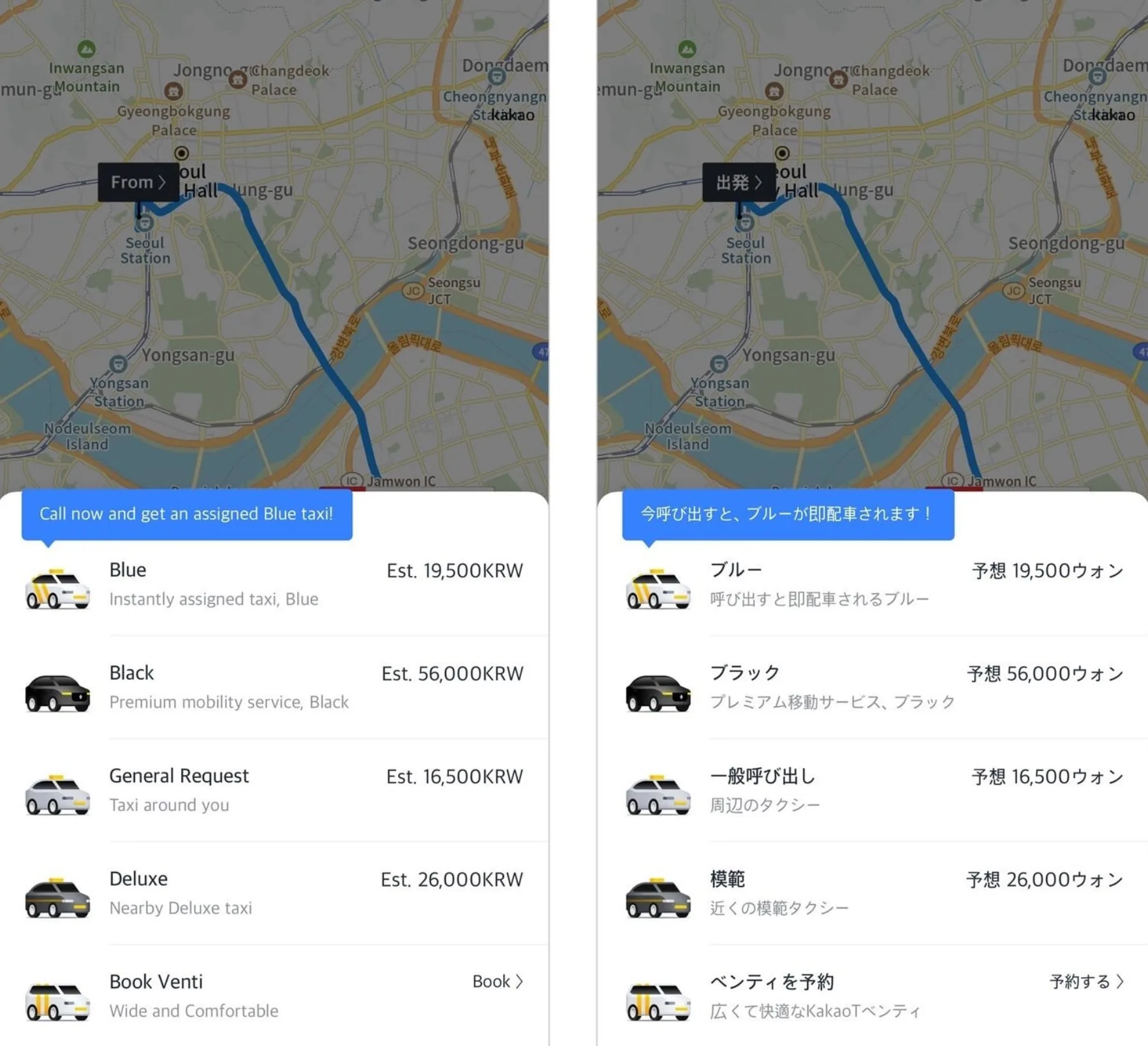
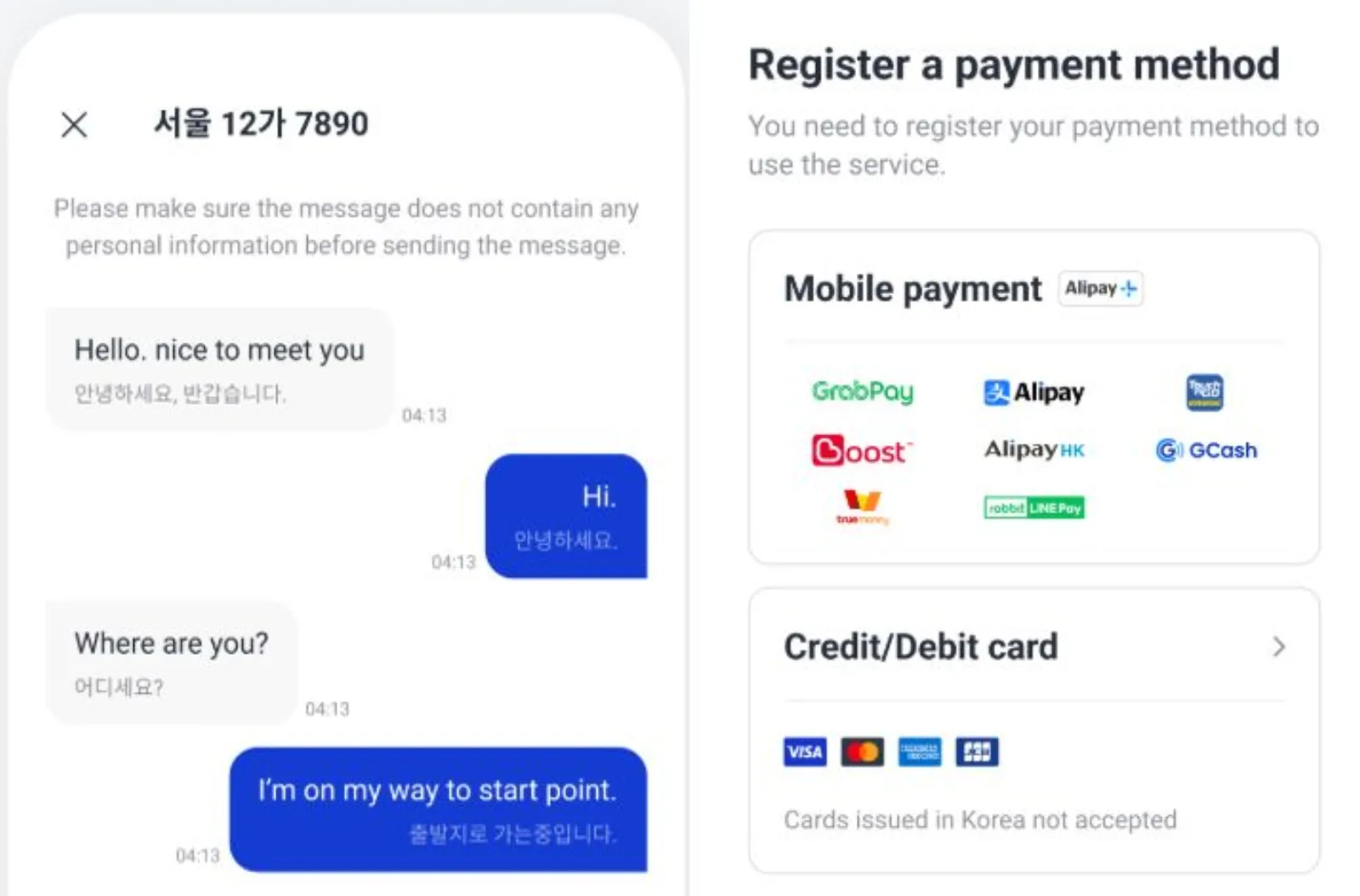
Kakao T is what the vast majority of drivers and locals use, so it has the deepest coverage by far. It now offers English and Japanese in the app itself, and foreign-issued Visa, Mastercard, American Express and JCB cards can be registered for automatic payment.
The app also runs real-time automatic translation in the chat between you and your driver, so a language gap doesn’t block a booking outright.
The catch: phone calls, not the booking itself
Signup itself can work with an overseas number, and cash or a foreign card covers payment without much trouble. What breaks down is voice contact. Drivers sometimes call to confirm a pickup spot, and a foreign number usually can’t receive that call.
The workaround locals use: send a chat message right after booking saying you’ll be waiting at the entrance, so the driver doesn’t need to call at all.
For a short trip, that’s a manageable quirk. For anyone who’d rather skip it entirely, that’s exactly the gap k.ride and TABA were built to close.
k.ride and TABA: Built for Foreign Visitors
Both apps exist for one reason. Kakao T’s signup flow assumes a Korean number, and these two don’t.
k.ride, built by Kakao Mobility itself, is the more general-purpose of the two. Sign up with a Google, Apple or email account, no Korean number required. It runs in English, Japanese and Chinese, with destination search and driver chat translated across more than 100 languages. Payment goes through a foreign-issued card, Alipay or GrabPay, and you can see an estimated fare before you confirm the booking. It works nationwide in Korea and, since expanding, in roughly 30 other countries including Japan, Guam and several in Southeast Asia.
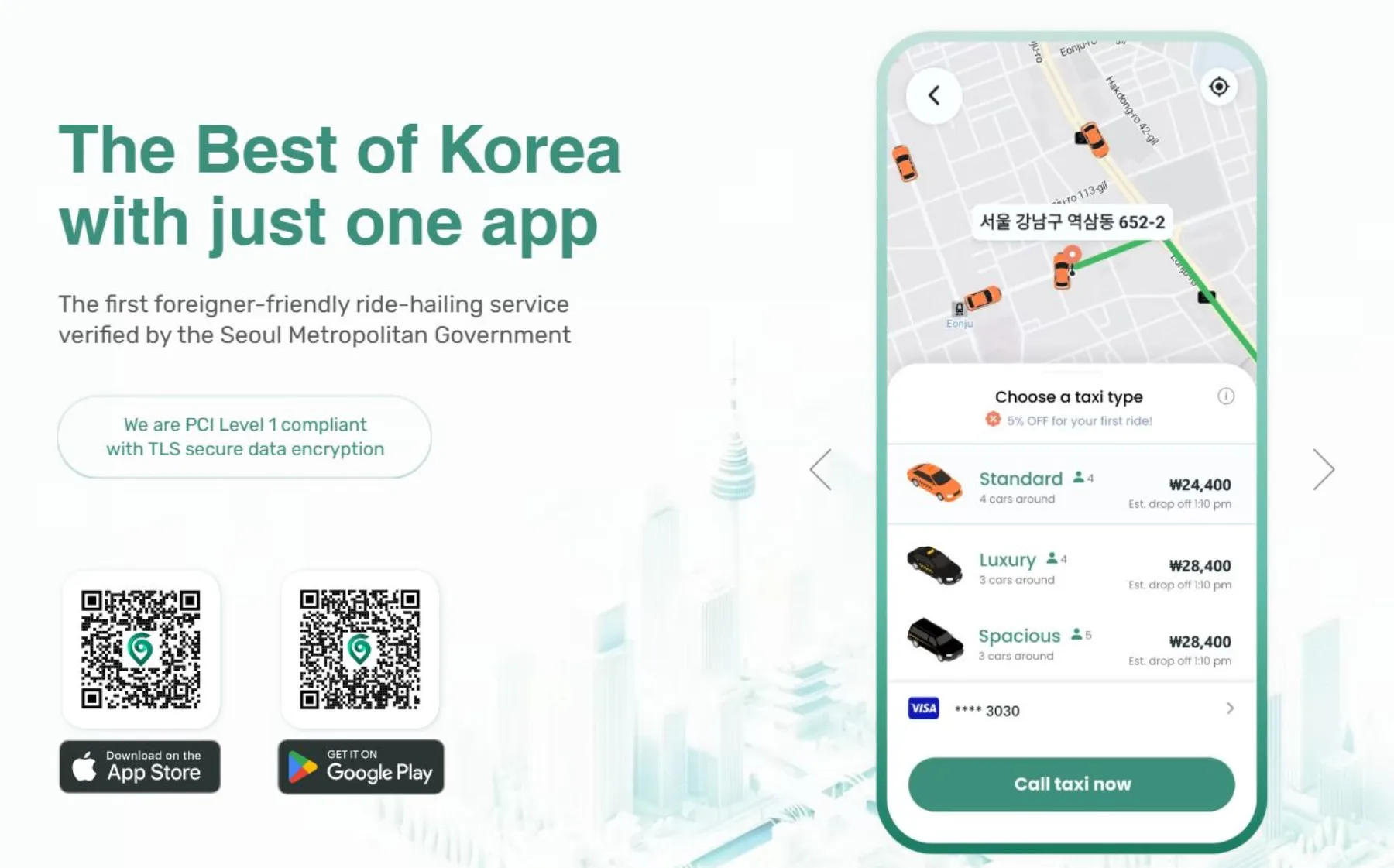
TABA takes a narrower, Seoul-first approach. It was launched with Seoul city government backing specifically for foreign tourists, and it authenticates with your home-country phone number instead of a Korean one. Language support runs to English, Japanese, and simplified and traditional Chinese, plus Thai. It also builds in roughly 200 Seoul tourist attractions, so a destination can be one tap away instead of a typed address.
k.ride or TABA?
Traveling beyond Seoul, or want one app that also works back home? k.ride covers more ground.
Staying in Seoul and want built-in shortcuts to major sights? TABA’s attraction list saves the typing.
Uber in Korea: Not What You’re Used To
Uber operates in Korea as a joint venture with T Map Mobility, branded UT once you open the app here. That partnership matters, because Korean law doesn’t allow the private-driver model Uber runs in most other countries.
Open the app, request a ride, and what actually shows up is a licensed taxi or a premium black car, dispatched through the same Uber interface and payment flow you already know. Your home account, saved cards and ride history carry over, since it’s still the standard global Uber app underneath.
Coverage leans toward central Seoul, busy areas like Gangnam and Itaewon have plenty of partner taxis nearby, while outer neighborhoods and residential streets thin out fast. Fares typically run a bit above Kakao T’s base pricing for the same trip.
Taxi Types and Fares
Every app above dispatches from the same pool of taxi types, and the base fare depends on which type shows up.
| Taxi type | Base fare | Notes |
|---|---|---|
| Standard (일반) | ₩4,800 | Most common, metered by distance and time |
| Deluxe (모범) | ₩7,000 | Higher comfort tier, no late-night surcharge |
| Large (대형, 9-seat) | ₩7,000 | For groups or extra luggage |
| International Taxi | Zone fare | English, Japanese or Chinese-speaking drivers |
A 20 to 40 percent surcharge applies on standard and large taxis between 10 PM and 4 AM. Deluxe and International Taxis skip that surcharge entirely, which narrows the overnight price gap between tiers.
Stuck without any of these apps working and need help in your language on the spot? The Korea Travel Hotline at 1330 supports Korean, English, Japanese, Chinese, Russian, Vietnamese, Thai and Indonesian, around the clock.
Korea Taxi Apps: Quick Answers
k.ride or TABA. Both let you sign up and pay without a Korean number, unlike Kakao T, which effectively assumes one for driver contact even though signup and payment can work around it.
No. Korean law doesn’t permit Uber’s private-driver model, so the app here, branded UT, only dispatches licensed taxis and premium black cars. The booking and payment flow is otherwise the standard Uber app.
Yes, through any of these four apps. Kakao T and k.ride both accept foreign-issued Visa, Mastercard, American Express and JCB, and TABA and Uber accept international cards as well.
k.ride, from Kakao Mobility, works nationwide in Korea and in roughly 30 other countries, useful if you want one app for multiple trips. TABA is Seoul-focused, backed by the city government, and builds in about 200 tourist attractions as one-tap destinations.
A standard taxi starts at a ₩4,800 base fare, metered by distance and time from there. Deluxe and large taxis start at ₩7,000. A 20 to 40 percent surcharge applies on standard and large taxis between 10 PM and 4 AM.
Landing at Incheon and want the full comparison against the train and airport bus? Our Incheon Airport to Seoul guide breaks down all three. For getting around once you’re settled in, see our Seoul subway and bus guide.
Safe travels.



Comments
Leave a comment